

Airbus bets on SAF scale-up while resetting hydrogen expectations
Airbus executive Bertrand de Lacombe outlines a pragmatic three-track strategy, pushing SAF scale-up, engine efficiency, and pushing hydrogen aircraft to the 2040s.

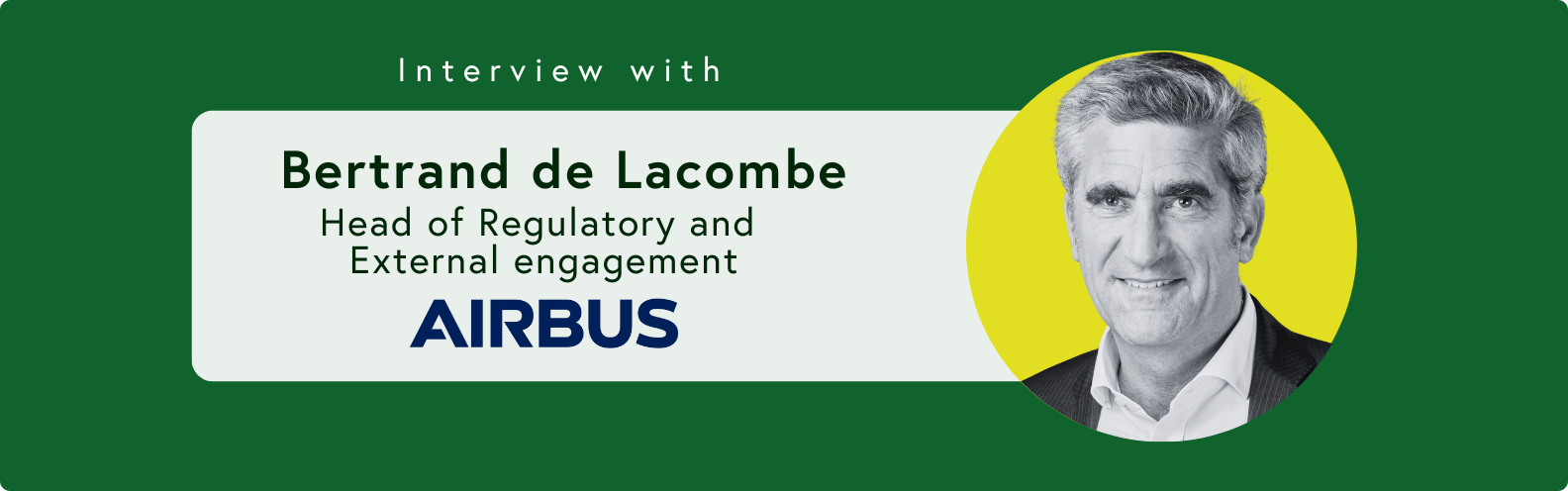
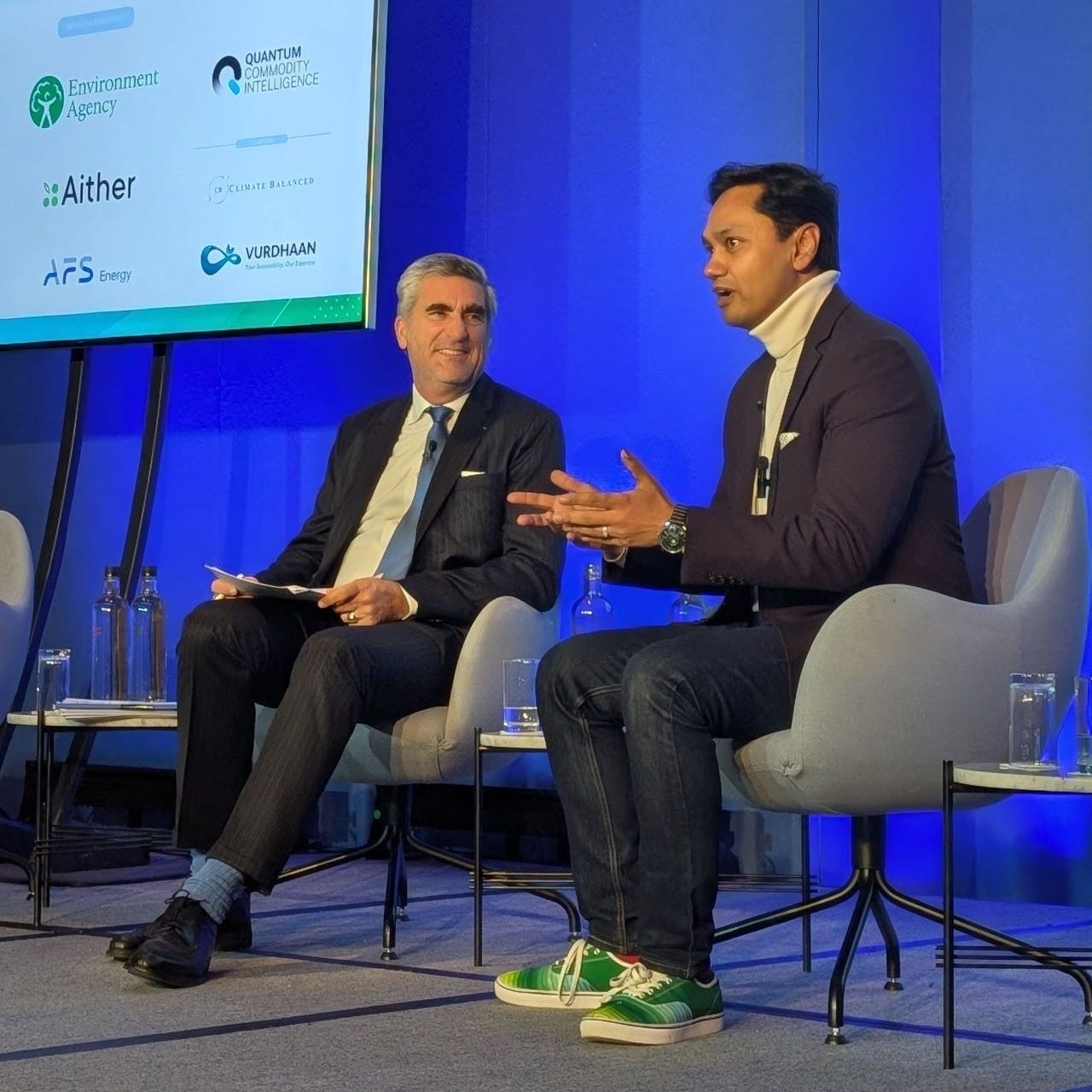
In conversation with SimpliFlying CEO Shashank Nigam at the Aviation Carbon Conference in London, Airbus executive Bertrand de Lacombe outlined Airbus’ position across short-, medium- and long-term climate measures, as well as the company’s work with governments and airlines to expand the sustainable aviation fuel (SAF) ecosystem.
Taking a bold stance, de Lacombe said the aviation sector is entering a period where growth and decarbonisation must advance in parallel, emphasising that the industry needs “global regulation, long-term coordination and a realistic view of technology timelines” to reach net-zero emissions by 2050.
Two conditions for aviation’s future
De Lacombe said governments have made clear that aviation remains a strategic sector, referencing the recent ICAO assembly.
“The world needs aviation,” he said. But, he added, “climate change is already here,” and industry growth must be aligned with credible emissions reductions.
Airbus’ role, he said, is to “pioneer sustainable aviation” by working across technology, operations, SAF and market-based measures. This is because Airbus sits at the intersection of manufacturers, airlines, airports, regulators and fuel producers. As a result, its strategy is built around short-term and long-term tracks that follow ICAO’s global net-zero framework.
SAF: Certification and scale-up
Asked by Nigam what Airbus is doing to accelerate SAF adoption, de Lacombe pointed to two priorities: certifying the fleet for 100% SAF use by 2030, and helping to build out supply through partnerships.
Airbus is already using SAF in its internal operations, including flight tests, deliveries to customers and Beluga operations, and targets 30% by 2030. Aircraft delivered from Airbus plants can already fly on SAF blends of up to 50%. The company has also partnered with Qantas to co-fund SAF projects and support producer pathways.
De Lacombe also shared insights on three different aspects of the SAF ecosystem:
Policy: He highlighted recent UK policy developments, including contracts-for-difference-style price-stability mechanisms, calling the UK “an important leader” in transforming SAF into an industrial strategy rather than a purely environmental initiative.
Pricing: On pricing, he said mandates help signal demand, but additional tools are still required: “There is still the problem of price for airlines.” The company has pushed EU policymakers to consider price-certainty and revenue-stability mechanisms similar to those in the UK.
Certification: Regarding certification for 100% SAF, he stated that the work is technically complex because SAF’s properties differ from those of petroleum jet fuel, requiring validation that no parameter in the aircraft-engine system is adversely affected.
Near-term technology: Engines, wings and efficiency
For the 2030s aircraft generation, Airbus is focusing on conventional but higher-efficiency improvements. These include: new wing designs, new engine architectures developed with suppliers, and higher bypass ratios.
De Lacombe said each new generation must deliver roughly “20%” efficiency gains over the previous one, a challenging target that will require new structural concepts and aerodynamic improvements.
Airbus is still evaluating future iterations of the A320, A321 and A350 families but has as yet not announced new programme decisions. The company’s main constraint, he emphasised, is not demand but capacity: Airbus and its competitors face backlogs stretching up to a decade.
Hydrogen timeline extended to the 2040s
Nigam asked for updates to Airbus’s ZEROe hydrogen programme. De Lacombe said Airbus still sees hydrogen as a “fantastic long-term solution,” particularly for reducing both CO₂ and non-CO₂ effects.
However, the company now believes the supporting airport and fuel infrastructure will not be in place by the mid-2030s and is rephasing its plans for aircraft technology accordingly.
The concept will also be based on fuel-cell electric propulsion rather than direct hydrogen combustion, which Airbus has now deprioritised.
Safety and certification
During the audience Q&A, de Lacombe stressed that safety remains “the first priority” in any new technology pathway, and that there is “no possibility of compromise.”
He further noted that the ICAO has set a long-term vision of zero fatalities by 2050, guiding certification of new fuels and engine types. Noise reduction remains important, he said, but climate impact is increasingly treated as the primary constraint for future aircraft design.
A collaborative path
Throughout the discussion, Nigam emphasised the need for clearer pricing models and simpler consumer propositions for SAF.
De Lacombe responded that Airbus sees its role as an advocate and facilitator rather than a regulator or fuel producer. “Our objective is to participate as much as we can to see the benefit of SAF,” he said.
This collaborative approach reflects the broader theme of de Lacombe’s remarks: that reaching net-zero will require alignment across the entire aviation ecosystem, with Airbus leveraging its position to connect technology development, policy frameworks, and market mechanisms.