

Why Dotz Nano sees itself as the "Intel inside" for Direct Air Capture
The Israeli startup's mission is to supply the "sorbent inside" for carbon capture machines, betting that better chemistry, not bigger plants, will unlock the future of removal.

Israeli startup Dotz Nano is developing sorbent materials designed to lower the cost of Direct Air Capture (DAC), a technology that removes carbon dioxide directly from the atmosphere.
Unlike companies that build DAC facilities, Dotz operates as a specialised materials supplier, providing chemical components used inside capture systems. These sorbents bind to CO₂ from ambient air, where concentrations are roughly 420 parts per million. Their efficiency directly influences overall energy consumption, which is the primary cost driver in DAC operations.

Shirley Shoshaney-Kleiner, Dotz Nano’s chief commercial officer, draws a clear parallel to explain her company’s role: “Sorbent is the Intel inside for DAC systems.”
Accordingly, Dotz plans to sell or license its materials to multiple DAC developers rather than constructing its own plants.
Promising lab results
In laboratory testing, Dotz reports that its sorbents capture approximately twice as much CO₂ as existing commercial materials. Additionally, the captured carbon can be released at about 70 degrees Celsius — lower than many current systems — reducing energy needs and potentially cutting operational expenses.
“Because the sorbent sits at the core of the CO₂ capture process, its performance can significantly impact both the CAPEX and OPEX of direct air capture, potentially lowering costs enough to make DAC economically viable,” Shoshaney-Kleiner said.
The company has secured an agreement with U.S.-based Carbon Capture Inc. to test its materials, and several other firms are conducting lab evaluations, with some progressing to larger pilot demonstrations. Dotz is also working with an unnamed automotive manufacturer on performance assessments.
Looking toward aviation, Shoshaney-Kleiner says Dotz is collaborating with developers of synthetic fuels, for whom high-purity CO₂ serves as a critical feedstock. Beyond e-fuels production, the aviation sector is increasingly interested in carbon removal technologies as a way to generate reliable carbon credits, moving away from traditional offsets that face growing credibility concerns.
Industry landscape and scaling up
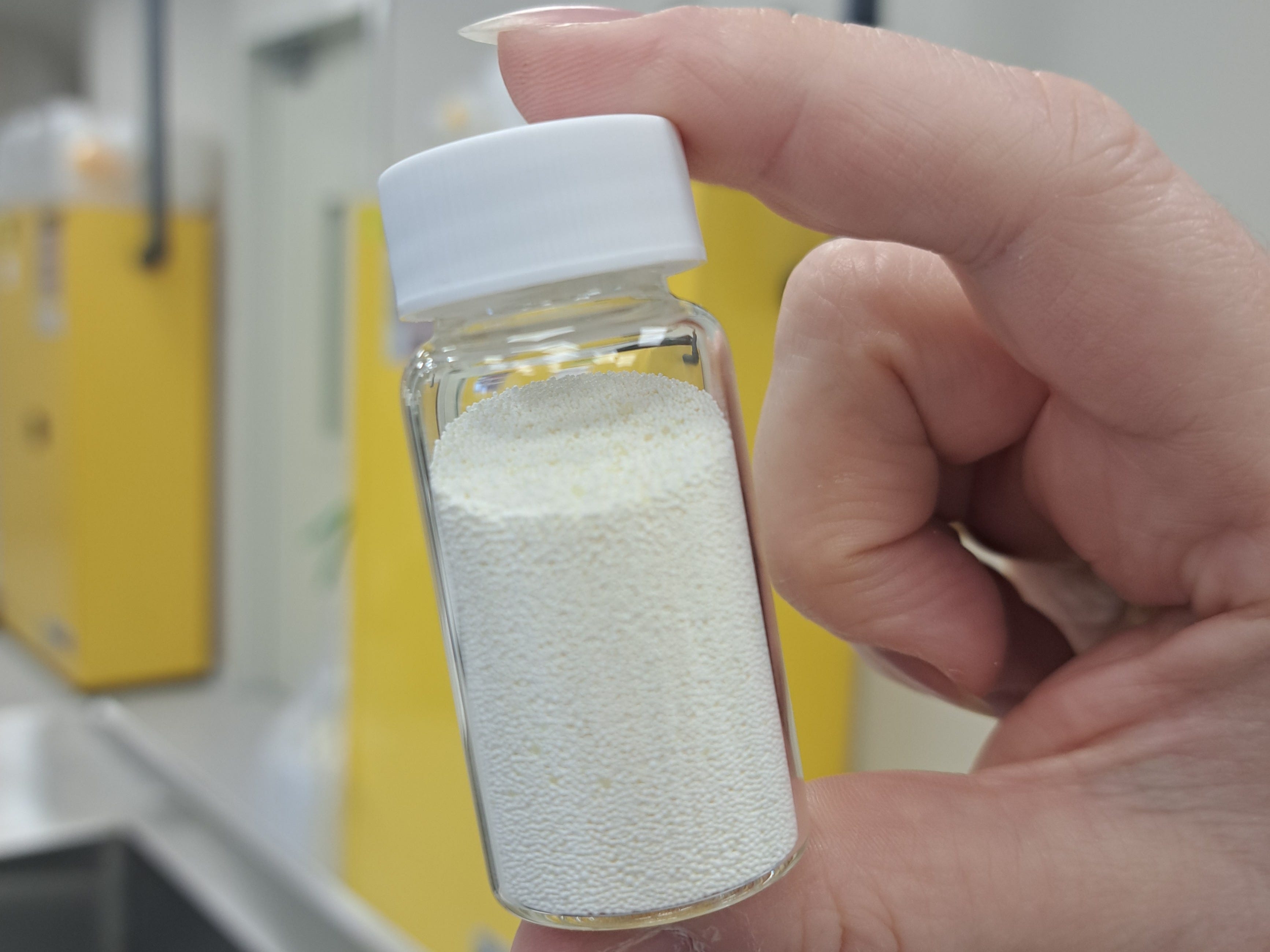
Most sorbents used in DAC today were originally designed for other industries, such as water treatment.
Now, several other companies are creating materials tailored specifically for low atmospheric CO₂ concentrations. These include Ireland’s NEG8 Carbon, which employs low-temperature electrostatic capture, and fellow Israeli startup RepAir, developer of a polymer-based system.
Dotz says its sorbents are engineered to last for roughly 3,000 capture cycles before replacement. The company has achieved kilogram-scale production and aims to reach several tons annually by 2026. Cycle testing is underway under various operating conditions to meet different DAC design requirements.
According to Shoshaney-Kleiner, broader commercial deployment still hinges on continued policy backing. “Governmental or international support for this industry is really vital, especially in these years where the economics doesn’t make sense yet,” she noted. Currently, many DAC projects rely heavily on incentives and advance purchase agreements, with the sector being at a relatively early stage of development.
Dotz anticipates that further testing will take place before full commercial adoption, targeting initial sales around 2027 or 2028.