

How FatHopes transformed waste oil collection into a digital feedstock business
From a diesel car in Kuala Lumpur to a 300,000-tonne SAF refinery: FatHopes Energy is now betting $500 million on making Malaysia a SAF powerhouse.

⚡ In a nutshell
From a diesel car to a refinery: Founder Vinesh Sinha began in 2006 by blending used cooking oil (UCO) in a second-hand diesel car. By 2010 he had a small biodiesel plant; by 2013 he was supplying feedstock to some of largest renewable fuels refineries in the region.
The “Uber for waste”: His company, FatHopes has built a digital supply-chain platform encompassing vendor, driver, consumer and “Ranger” apps, tracking every litre of UCO from stall to ship. COVID-19 lockdowns drove digital adoption from 35% to 100% overnight.
Why traceability matters for aviation: That digital infrastructure was built for operational efficiency, but it gives buyers the low-latency chain-of-custody data needed to satisfy EU and UK sustainability criteria.
The big bet: A 300,000-tonne-per-annum SAF refinery in Port Klang, Malaysia, budgeted at $500 million. Pre-FEED completes June 2026; FID is targeted for mid-2027; commercial production is slated for H2 2030.
The financing gap: Equity is already secured, but debt financing must close before FID. Memoranda of understanding cover roughly 70% of offtake; definitive agreements are being held until FEED firms up the cost structure.
Malaysia as “Singapore 2.0”: Sinha argues Malaysia offers the trade stability of Singapore at a lower cost, with predictable export policies and zero levy on finished product. That is why Chinese and Middle Eastern producers are increasingly choosing it as a regional SAF hub.
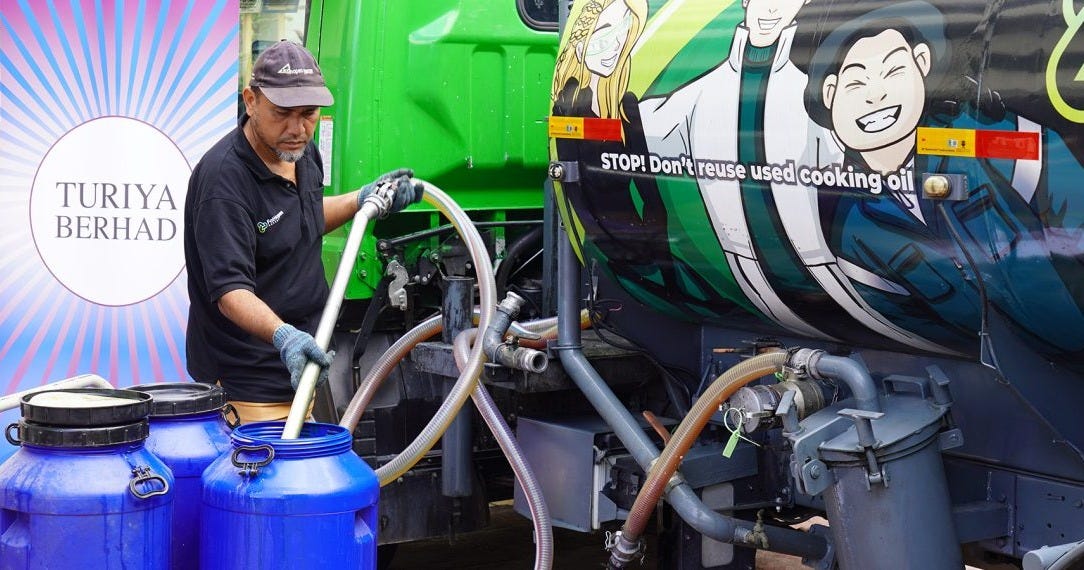
The hobby that started it all
Every founder has an origin story. Malaysian entrepreneur Vinesh Sinha’s begins in 2006, when his father gave him a second-hand diesel car.
“I started experimenting on used cooking oil in that car,” Sinha recalls. “I subsidised my own fuel bill by running one part used cooking oil, one part diesel.” At the time, he notes, “the word biodiesel was not even a thing yet, especially in this part of the world.”
What began as a personal money-saving scheme scaled into a cottage industry for friends and family. By 2010, Sinha had imported a 5,000-litre skid-mounted plant from Europe and was producing biodiesel blends for Malaysia’s construction and tunnelling sectors.
The economics were almost implausibly attractive: restaurants were paying him to take their waste oil away. “It was just revenue on all fronts,” he says.
The aviation connection came in 2008, when Virgin Atlantic flew a Boeing 747 partially powered by biofuel derived from coconut and babassu oil. In Malaysia, Richard Branson was already a household name, in part, thanks to his famous Formula 1 bet with AirAsia’s Tony Fernandes.
Branson had wagered that his Virgin Racing team would beat Fernandes’s Lotus team at the 2010 Abu Dhabi Grand Prix. He lost, and so in May 2013 paid up by serving as an AirAsia flight attendant on a Perth-to-Kuala Lumpur route, complete with full makeup, and a red skirt. “Virgin was not a foreign name to us,” Sinha explains. That 2008 biofuel flight planted a seed: could the same waste oil one day power aircraft?
The pivot that wasn’t the end
In 2013, the price of crude oil collapsed. As a result, the domestic biodiesel market evaporated. “Scaling the biorefinery didn’t make much sense to us, we were strapped on capital,” he says.
That led to a pivot, but one which served as a learning opportunity. As renewable fuel projects were being developed in neighbouring Singapore, demand emerged for waste-based feedstocks, and a major fuel producer offered to take his feedstock. Sinha obliged, and for the next few years FatHopes Energy focused on pure feedstock aggregation.
But the experience taught him something critical: if large-scale refiners saw enough value in waste oil to build facilities around it, then the technology was proven. What was needed was reliable, traceable feedstock at scale.
Sinha spent the next ten years solving that problem.
Why the app ecosystem matters
Today, FatHopes is more of a tech company disguised as a waste haulier than just a collector, with Sinha’s team having built a digital ecosystem that tracks every molecule of used cooking oil from a roadside stall in Penang to a refinery in Rotterdam.
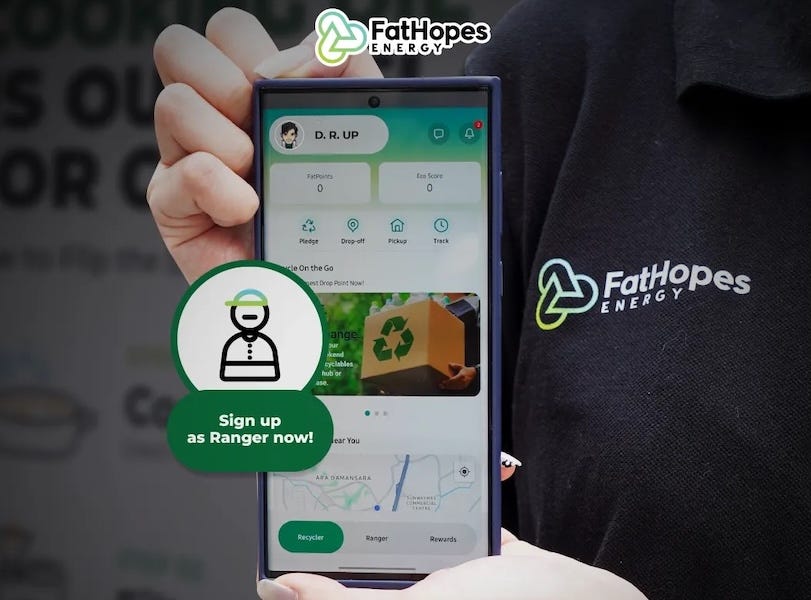
The system includes apps for vendors (restaurants), drivers (with AI-powered route optimisation), household consumers, and “Rangers” — digital aggregators for housing estates — all feeding into an enterprise dashboard.
Initially, the adoption of this digital ecosystem was sluggish. Then, on 16 March 2020, COVID-19 lockdowns hit Malaysia. “All of the points of origin called us up and said, ‘Can we go paperless, cashless, contactless?’” Overnight, the digital penetration jumped from 35% to 100%. “Owners could sit at home and manage their UCO disposal remotely,” Sinha says.
This matters for the aviation industry, as groups like Transport & Environment have in the past raised concerns about the provenance of UCO. European buyers require chain-of-custody documentation. Certification bodies want low-latency traceability.
Sinha’s system was built for operational efficiency, but the byproduct is total transparency. “For us to be efficient, we need to know where it is,” he says. FatHopes now has an important commercial asset, which gives offtakers the provenance data they need to satisfy EU and UK sustainability criteria.
The platform is also expanding beyond cooking oil into batteries and other waste streams. Sinha’s thesis is that any material that can become a fuel feedstock should follow the same traceable process flow.
The refinery: Port Klang, 300,000 tonnes, and the debt question
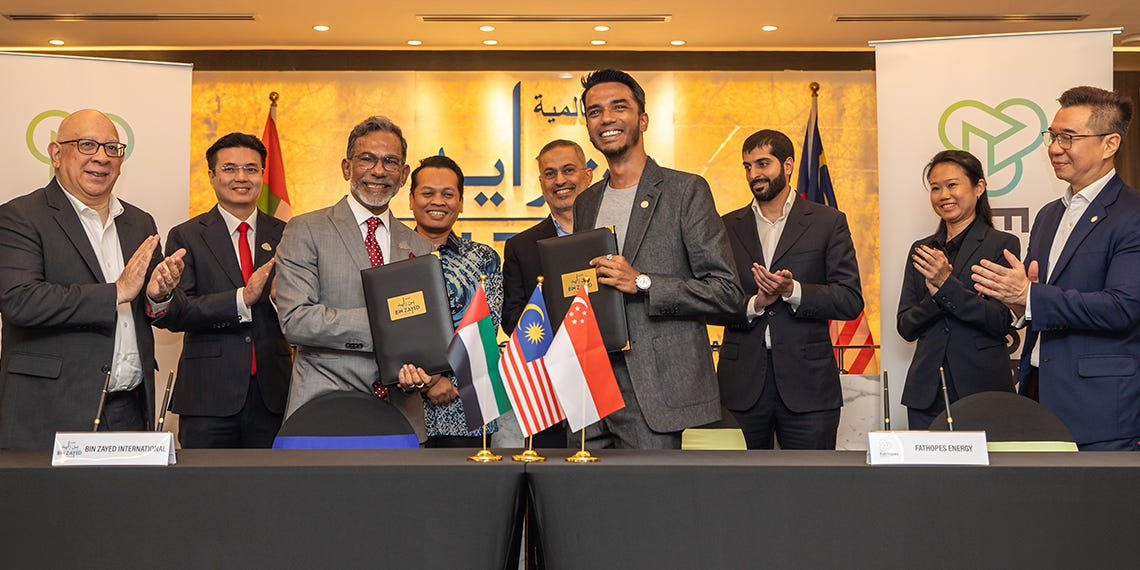
After fifteen years in feedstock, FatHopes is now planning what it hopes will be one of Southeast Asia’s most advanced SAF refineries. The project, a partnership with UAE-based Bin Zayed International Group, is located in Port Klang’s free trade zone.
The numbers are substantial: 300,000 tonnes per annum of SAF capacity, requiring roughly 330,000 tonnes of feedstock, on a $500 million budget.
The facility will use the HEFA pathway, with a dedicated jetty and is deliberately positioned both for export and for proximity to Kuala Lumpur International Airport (KLIA), giving it optionality as Malaysia’s domestic mandate matures.
The offtakes are already well progressed: memoranda of understanding cover approximately 70% of the plant’s capacity, and definitive agreements are being negotiated. Sinha is deliberately holding off on finalising those terms until FEED (front-end engineering design) delivers a firmer view on capex and opex.
The technology partner shortlist is down to three names (Sinha did not specify them publicly, but the company has previously disclosed a feasibility collaboration with Topsoe). Two EPC contractors are currently competing through the pre-FEED phase, with one expected to carry the project forward.
The economics however are straightforward: feedstock accounts for roughly two-thirds of HEFA production cost, and European UCO prices have risen above $1,300 per tonne. An IRENA study found that HEFA consistently shows the lowest capital expenditure of all SAF pathways in Malaysia, benefiting from the country’s existing oleochemical refining experience.
Palm oil, traceability, and the “palm stigma”
No conversation about Malaysian biofuels avoids palm oil. Sinha does not duck the question, but he does challenge the blanket assumption that all palm-derived feedstocks are equal. He describes the “palm stigma” as cyclical: “You have a big push against it, fuel prices increase, everyone goes quiet, and then the cycle comes back.”
The regulatory reality itself is quite nuanced. It is indeed the case, that under EU RED III, crude palm oil is classified as a high ILUC-risk feedstock and is being phased out of renewable energy targets by 2030. But the waste and residue streams that Sinha deals with, used cooking oil from palm frying, palm fatty acid distillate (PFAD), and palm oil mill effluent (POME), occupy a different category.
POME and UCO are listed in the EU’s Annex IX Part A as advanced feedstocks, exempt from the palm phase-out. PFAD sits in Part B as a recognised residue. Academic life-cycle studies show PFAD-derived fuels achieving up to 84% GHG reductions when treated as a refining byproduct, because the upstream cultivation emissions are allocated to the main product and not the waste stream.
FatHopes’ position is one of total disclosure. The company provides full supply-chain data to counterparties before trade confirmation and lets the buyer decide what meets their sustainability threshold. This recognises that certification standards vary between Asia, Europe, and the United States. His digital infrastructure is designed to satisfy whichever standard a customer requires, from chain-of-custody to the plantation gate, to self-declaration, to ISCC mass-balance audit.
The regional context: Malaysia as “Singapore 2.0”
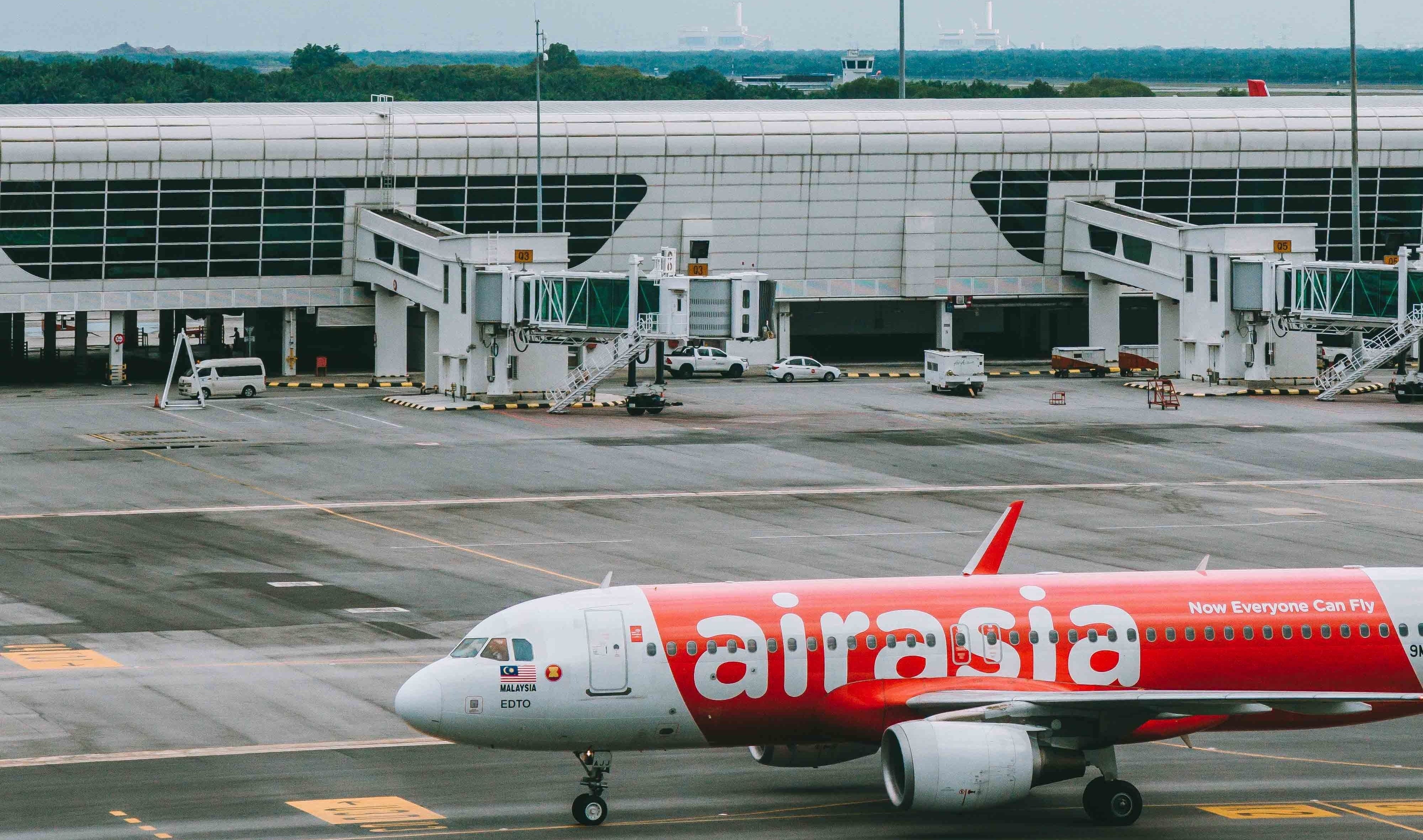
Sinha told us that Malaysia’s policy environment is warming. The National Energy Transition Roadmap sets a 1% SAF blending aspiration by 2027, scaling to 47% by 2050. A SAF Task Force, chaired by the Civil Aviation Authority of Malaysia and Malaysia Aviation Group, is advising the government on mandates, incentives, and cost implications.
Sinha is cautious about calling this a done deal. “There is no visibility yet” on whether the mechanism will be an incentive or a penalty, he says. But there is a clear direction of travel, and when Malaysia chaired ASEAN last year, there were active discussions about a unified regional mandate led by Singapore and Kuala Lumpur.
Singapore, for its part, already has a mandate from 2027 (delayed because of the upheaval in the Gulf), with a passenger levy to fund procurement. Thailand has targets of 1% by 2026. Indonesia has mandated 1% for international flights from 2027. The region is moving and mandates are coming.
The China question
FatHopes is not the only player eyeing Malaysia.
EcoCeres, the Hong Kong-founded renewable fuels unicorn backed by Towngas and Bain Capital, inaugurated a 420,000-tonne-per-annum SAF and HVO plant in Pasir Gudang, Johor, in January 2026, making it Malaysia’s first operational SAF facility and the second-largest SAF producer globally. According to Sinha, Chinese producers are increasingly building “+1” refineries outside China to hedge against anti-dumping investigations in Europe and the UK.
Sinha is sanguine about the competition. FatHopes has never sourced a Chinese molecule — “organic, not deliberate,” he says — and he views the influx of Chinese capital as complementary.
“Malaysia is going to eventually be responsible for significant volume,” he argues. “Whether that is feedstock from outside coming in, being refined and exported as finished product, or regional and domestic feedstock being used.”
His broader geopolitical point is about trade stability. Malaysia, he contends, is “Singapore 2.0 in terms of import-export policies. …it’s just that on top of that we’re cheaper than Singapore.”
Malaysia operates on predictable, annual budget cycles. Raw materials face levies, but finished product exports are duty-free. That stability, he believes, is why foreign refiners are choosing Malaysia over other Southeast Asian locations.
Our take
FatHopes Energy is a case study in patient capital and incremental innovation. From a single diesel car in 2006 to a digital waste empire and, potentially, a 300,000-tonne refinery by 2030, Vinesh Sinha has followed the feedstock.
The FatHopes story reinforces that many of the SAF production centres are not where they were yesterday. They will be where the waste is cheapest, the policy is stable, and entrepreneurs are willing to spend the time getting it right in commercialising it.