

How e-fuels’ energy problem could be solved by nuclear power
Renewables alone can’t deliver the constant, massive electricity needed for power-to-liquids SAF. Small modular reactors running ~95% of the time could change that equation.

⚡ In a nutshell
Sustainable aviation fuel (SAF) remains below 1% of global jet fuel supply, and the most promising long-term pathway — e-fuels (also known as power-to-liquids) — faces a fundamental energy problem: it requires enormous quantities of constant, low-carbon electricity that renewables alone struggle to provide reliably.
Nuclear energy, and small modular reactors (SMRs) in particular, could solve this. Running at ~95% capacity with a fraction of the land footprint of renewables, SMRs offer the always-on baseload power that industrial-scale SAF production needs.
A single Rolls-Royce SMR, paired with Equilibrion’s Eq.flight technology, could produce over 160 million litres of SAF per year — roughly a third of the UK’s entire 2040 power-to-liquids target from one facility.
The economics are improving: nuclear-derived “pink hydrogen” is already cheaper per kilogram than green hydrogen, and policy tailwinds are building in both the UK and EU.
This isn’t a near-term fix. Nuclear SAF is a decade-plus infrastructure play, but for an industry that needs fuel at scale and reliably for decades, it may be the most credible long-duration backbone yet identified.
SAF accounts for less than 1% of global jet fuel supply, even as European mandates are in place, and with countries such as Singapore and Thailand following suit.
That supply crunch is particularly acute when it comes to so-called e-fuels, where you need substantial quantities of reliable, low-carbon electricity to produce them. A growing number of voices in aviation now believe nuclear energy is well positioned to solve this problem; prominent among them is Emirates President Sir Tim Clark.
In our January 2026 trends report “What could strengthen aviation’s decarbonisation efforts?” we identified new nuclear — particularly small modular reactors (SMRs) — as one of five technologies with the potential to reshape aviation’s energy landscape. That case has only strengthened since then.

The e-fuels energy bottleneck
The power-to-liquids (PtL or e-fuels) pathway involves using electricity to split water into hydrogen via electrolysis, capturing CO2 from the atmosphere, and combining the two to synthesise a liquid hydrocarbon, which is a drop-in fuel, meaning it works like conventional jet fuel. It is widely regarded as the cleanest SAF pathway, which is why both the European Union and United Kingdom have an e-fuels sub-mandate under the broader SAF mandate.
The catch is that PtL production is extraordinarily energy-intensive. Each tonne of e-kerosene typically requires 30 to 50 megawatt-hours of electricity when electrolysis, CO2 capture, and synthesis are included. To produce SAF at the volumes aviation needs, you need power sources that are not just clean but constant, compact, and available around the clock.
Renewables such as wind and solar are essential to the energy transition, but they come with well-documented limitations for industrial-scale fuel production: intermittency, large land requirements, and the need for expensive energy storage to maintain continuous operation.
Nuclear energy sidesteps most of these constraints. A reactor operates at capacity factors of around 95%, producing steady baseload power regardless of weather or time of day. Its land footprint is a fraction of that of an equivalent renewable installation. And its lifecycle carbon intensity is comparable to wind, among the lowest of any energy source.
Enter the small modular reactor
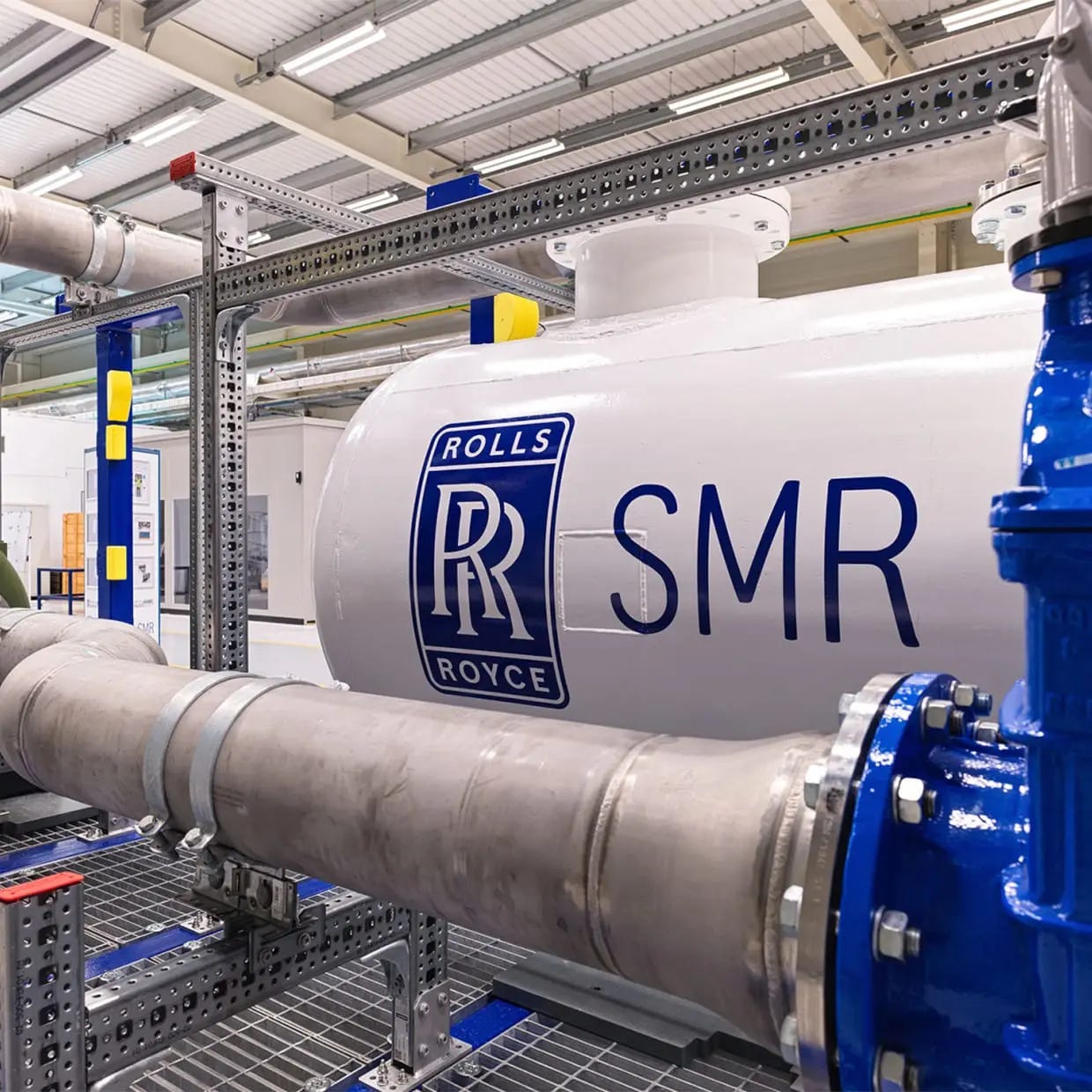
The nuclear technology attracting most attention in aviation circles is not the conventional gigawatt-scale plant, but the small modular reactor, or SMR. These are factory-built units typically generating up to 300 megawatts of electricity, designed for faster construction, lower capital risk, and modular deployment close to industrial demand.
For SAF production, SMRs offer a particular advantage: they generate not only electricity but process heat, which can be fed directly into the fuel synthesis process to improve efficiency. This dual output of electric and thermal energy allows more fuel to be produced per unit of energy input, a critical factor in bringing down the cost of e-kerosene.
One company working at this intersection is Equilibrion, a UK-based project development firm founded to create commercial applications for nuclear energy in hard-to-decarbonise sectors. Its proprietary system, Eq.flight, is specifically engineered to integrate with nuclear electricity and heat for PtL SAF production.
From concept to collaboration
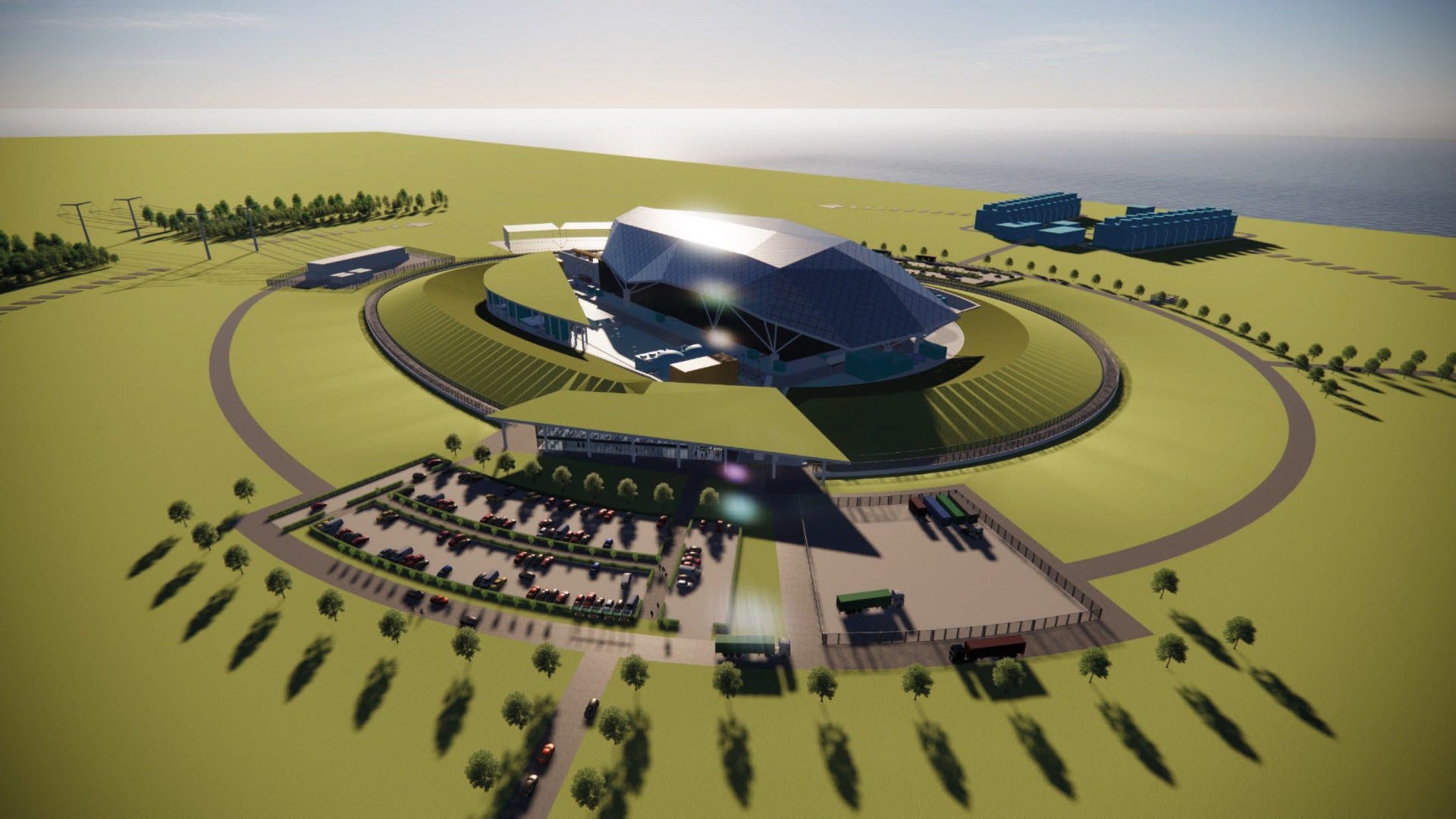
In March 2026, Equilibrion and Rolls-Royce SMR announced a memorandum of understanding to assess how Eq.flight could be powered by the Rolls-Royce SMR design.
The headline figure from the announcement: a single Rolls-Royce SMR could produce over 160 million litres of SAF per year — roughly a third of the UK’s 2040 PtL target from one facility.
“Aviation will only meet its climate commitments if SAF becomes available in large, dependable volumes,” says Caroline Longman, Director at Equilibrion, in an interview with Sustainability in the Air. “Nuclear-derived fuel production offers the reliability, scalability and low carbon intensity needed to deliver that future.”
Longman, whose background spans more than 15 years in major nuclear innovation programmes, frames the opportunity in pragmatic terms. The power-to-liquids pathway is widely acknowledged to be the ultimate long-term solution for SAF, she notes, but it has been held back by the cost and intermittency of renewable power. Nuclear changes that equation.
“Because nuclear is on all the time, it avoids the need for energy storage, which is an additional cost,” she explains. “It maximises the amount of time a SAF plant is producing mandate-compliant fuel.”
The economics are moving in the right direction. Analysis by Lazard and others suggests that pink hydrogen, produced via nuclear‑powered electrolysis, could come in at roughly $3.07-4.33 per kilogram unsubsidised, compared with about $4.33–6.05 per kilogram for unsubsidised green hydrogen, reflecting the advantage of nuclear’s higher utilisation rates and more stable baseload‑style output

At the same time, a feasibility study completed by Bristol Airport and Equilibrion, with support from Q8Aviation and pipeline operator Exolum, found that SMRs sited in South West England could generate both SAF and hydrogen for the region.
It projects that this could reduce emissions from Bristol Airport’s flights by 29% relative to current baselines by 2035, while meeting growing demand for flight and ground operations.
Separately, Equilibrion secured UK Department for Transport funding under the Advanced Fuels Fund for its Eq.flight PtL SAF technology, which is designed to pair with nuclear power. They are working with engineering partner Kent on pre‑FEED design for a demonstration plant, targeting operations around 2030–31.
The policy tailwind and sober realities
The timing aligns with a broader shift in energy policy. The UK government’s Advanced Nuclear Framework is designed to attract investment into advanced reactor development, while Great British Energy Nuclear provides an additional institutional anchor. Across the Channel, the European Commission has pledged €200 million to support nuclear technologies and unveiled a strategy to have SMRs operational by the early 2030s. A bloc of nine EU member states led by France has successfully pushed for greater regulatory recognition of nuclear-derived hydrogen — a development that could open significant markets for pink hydrogen and nuclear SAF.
None of this will happen quickly. Given the large capital expenditure required, nuclear projects take longer to build than renewable installations, and first-of-a-kind deployments carry regulatory and financing risks that should not be underestimated. Public acceptance remains uneven, and siting reactors near airports or fuel production hubs will require careful navigation.
But the counterargument is one of timescale and durability. Once operational, a nuclear SAF facility runs for decades, providing long-term employment and energy security that is largely insulated from weather, grid volatility, and geopolitical disruption. Longman estimates that each Eq.flight facility could generate around 10,000 skilled jobs over its lifetime.
Longman calculates that approximately 2,000 Eq.flight-type units would be needed to replace all global aviation fuel with nuclear-derived e-fuels. A more realistic near-term target: tens of units operational worldwide by 2040, delivering perhaps 1% of global demand. Ten units deployed across the UK and EU could meet approximately a third of PtL mandate requirements.
As a result, rather than being a silver bullet, nuclear SAF represents a serious, long-duration infrastructure investment. One that, if engineering and economics hold up over the next decade, could provide the always-on energy backbone the industry has been searching for.