

The country that banned petrol cars is now betting on SAF
A UK-based developer believes that Ethiopian cassava, a crop most people have never considered as jet fuel feedstock, could produce SAF lower than market costs.

⚡ In a nutshell
Ethiopia has banned petrol and diesel car imports, registered over 115,000 EVs, and is bringing Africa’s largest hydropower dam online. Now it wants to apply the same energy independence logic to aviation fuel.
UK developer Sunbird Group, which has spent 13 years building bioenergy projects in Africa, has signed an MOU with Ethiopian government partners to produce bioethanol and then SAF via the Alcohol-to-Jet (AtJ) pathway.
The feedstock is cassava, an industrial crop in Ethiopia that doesn’t compete with food production and works for smallholder farmers, creating thousands of rural jobs rather than a handful of plant positions.
Sunbird’s CEO Richard Bennett estimates AtJ-produced SAF from Ethiopian cassava could undercut current HEFA prices.
The key question is how SAF produced in Africa reaches airlines that need it. One route is export. Or, book-and-claim, where the fuel is used locally and the environmental certificates are sold to European airlines facing mandates.
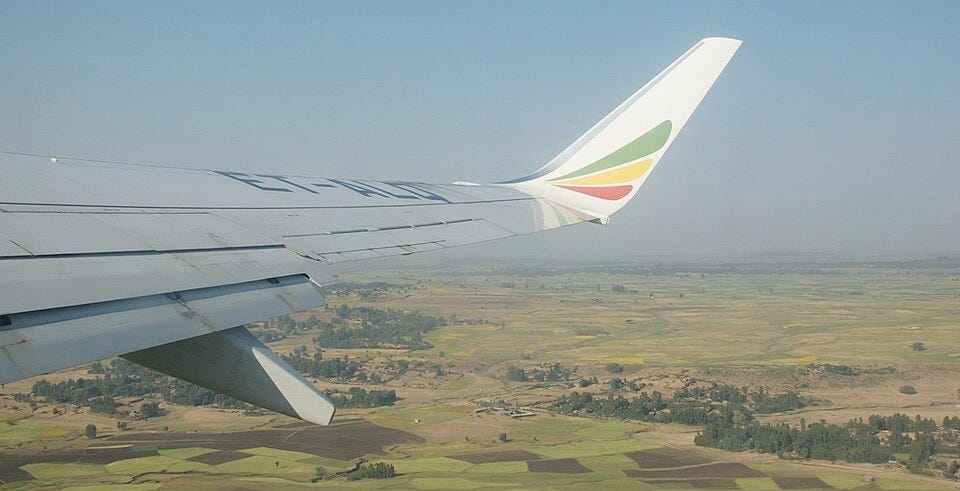
As a low-income nation in the Horn of Africa, recovering from a civil conflict that ended in late 2022, with a GDP per capita of around $1,200, Ethiopia doesn’t seem like the kind of country that would feature in a sustainable aviation fuel (SAF) roadmap.
But once you look at what the country actually has to offer, a different picture emerges.
First of all, Ethiopia is weaning itself off imported fossil fuels and concentrating on energy security. The import of new petrol and diesel vehicles has been banned, and over 115,000 electric vehicles are registered. At the same time, the Grand Ethiopian Renaissance Dam, Africa’s largest hydropower project, is coming online, delivering surplus renewable electricity.
The government has also been laying groundwork in road transport. Since 2008, Ethiopia has pursued an ethanol blending policy, which involves mixing home-grown ethanol into petrol to replace costly imports.
What started as a cautious E5 blend (5% ethanol) has been stepped up toward E10 and eventually E20 (10% and 20% ethanol respectively). The idea is straightforward: use Ethiopia’s existing sugar industry and, increasingly, cassava to produce domestic fuel rather than spending scarce foreign currency on imported gasoline.
Now a UK-based developer with extensive experience of working in Africa, Sunbird, wants to apply the same principle to aviation by taking an agricultural crop, fermenting it to alcohol and turning that alcohol into SAF.
Ethiopian Airlines, the largest carrier on the continent, is a consortium partner. The country’s sovereign wealth fund, Ethiopian Investment Holdings, is participating. The World Bank conducted a feasibility study in 2024 that specifically identified the AtJ pathway as the optimal SAF technology for the country. And the Roundtable on Sustainable Biomaterials (RSB) has published a national biofuel strategy.
In short: Ethiopia has the policy framework, the energy surplus, the anchor airline, the institutional backing, and the agricultural land. Now it needs the fuel.
That’s where Richard Bennett comes in.
Thirteen years building bioenergy in Africa
Richard Bennett is the founder and CEO of Sunbird Group. He’s been doing this across Africa for 13 years, which makes him one of the longest-standing operators in an African bioenergy space that people in the aviation industry are only now discovering.
His path to Africa was accidental. Working in tech and cleantech, Bennett had partnered with China New Energy, one of the largest developers of renewable fuel technology in Southeast Asia, with around 200 plants. When they tried to take that technology into Africa, they hit a fundamental problem.
“What we found when we got there is, unlike in Southeast Asia, there’s no agricultural feedstock supply chains actually in place,” Bennett says. “That then gave birth to Sunbird. In order to sell plants and develop projects, we needed to look at fully integrated feedstock-to-liquid-fuel projects, the whole value chain.”
The pitch to governments was direct: you have underutilised land, you want jobs, you want energy security. “You work with us on large-scale projects, you become a stakeholder with the land assets and the people assets, we’ll be the technical development stakeholder,” Bennett explains.
Today, Sunbird operates a sugarcane-to-bioethanol project in Sierra Leone, acquired from Swiss oil company Addax Norix. The asset includes a 22,000-hectare agricultural estate, a 60-million-litre bioethanol distillery, and a 32 MW biomass power plant. In Zambia, the company has developed a cassava-to-ethanol project designed to supply 20% of the country’s transport fuel through an E20 blend, with a 10,000-hectare estate and a 120-million-litre biorefinery.
The model Bennett has built around these real, operational assets is now being applied to Ethiopia, at a significantly larger scale.
The Ethiopia project
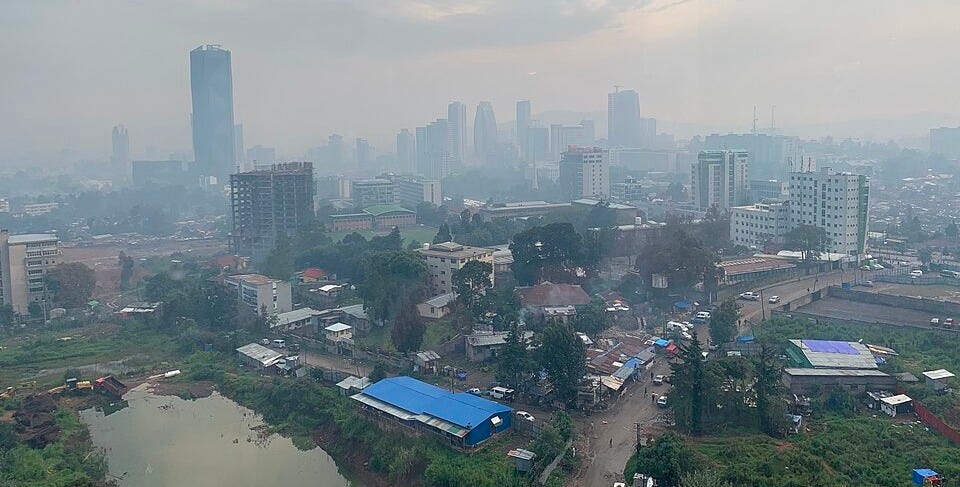
An MOU was signed in October 2025, with the initial partnership involving Sunbird and the Ethiopian Mining Corporation, a state-owned enterprise that provides industrial expertise and infrastructure. Bennett says the broader consortium also involves key government ministries, Ethiopian Airlines, and Ethiopian Investment Holdings, the sovereign wealth fund.
Bennett describes the Ethiopian government as “really future-minded around the green economy. They understand the problem. They’re a fuel importer, they’ve got great underutilised agricultural land resources, and a population they aim to move beyond subsistence farming. Agri-energy is a very good proposition for them.”
The project is phased deliberately:
Phase one targets 60-70 million litres of bioethanol, with a two-year timeline to first production.
Phase two upgrades to SAF via the alcohol-to-jet pathway, two to three years after that.
Why ATJ? Bennett explains that it carries a built-in hedge that some other SAF pathways lack. “What we liked about the alcohol-to-jet pathway is we could get halfway and we’ve still got a commodity that we can sell,” he says. “Whereas if we go in on the HEFA process, you live or die by the SAF market.”
This matters when it comes to project financing. A phased approach where the first investment generates revenue from bioethanol, which is an established commodity, before the second phase requires the larger capital commitment for SAF conversion, is a fundamentally different risk profile from a single-stage direct-to-SAF megaproject.
The feedstock that’s hardly talked about
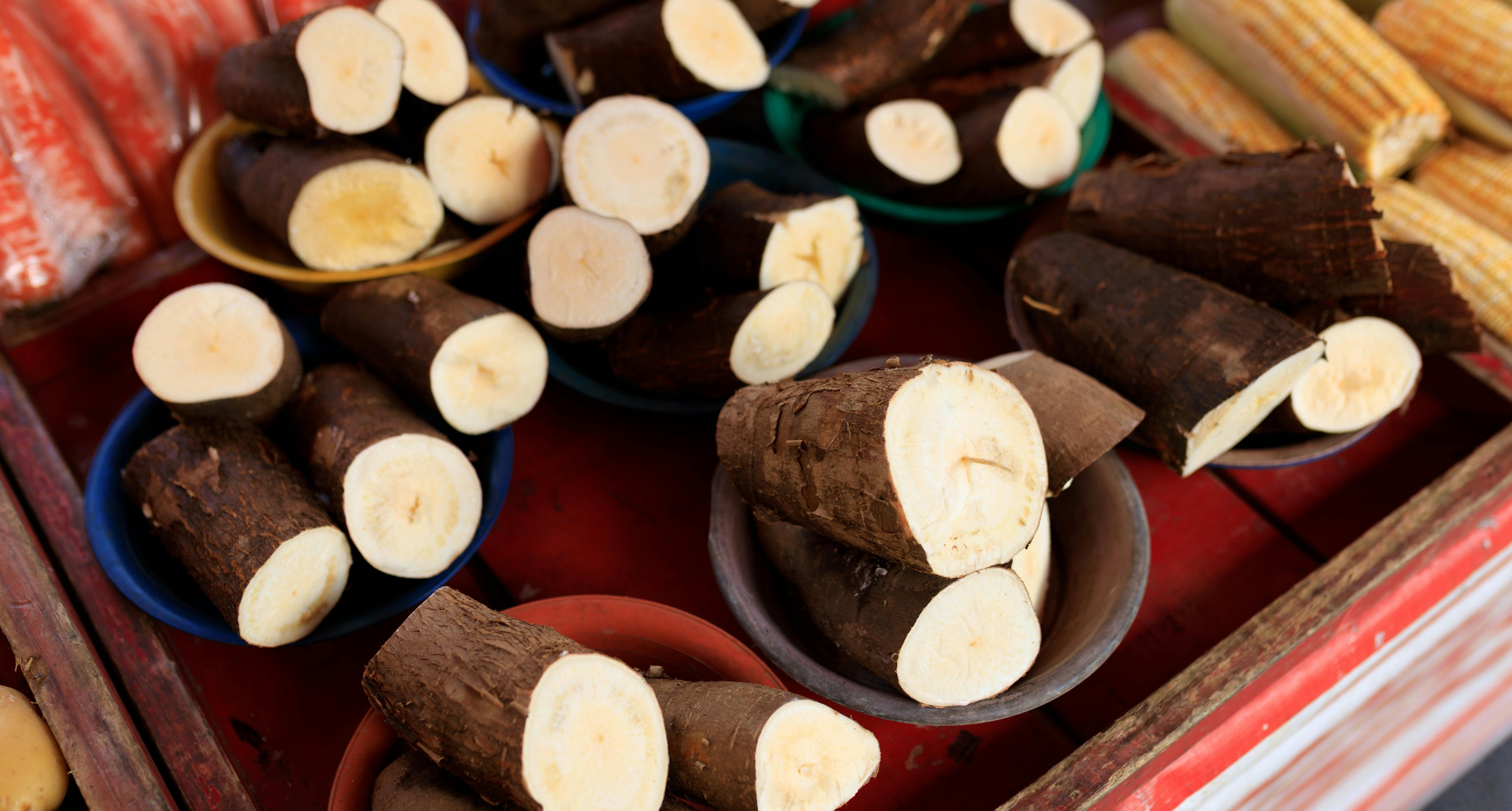


The core feedstock is cassava, a starchy root crop grown across the tropics. Though in much of Africa it’s a food staple, in Ethiopia itself it’s classified as an industrial crop as it isn’t part of the national diet. That means scaling up cassava production for fuel doesn’t compete with food security, which has been a criticism of previous African biofuel ventures.
And unlike sugarcane, which rewards scale and typically requires plantation-style agriculture, cassava is a smallholder crop.
Bennett explains why that matters: “When you’re growing cassava, as opposed to something like sugarcane or maize, it really lends itself to the small community outgrower programmes. If you’re a one-family plot where you have a couple of hectares, you can put one hectare to use growing for us.”
That produces a model where thousands of smallholder farmers grow feedstock and earn income, without being displaced from their land or absorbed into a plantation. In Zambia, Sunbird’s programme is designed to create over 20,000 economic opportunities for small-scale farmers. The Ethiopia project would operate on a similar basis.
For development finance institutions evaluating whether to back a project like this, the cassava model checks boxes that other feedstock choices don’t.
It creates broad-based rural employment rather than a few hundred plant jobs.
It avoids the food-versus-fuel conflict.
It builds agricultural supply chains in regions that need them.
And it generates multiple revenue streams: the ethanol itself, high-protein animal feed from processing co-products (relevant because both Ethiopia and Zambia are targeting significant expansion of their cattle herds), renewable electricity from biomass waste, and clean cooking fuel.
Bennett frames the broader pitch to development lenders as this: “This is not a biofuel project that’s going to attract loads of negative press. This is a genuine agri-energy platform that’s got multiple outputs: the fuel, the food systems going alongside it, renewable power. You’ve created a cluster, a development effect for what’s going on around the projects as well.”
The price advantage
Bennett estimates that ATJ-produced fuel from Ethiopian cassava would currently price at around 2.5 times the cost of conventional jet fuel, before the latest round of Gulf tensions pushed fossil fuel prices higher still.
At that price point, it would undercut HEFA, which the latest EASA figures show as commanding a 3x premium over Jet A-1 before any additional incentives or carbon pricing.
But if African ATJ can deliver at the lower end of the SAF cost spectrum, how does that fuel reach the airlines that need it?
Bennett sees three routes:
First, domestic political will, where the Ethiopian government pays a premium because the project creates agricultural jobs and reduces fuel import dependence. Ethiopian Airlines would then voluntarily uplift SAF.
Second, physical export to Europe. The shipping route from Ethiopia through the Suez Canal to Southern Europe is well established.
Third, and potentially most transformative: book-and-claim.
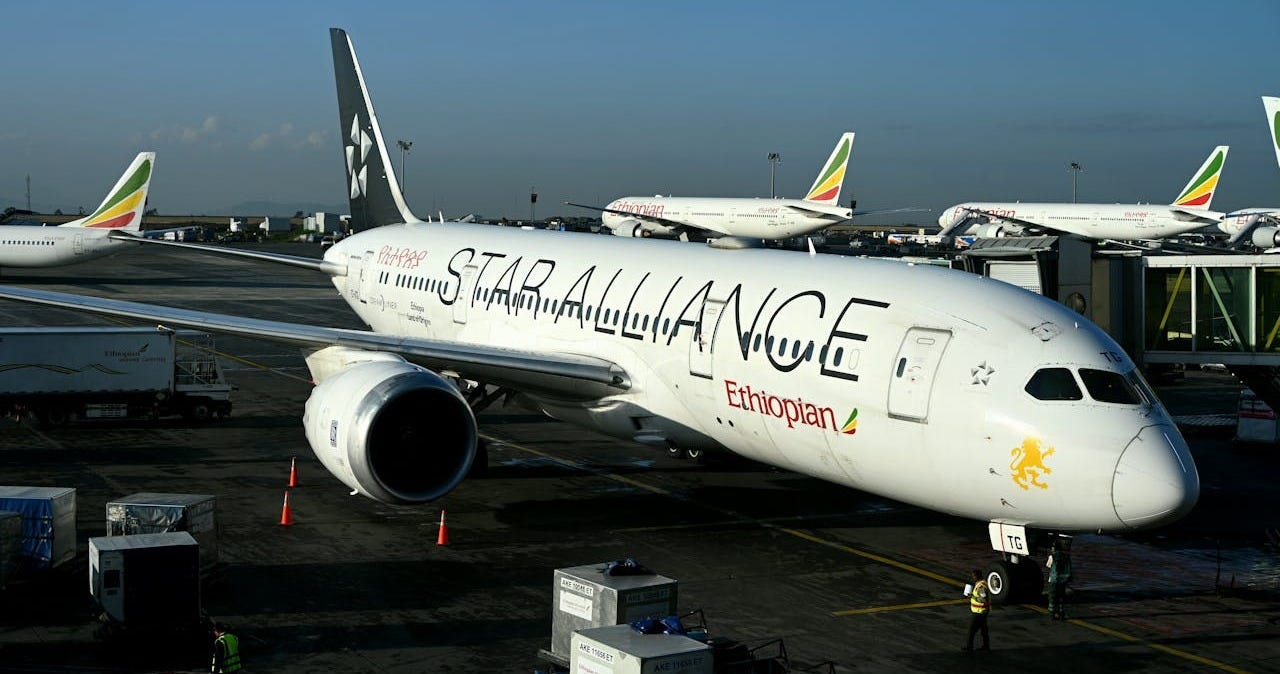
Under this mechanism, the physical fuel is used in Ethiopia at Ethiopian Airlines’ Addis Ababa hub, while the environmental attributes are sold as certificates to European or UK airlines facing blending mandates. If a carrier in Frankfurt can meet its mandate obligation by purchasing a certificate from SAF produced in Addis Ababa, and that SAF costs less to produce than European alternatives, then the mandates themselves become the market that connects African production to European demand.
The Spohr question revisited
In 2023, Lufthansa CEO Carsten Spohr argued that SAF production would inevitably migrate away from Europe, in the same way that Jet A is currently imported into the continent. But his bet was on e-fuels from green hydrogen, not agriculture.
For Africa, Bennett argues the agricultural pathway is the one that actually works: it creates thousands of livelihoods rather than a few hundred plant jobs, it produces bioethanol as a fallback product with real domestic demand if SAF offtake is slow, and it can be built in two years with proven technology.
At scale, Bennett envisions something closer to a national fuel ecosystem than a single megaproject. Multiple regional ethanol sites, each producing 50 to 100 million litres from cassava or molasses, would feed into a single large ATJ conversion plant near the airport.
“Just have regional ethanol production, and then have one super SAF plant that takes all the bioethanol and upscales it to SAF closer to the airport,” he explains. “It becomes more of a regional collaboration rather than a single company trying to develop a project.”
Bennett sees the model as replicable across Nigeria, South Africa, and Kenya. “The strategy for Sunbird is really to get one or two projects up and running, and then use that as an investment platform to attract wider investment into the African industry.”
The honest risks
Ethiopia is not a straightforward operating environment. The Tigray conflict ended only in late 2022. The sugar sector reform that’s supposed to free up processing capacity has been slow.
And Bennett himself describes a cautionary tale in unintended consequences:
When the Ethiopian government imposed tariffs on imported alcohol, the country’s sugar companies pivoted. As he puts it: “The sugar companies were all producing ethanol for the transport industry. And then they went and put a very big import tariff on importing alcohol. So suddenly all the sugar companies started selling it as a beverage, rather than as fuel.” The result was less ethanol reaching the fuel market, creating the very deficit Sunbird is now trying to fill.
Then there is the question of mandates. Ethiopia has an E10/E20 policy on paper, but policy and enforcement are different things. Government priorities can shift.
Finally, book-and-claim, while conceptually powerful, is not yet operational for African-produced SAF. The regulatory frameworks in the EU and UK are still being finalised, meaning this route to market for now remains hypothetical.
Why this matters beyond Africa
The assumption until now has been that that SAF production will concentrate near demand: European refineries serving European mandates, US facilities serving US tax credits.
But the economics point in a different direction. Feedstock costs, labour costs, energy costs, and construction costs are all significantly lower across the Global South than in Europe or North America.
If the logistics and regulatory mechanisms can be made to work, then a cassava field in Ethiopia could end up producing the fuel that helps a European airline meet its regulatory obligations, while creating jobs in one of the world’s lowest-income countries.
Will it work? That depends on execution, on whether the international regulatory architecture evolves and most crucially, financing. But the components are there. And it’s another example of how the future geography of SAF production could end up looking different from what the industry currently expects.