

#Sustainability20: India updates jet fuel regulations to allow for SAF blending & more
Weekly Round-up - 24/04/26

Each Friday, we publish a round-up of the 20 most important stories on sustainable aviation. You can see previous editions of #Sustainability20 here.
Industry Updates
The Indian government has amended its aviation fuel regulations to permit SAF blending, introducing targets of 1% by 2027, rising to 5% by 2030 for international flights.
The European Union has promised guidance for airlines on managing fuel shortages caused by the Iran war, though no widespread cancellations have yet been reported.
Delta Air Lines has reframed its 2050 net-zero target as an “aspiration” on its website, though a spokesperson insists it remains committed to 10% SAF usage by 2030.
Carbonfuture signs multi-year agreement with Boeing to supply carbon removal credits - GreenAir News
Boeing has signed a multi-year agreement with Carbonfuture for at least 40,000 tonnes of carbon removals, sourced from biochar projects across the Global South.
CLIMATE WATCH: Clean energy generation exceeded rise in global electricity demand in 2025 - The Guardian
All of last year’s growth in global electricity demand has been met by renewable sources, with fossil fuel generation remaining flat, according to new research.
Infrastructure and operational efficiencies
Airports including Vancouver, Munich, Pittsburgh and Edmonton have accelerated sustainability through partnerships, with YVR targeting net-zero emissions by 2030 and zero waste by 2040.
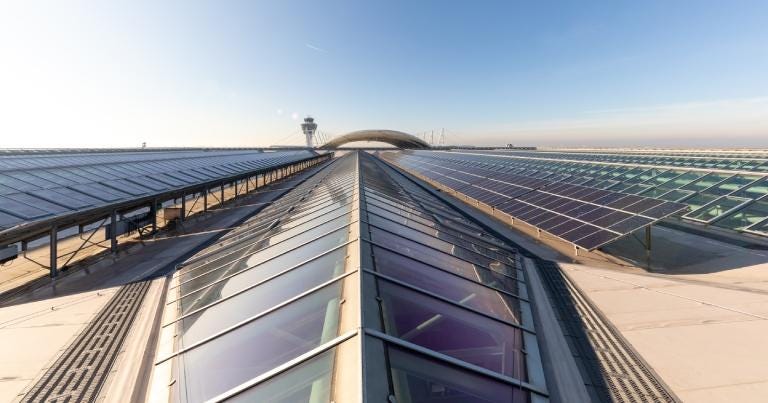
ITA Airways has used SITA’s AI-based climb optimisation to achieve substantial fuel savings, with over 7,100 tonnes of fuel and 22,100 tonnes of CO2 to be saved across 2025 and 2026.
Sustainable Aviation Fuel (SAF)
The US EPA has approved Summit Next Gen’s fuel pathway to produce renewable diesel and SAF from undenatured sugarcane ethanol at its Texas facility.
Shanghai Electric has achieved a world-first by producing 100% SAF from waste oils and fats that can be used directly in aircraft engines without blending.
Southern Energy Renewables has signed an MOU with Axens to collaborate on SAF development, starting with a Louisiana biomass facility, while also creating an experimental digital token.
Sasol has received German certification for its SAF produced from cooking oil, paving the way for exports to the European Union from South Africa.
XCF Global and DevvStream have agreed to explore an integrated platform to generate, verify and market 45Z clean fuel production credits for SAF.
DHL Group has expanded its SAF collaboration with IAG Cargo, enabling 240 million litres of SAF at Heathrow and reducing lifecycle emissions by 640,000 tonnes of CO2e.
New technology: Electric and Hydrogen
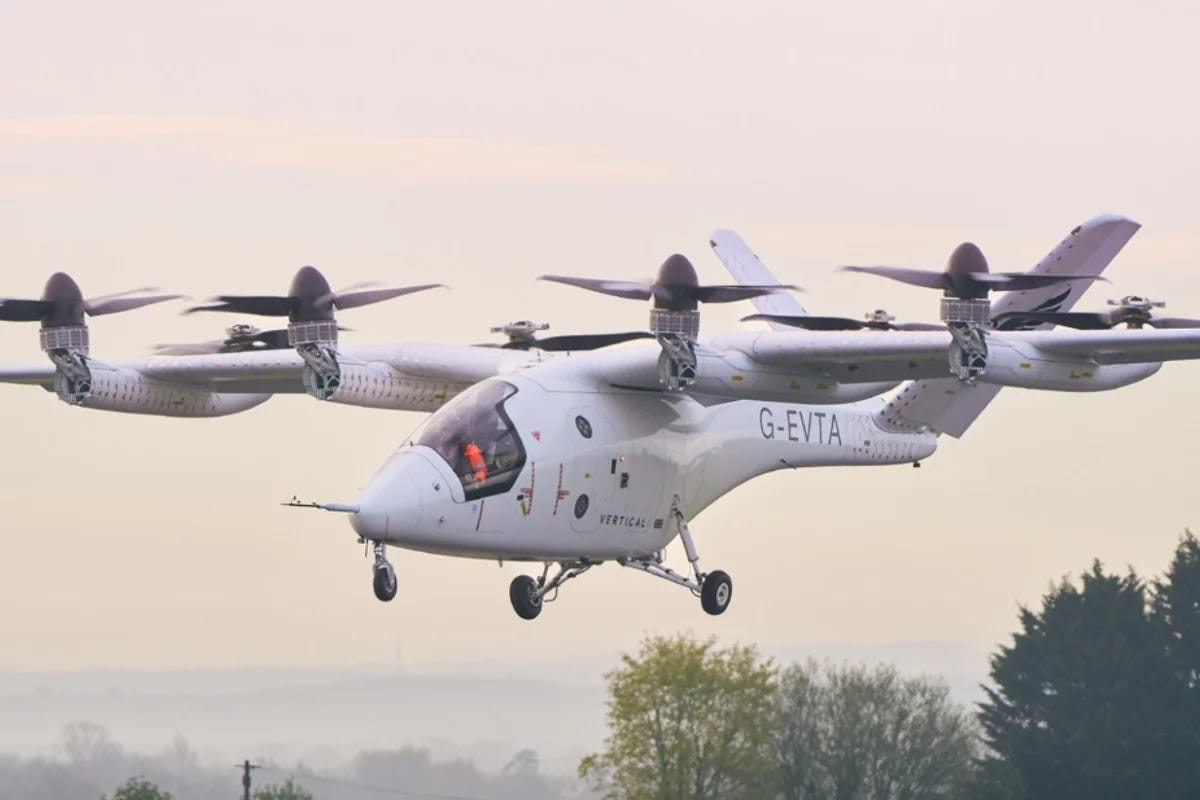
Vertical Aerospace has completed the world’s first full-scale piloted two-way eVTOL transition flight under civil aviation Design Organisation Approval oversight.
Smartflyer has received the first batch of Adagio battery modules from H55, enabling full system integration and testing for its SFX1 aircraft ahead of ground tests this summer.
Electron Aerospace has redesigned its all-electric E5 aircraft, removing the canard and switching to tractor propellers ahead of a prototype first flight targeted for 2027.
Bristow, Electra, Avinor and the Norwegian CAA have launched a second test project for zero-emission aviation, with hybrid-electric demonstrations planned from mid-2027.
Aura Aero has raised €50 million in Series A funding plus €120 million in subsidies, though first flight of its 19-seat hybrid-electric Era has slipped to “less than two years”.
A vertiport near Dubai International Airport has reached technical completion, with a planned capacity of 170,000 passengers annually and operations targeted before the end of 2026.
Rolls-Royce has patented a new hydrogen combustion system that uses a small amount of fuel to pre-heat the rest, solving key challenges around ultra-cold liquid hydrogen storage.
Vertical Aerospace has closed a financing package worth up to $850 million, providing fresh support for its Valo eVTOL program following a successful two-way transition flight.