

#Sustainability40: UK SAF prices jump over 60% as demand surges & more
Bi-weekly roundup - 28/11/25

This Friday, we’re publishing a round-up of the 40 most important sustainable aviation stories from the past two weeks. You can see previous editions of #Sustainability20 here.
Industry Updates
EASA and IATA have signed a Memorandum of Understanding (MoU) to explore synergies between the EU Flight Emissions Label and IATA’s EcoHub and CO₂ Connect tools, with the aim of achieving more consistent calculation and display of flight emissions for passengers.
A coalition of airlines and governments is urging world leaders to back a single global system for curbing aircraft emissions, warning that fragmented rules could undermine net-zero goals.
The UK’s sustainable aviation fuel (SAF) consumption is rising but remains below its 2% mandate, causing a late-year price surge as suppliers race to meet targets.
The head of the Association of Asia Pacific Airlines has said governments in the region are taking proactive steps to help airlines achieve a 5% SAF target by 2030.
The European Union and the United Arab Emirates have held a high-level session on SAF, underscoring growing international cooperation to cut aviation emissions.
Dubai Airports will unveil the world’s first Sustainability Showcase at the Dubai Airshow, featuring a full demonstration of a sustainable aircraft turnaround.
Boeing has signed a deal with Charm Industrial to remove up to 100,000 metric tons of carbon dioxide, marking its first major purchase of permanent carbon removals.
Air Tahiti Nui has implemented a comprehensive sustainability strategy, including a war on cabin waste and a voluntary carbon offset programme, to protect its island environment.
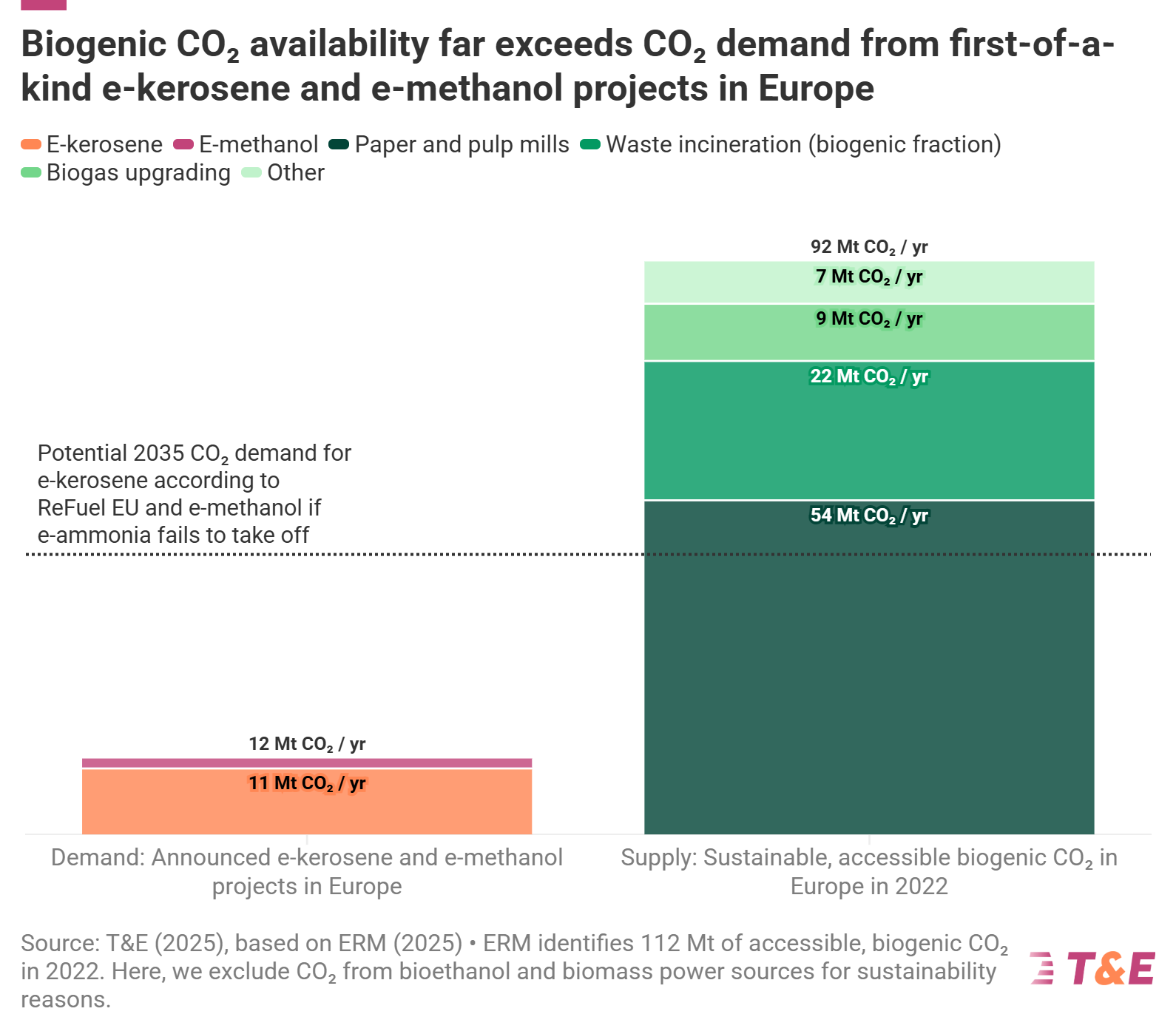
A new report warns that Europe’s supply of sustainable carbon for synthetic fuels is limited and will be contested by other industries needing carbon capture.
Lootah Biofuels and SimpliFlying have signed an MoU to strengthen collaboration on developing and promoting SAF globally.
CLIMATE WATCH: Zombie fires: how Arctic wildfires that come back to life are ravaging forests - The Guardian
Scientists report that “zombie fires” are becoming increasingly common in the far north, smouldering underground through winter and transforming fires into multi-year events.
Infrastructure and operational efficiencies
Heathrow Airport is using a digital Marginal Abatement Cost Curve tool to strategically prioritise its decarbonisation initiatives based on cost-effectiveness and carbon savings.
Amsterdam Schiphol Airport has announced a €10 billion investment plan to improve the passenger experience, enhance sustainability, and upgrade its facilities by 2035.
Dubai Airports has begun deploying an AI-based turnaround management system across all aircraft stands to enhance the coordination and efficiency of ground operations.
Korean Air will begin phasing out traditional meal containers from December, replacing them with plant-based alternatives made from agricultural waste.

Sustainable Aviation Fuel (SAF)
DHL Group has announced a major agreement with Phillips 66 for the purchase of over 240,000 metric tons of SAF for delivery to US airports.
Emirates and ENOC Group have signed an MoU to explore and develop joint initiatives for the supply of SAF in Dubai.
Masdar and Tadweer Group have partnered to develop a facility in Abu Dhabi that will convert waste into SAF.
China’s Unipec has signed a deal to supply Lufthansa with approximately 60,000 metric tons of jet fuel annually for its operations in Belgium and Germany.
Korean Air has partnered with Samsung E&A to develop a SAF production and supply chain, with an initial focus on the United States.
Malaysia’s minister has said the country’s first commercial production of SAF marks a major leap in its efforts to decarbonise aviation.
German start-up Greenlyte has launched a pilot plant that produces synthetic methane from captured atmospheric carbon and solar-powered green hydrogen.
Pacific Inter-Link has partnered with DHL Express to lower the carbon footprint of its shipments by using SAF through the GoGreen Plus programme.
Lufthansa Cargo and CEVA Logistics have formalised a SAF agreement, expected to reduce CO₂ emissions by 8,000 tonnes in 2025.
The carinata crop has delivered strong yields in its first commercial trials in Brazil, establishing it as a promising feedstock for SAF.
XCF Global has signed an MoU with BGN to explore a global partnership for the distribution of SAF and renewable diesel.
New technology: Electric and Hydrogen
Archer Aviation has signed an agreement with The Helicopter Company and Red Sea Global to prepare for eVTOL trials in Saudi Arabia.
ZeroAvia has signed an MoU with Hybrid Air Vehicles to develop a hydrogen-electric version of the Airlander 10 aircraft.
Beta Technologies has enlisted Near Earth Autonomy to help bring autonomous flight capabilities to its Alia family of electric and hybrid-electric aircraft.
ZeroAvia has received design organisation approval from the UK Civil Aviation Authority, a key step toward certifying its hydrogen-electric propulsion system.
Joby Aviation has completed the inaugural flight of its turbine-electric, autonomous vertical take-off and landing demonstrator aircraft.
German firm Hy2gen has obtained a site in Finland for a proposed 200MW plant to produce renewable hydrogen and synthetic fuels.
Skyports Infrastructure and Dubai’s RTA have reached a significant construction milestone for the world’s first commercial vertiport, which is on schedule for a 2026 opening.

Telecoms company Orange will help Climate Impulse map the safest route for a planned non-stop hydrogen-powered flight around the world.
Archer Aviation has agreed to acquire the master ground lease for Hawthorne Airport in Los Angeles to repurpose it as an air taxi network hub.
Pratt & Whitney has formally opened its European Technology and Innovation Center in the Netherlands, dedicated to researching advanced propulsion technologies.
Vertical Aerospace has been granted a Permit to Fly from the UK Civil Aviation Authority, authorising the final phase of flight testing for its VX4 eVTOL.
AutoFlight has unveiled the world’s first integrated sea-air solution for low-altitude mobility, combining a zero-carbon water vertiport with eVTOL aircraft.
India’s Sarla Aviation has signed an MoU to establish a 500-acre aerospace giga-campus for the manufacturing of electric vertical take-off and landing aircraft.
Honda is pursuing a hybrid-electric strategy for its eVTOL, betting that manufacturing scale and a longer range will trump the pure-electric strategies of rivals.
An Airbus executive has outlined the company’s position on climate measures, stating the sector needs global regulation and a realistic view of technology to reach net zero.