

#Sustainability40: IATA estimates 2026 SAF production at just 0.8% of jet fuel use & more
Weekly Round-up - 26/06/26

Each Friday, we publish a round-up of the 20 (sometimes 40) most important stories on sustainable aviation. You can see previous editions of #Sustainability20 here.
Industry Updates
IATA projects global SAF production will reach just 2.4M tonnes in 2026, comprising only 0.8% of jet fuel, despite a 26% increase, which its director general has called “still disappointing”.
The UK government has announced £219m in funding to boost domestic SAF production, alongside a call for evidence on its mandate requiring 10% sustainable jet fuel by 2030 and 22% by 2040.
SkyNRG’s report confirms SAF volumes doubled to 2Mt in 2025 as mandates drive demand, though it warns projected capacity faces fragility, with a critical need to diversify from HEFA technology before 2030.
The EU General Court has overturned the European Commission’s 2023 ruling excluding business aircraft manufacturing from the green taxonomy, finding the decision failed to adequately consider the sector’s specific characteristics.
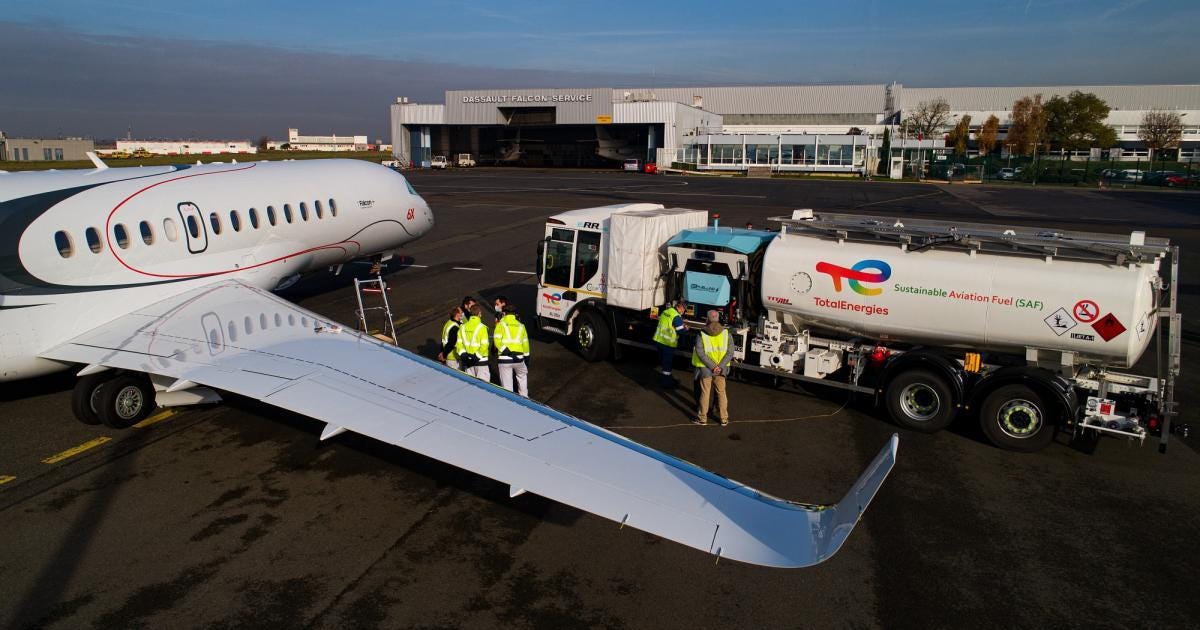
The GAO has found the FAA is certifying electric aircraft on a case-by-case basis, with manufacturers concerned about a lack of in-house expertise, while only 47 airports have planned charging infrastructure.
ACI EUROPE has reported that 328 airports across 38 countries have now committed to net zero, with 36 having already achieved the milestone, representing 83% of European passenger traffic.
The EU is considering extending its Emissions Trading System to cover intercontinental flights, though airlines have warned this would increase costs for passengers and businesses.
IATA has launched an alliance to boost CORSIA-eligible carbon credit supply, as only 38 million tonnes are currently available against estimated demand of 174.5 million tonnes for the first phase.
CLIMATE WATCH: European heatwave is worst ever and impossible without climate crisis, scientists say - The Guardian
Scientists from the World Weather Attribution consortium have found the record-breaking European heatwave would have been impossible without climate change, and is now the most severe ever to affect the region.
Infrastructure and operational efficiencies
iGA Istanbul Airport has announced it now sources 100% of its electricity from its Eskişehir solar plant, preventing 212,800 tonnes of CO2 annually and achieving a 27.8% reduction in Scope 1 and 2 emissions.
Sustainable Aviation Fuel (SAF)
Microsoft and Alaska Airlines have opened Twelve’s AirPlant One e-fuels facility in Washington, with Microsoft sourcing SAF to reduce business travel emissions through a book-and-claim system.
Allied Biofuels has signed a $6.1bn engineering agreement with Sinopec for a major Uzbekistan SAF and e-SAF complex expected to become Central Asia’s first large-scale integrated bio-aviation fuel facility.
Petrobras has completed the production and sale of the world’s first soy-based SAF batch carrying ISCC CORSIA PLUS Low-LUC Risk certification, produced via coprocessing at its Duque de Caxias refinery.
Syntholene Energy has opened an experimental e-fuel facility in Iceland, aiming to use geothermal energy and hydrogen to produce carbon-neutral fuels, with Icelandair expressing interest as an early customer.
South Korea has launched a 238bn won CCU mega project with LG Chem and POSCO to convert industrial CO2 into e-SAF and chemicals, which could replace 10% of aviation fuel demand by 2050.
Phelan Green Hydrogen has licensed Johnson Matthey’s technologies for its R47bn South African eSAF facility, which is expected to produce 35,000 tonnes annually and supply up to 6% of EU/UK mandated volumes.
Deutsche Aircraft and INERATEC demonstrated an integrated fuel-to-flight solution at ILA Berlin, combining the D328eco platform with containerised synthetic fuel production for remote operations.
Technip Energies, Airbus, Safran and Tereos have formed Rebound to develop a 160,000-tonne AtJ SAF facility at Dunkirk, covering the value chain from feedstock supply to aviation end-use.
American Airlines and Google have agreed a record 35-million-gallon SAF certificate deal over three years, enabled by Illinois’ new SAF tax credit and reducing emissions by nearly 300,000 metric tonnes.
KLM has operated a passenger flight to Hamburg using a 5% blend of synthetic e-SAF, though the airline has warned that availability still lags far behind European mandates.
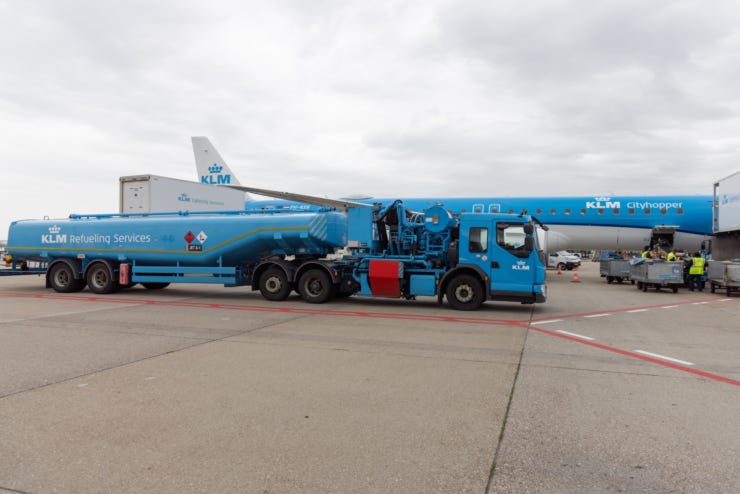
TruAlt Bioenergy has secured ₹150 crore in Indian government support for its 10-crore-litre SAF facility, helping meet India’s blending targets of 1% by 2027 and 5% by 2030.
EcoCeres has extended its SAF supply agreement with British Airways through 2030, reducing lifecycle emissions by approximately 198,000 metric tonnes compared with conventional jet fuel.
Groupe ADP has invested $20m in LanzaJet to boost SAF production, as part of its strategy to transform airports into energy hubs supplying electricity, SAF and low-carbon hydrogen.
MAIRE’s Nextchem has licensed its NX Circular technology to SUSTAERO for a Canadian SAF project converting forest residues into 144,000 tonnes annually from 2030.
Google Cloud has signed up to Kuehne+Nagel’s SAF programme covering 5.2m litres, reflecting the growing importance of decarbonising supply chains for the cloud infrastructure sector.
Honeywell will provide modular Ecofining technology for Acelen Renewables’ Brazilian biofuel refinery, which will use macaúba oil to produce SAF and renewable diesel.
Australia has launched a Green Fuels Accelerator supporting seven projects across three states to fast-track commercialisation of domestic low-carbon liquid fuel production.
Syzygy Plasmonics has signed a capacity reservation agreement with World Fuel Services for SAF production from its planned NovaSAF facilities in Central and South America.
XCF Global is advancing its 38-million-gallon Reno renewable fuel facility, initially producing renewable diesel with the capability to transition into SAF production as market conditions evolve.
New technology: Electric and Hydrogen
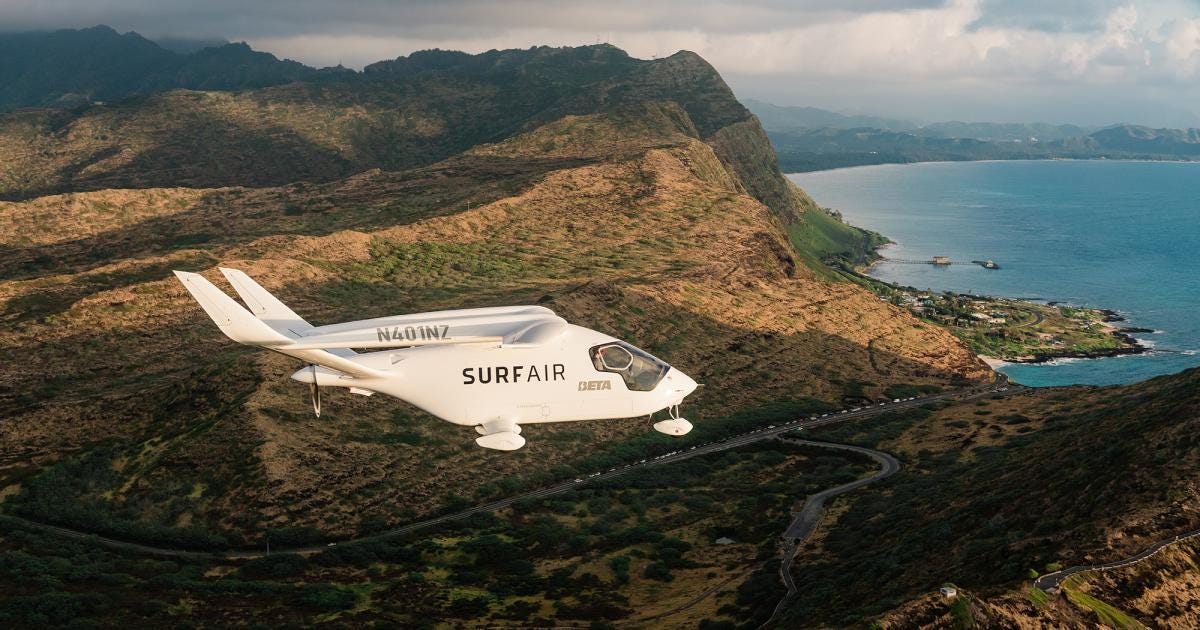
Beta Technologies and Surf Air Mobility have started flying the all-electric Alia CX300 across Hawaii to test battery-powered inter-island cargo and passenger operations.
Hong Kong has selected AutoFlight and EHang for regulatory sandbox trials of eVTOL aircraft, as part of efforts to establish regulations for the Greater Bay Area.
The UK CAA has opened applications for its Hydrogen Challenge, inviting industry and academia to test hydrogen technologies, airport infrastructure and AI for safe hydrogen adoption.
Florida-based test pilot Miguel Iturmendi has completed a test flight of the Helios Horizon electric aircraft using solid-state batteries, doubling range and achieving rapid charging.
Electra has designed a conceptual 100+ passenger turbo-electric aircraft under a NASA programme, potentially delivering a 17% efficiency improvement beyond 2050 projections.
Avio Aero and GE Aerospace have completed hydrogen combustion and fuel cell test milestones in Europe, advancing propulsion technologies for the CFM RISE programme.
Vertical Aerospace has begun flying its second full-scale Valo eVTOL prototype, following the completion of the first piloted bidirectional transition from helicopter to aeroplane mode.
AURA AERO has acquired VoltAero’s assets, gaining its hybrid-electric propulsion expertise and flight test data, as consolidation takes place in the French electric aviation sector.
Intelligent Energy has completed the H2GEAR hydrogen aviation programme, applying its fuel cell advances to commercial systems for eVTOL and sub-regional aircraft.
Horizon Aircraft is assembling its full-scale Cavorite X7 prototype, featuring stowable ducted fans for longer-range hybrid-electric flight at lower operating costs than helicopters.
Ecopetrol and GIZ have signed an agreement to develop feasibility studies for a synthetic fuels pilot plant in Cartagena, using green hydrogen to produce e-SAF.