

The most consequential ideas from Davos 2026 for aviation and beyond
While the aviation industry stayed home, the world’s leaders debated a future where AI pilots are inevitable, geopolitics disrupts travel, and “box-ticking” sustainability is officially over.

Note: This article is based on the on-the-ground insights of Shashank Nigam, CEO of SimpliFlying, who joined global leaders at the 2026 World Economic Forum Annual Meeting in Davos.
On the slushy, snowy promenade, in crowded meeting rooms, and over night caps, here are the best ideas I heard at the World Economic Forum in Davos in 2026.
Geopolitics cannot be ignored
Geopolitics froze Davos in its steps. Literally. On Wednesday, when US President Trump landed (late) at Davos, cellphone jammers prevented any communications and soon WiFi at many of the chalets was turned off. Even if you try to ignore geopolitics, you can’t.
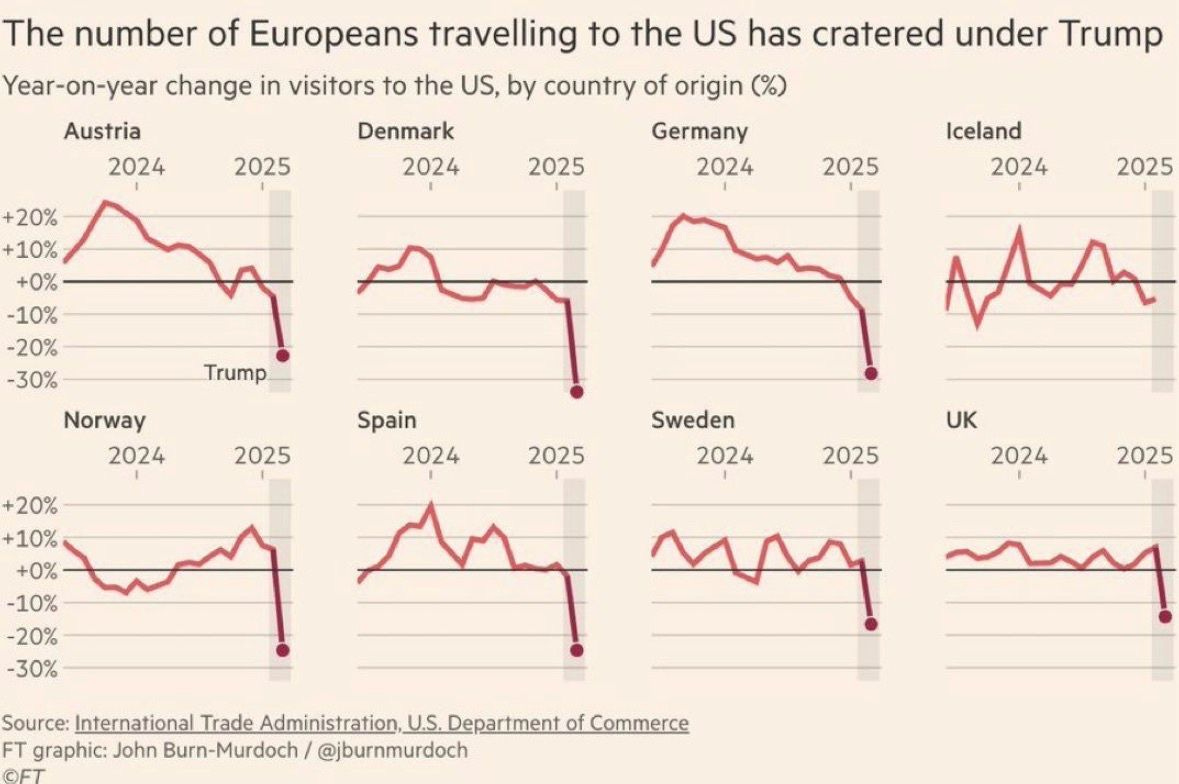
All industries are feeling the impact of the uncertainty in global geopolitics. Travel is especially sensitive. Already, we see the number of travellers to the US cratering, despite the slide in the USD. As a result, airlines will need to be creative. From Air Canada launching Sapporo from Vancouver, as opposed to a US destination, to United, Delta and British Airways focusing on premium travellers to drive margins instead of load factors.
Geopolitics will have a major impact on most businesses, over the next year.
Those that are agile will thrive.
“There will be more AI-powered robots than humans in a decade,” Elon Musk
A conversation with Elon Musk revealed lots of nuggets including his optimistic take on the AI-powered robots among us. This is not to say that there will be humanoid robots doing our laundry and dishes this decade, but he predicted a future where our jobs are heavily complemented by robots.
Applying this to aviation, you’re unlikely to see robots serving you drinks in-flight any time soon. But robotics is everywhere. From iris-scanning as your boarding pass to driverless electric tractors transporting bags across the tarmac.
I wouldn’t be surprised to see 2-3 AI-powered pilots in the cockpit to complement the human pilots on board in the next decade.
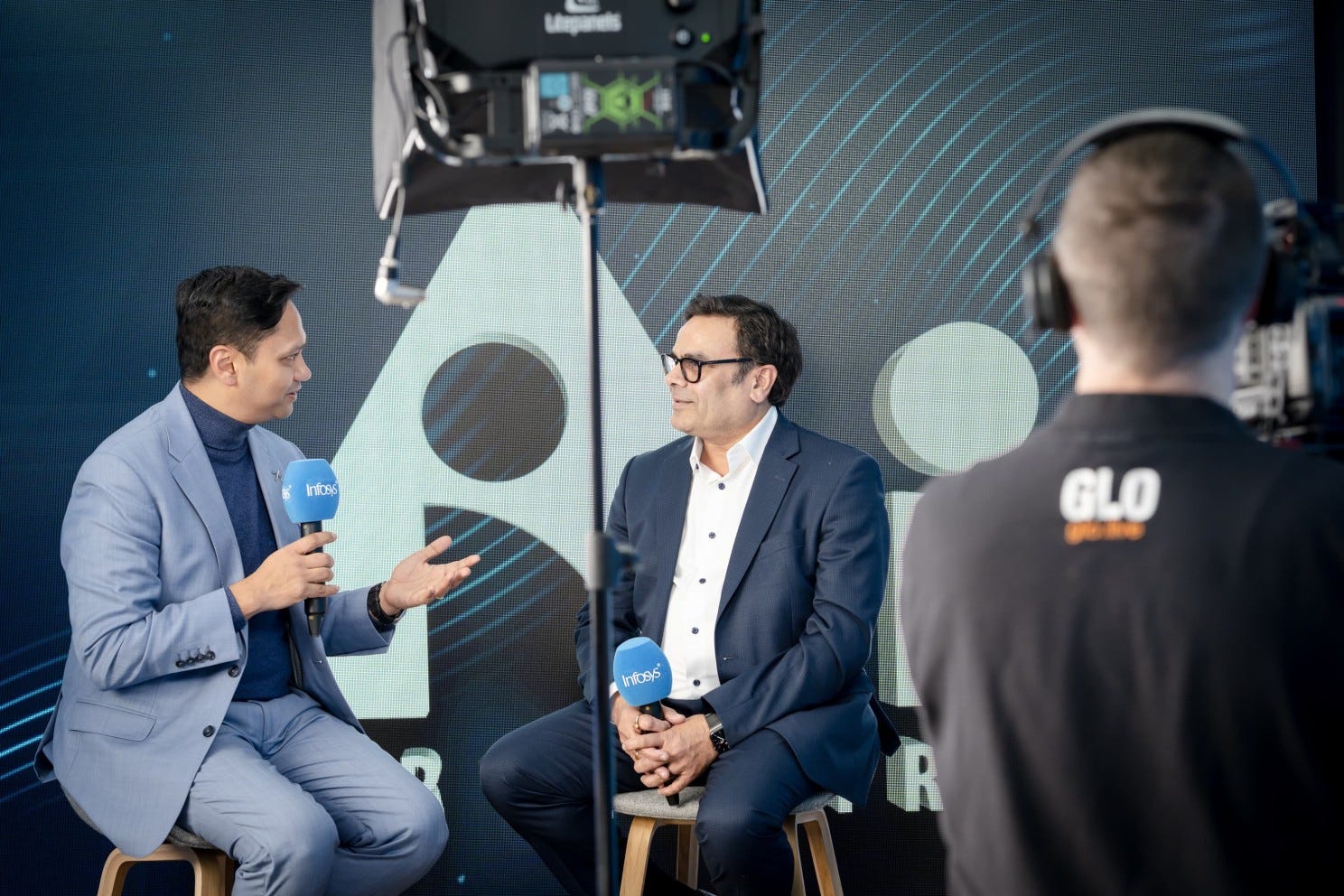
This was a point I made in my interview with Ashiss Dash at the Infosys chalet, on AI in Aviation.
On Sustainability: Economically better solutions will thrive
The CEO of TotalEnergies was on stage hoping that the ReFuel EU mandate would be lifted or diluted and he wouldn’t need to invest in SAF plants. While I wholly disagree with his approach that’s based on hope, he does have a point about green premiums. Airlines (or passengers) cannot foot the bill of sustainable aviation fuel (SAF) that’s two to five times the cost of jet fuel.
At the stunning Alpine stage outside the MIT Dome in Davos, I was asked, “What are the ideas with the biggest implications for aviation?” My reply was that ESG is out and AI is in.
By that, I meant that the focus on short term ESG compliance was not part of the discussions. Sustainability as “box ticking exercise” no longer exists. Sustainability will have to win on its economic merit.
While mission-driven founders often emphasise sustainability metrics, the market consistently rewards companies that lead with economic value propositions. In aviation’s capital-intensive ecosystem, environmental benefits must be accompanied by compelling unit economics.
“If you’re not at the table, you’re on the menu,” Canadian PM, Mark Carney
As a Canadian, listening to Mark Carney’s speech on Tuesday was exhilarating. It’s magical when a global leader is also a good orator. He encapsulated his speech by highlighting that “nostalgia is not a strategy“. He highlighted the importance of showing up to the discussions that matter and making your voice heard, no matter how small.
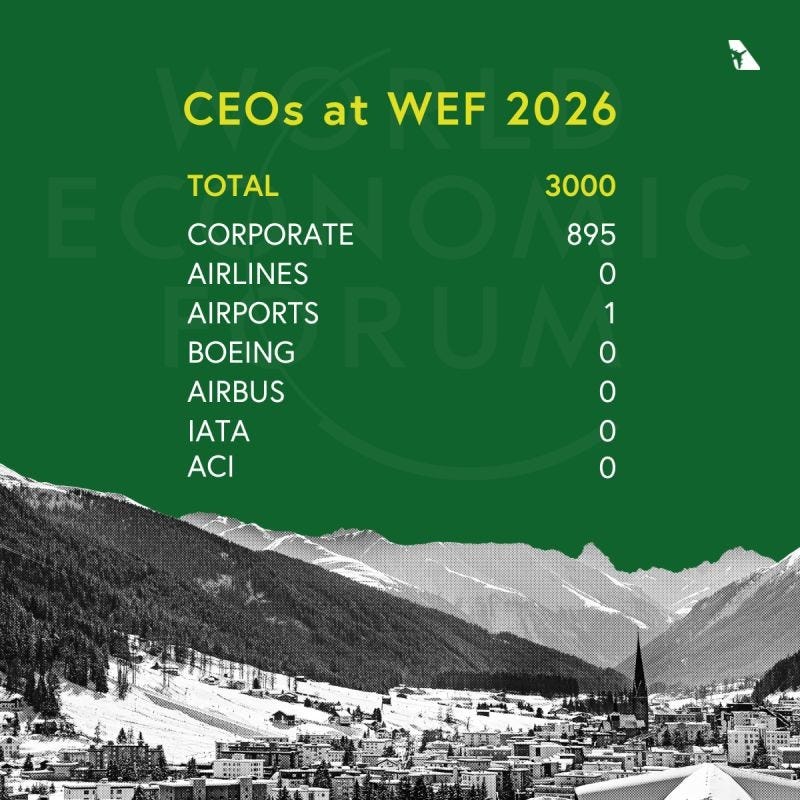
Applying his guidance to aviation, I observed that barely any airline or airport CEOs showed up to WEF this year. Nobody from Boeing or Airbus was in attendance. I met one airport CEO from South America and the CEO of Embraer was there. The leaders from our industry were not to be seen in the rooms where major policy and corporate decisions get made. I’m not sure why, but this needs to change. Here’s hoping that more leaders are at the table next year.
Other ideas worth noting
Davos is exhilarating because of the presence of very smart people who have their guards down (and have no bodyguards either!). Thanks to serendipitous meetings and getting pulled into rooms one had not planned to be in, one learns a lot. So here are a few other ideas I found to be important at the World Economic Forum in Davos 2026:
Demis Hassabis on why the AI shift is greater than the Industrial Revolution ⚙️🔗 https://lnkd.in/e7vV5zV6
Yuval Noah Harari and Max Tegmark on humanity and Artificial Intelligence 🧠🔗 https://lnkd.in/eg-EXEf9
Dario Amodei (of Anthropic) on AI: Power and Risk ⚖️🔗 https://lnkd.in/e9Vquy53
Scaling AI: Now comes the hard part 📈🔗 https://lnkd.in/eE3jab6p