

Why airlines believe it’s time to redirect ETS revenue back into SAF
Notes from a panel discussion moderated by Shashank Nigam, CEO of SimpliFlying, at the Sustainable Aviation Futures Congress in Amsterdam.

Europe’s airlines don’t want handouts. They simply want their money back.
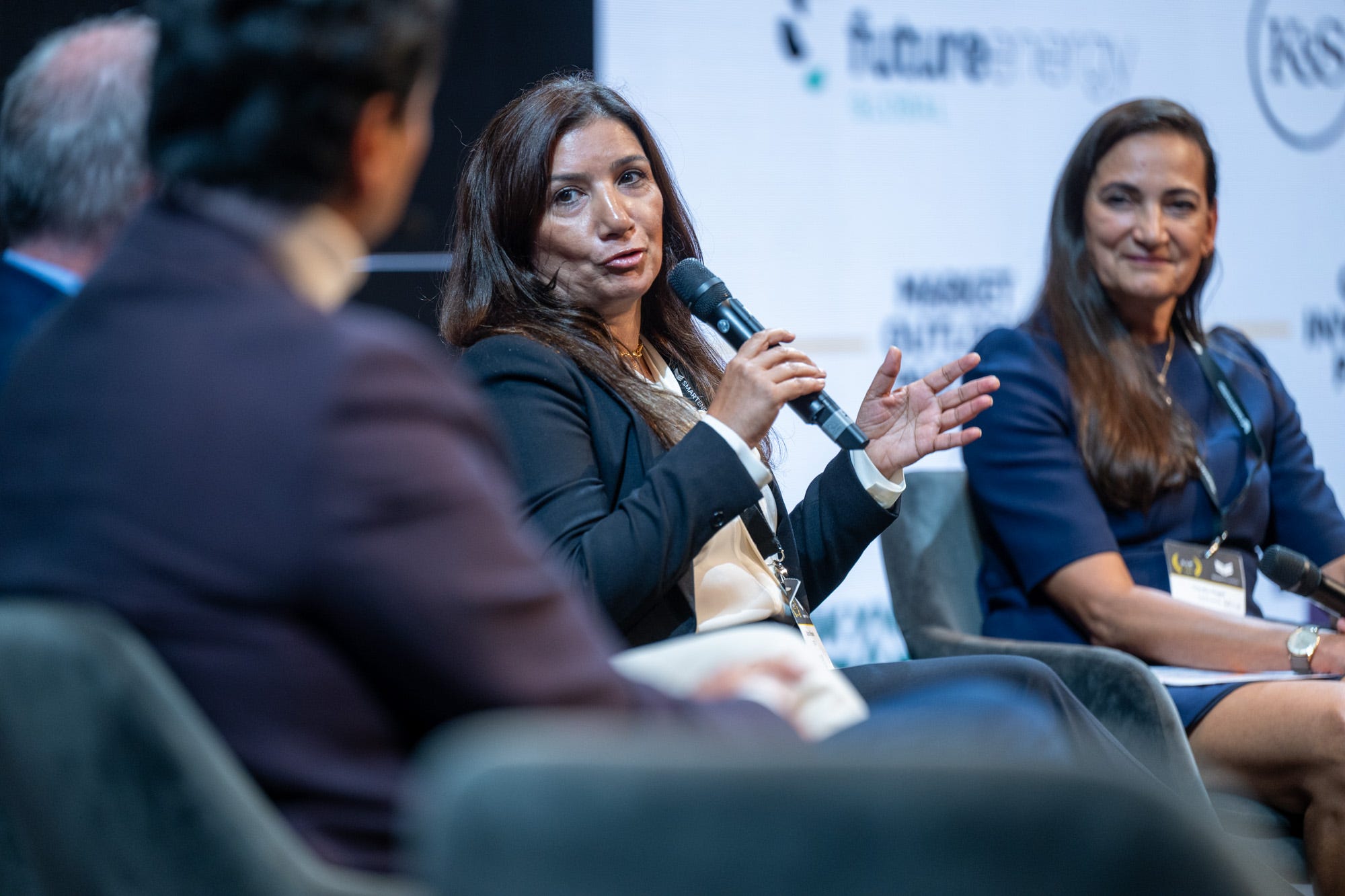
That was the message from a panel on balancing sustainability, financial stability and fuel efficiency at the Sustainable Aviation Futures Congress in Amsterdam, where SimpliFlying CEO Shashank Nigam brought together airline, technology and policy voices to see how the industry might be able to close the gap between SAF ambition and SAF action.
The most direct challenge came from Ourania Georgoutsakou, Managing Director of Airlines for Europe (A4E), the trade body representing 60 major European airline groups and roughly 80% of the continent’s air traffic.
Georgoutsakou argued that the authorities treat the EU Emissions Trading System (ETS) like a blanket tax, collecting billions from airlines and passengers with no transparency about where the money goes, and no obligation to channel it back into decarbonising aviation. As a result, ETS has become “a bank ATM for governments.”
Her proposed fix is simple: redirect national ETS revenue back into SAF offtakes and allow airlines to deduct their SAF costs from their ETS bill via extending SAF allowances.
“Imagine if airlines could reclaim all their ETS contributions back in SAF allowances,” she told the panel. Airlines could then sign offtake agreements that go beyond existing mandates, stimulating exactly the kind of demand signal that SAF producers say they need before scaling production.
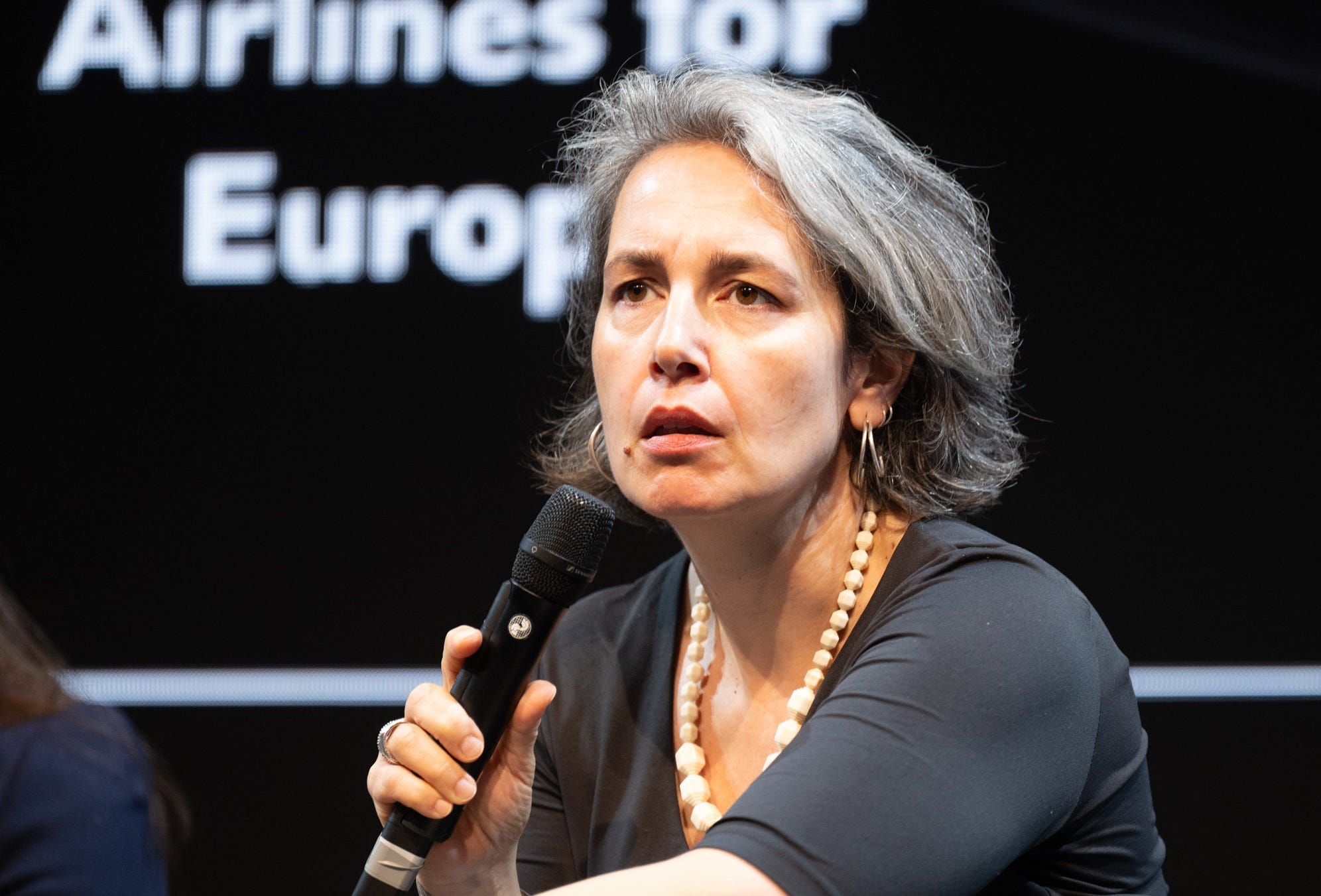
Georgoutsakou emphasised that we don’t need new money, we simply need to use the money that’s already in the system but currently disappearing into general government coffers. She was equally forceful on book-and-claim, the mechanism that allows airlines to claim the environmental benefits of SAF purchases regardless of where the physical fuel is uplifted.
Right now, airlines pay a SAF premium at airports where no SAF exists. “I pay that premium for the SAF, not for the geography that you just happen to be flying to,” she argued. Book-and-claim removes that geographical barrier, and she stressed that we needed to make book-and-claim work now. “It’s meant for today, not tomorrow,” she said. “In five years’ time, hopefully we have a functional market” where it’s no longer needed.
All of this leads to what she called the sector’s persistent chicken-and-egg problem: airlines won’t commit at today’s prices, producers won’t invest without demand certainty, and the whole system stalls.
The premium cost of reaching net zero, she noted, is an additional EUR 1.3 trillion between now and 2050. “Politicians need to put their money where their politics is,” she said. “It’s as simple as that.”
The demand signal that’s actually working
Meanwhile, even as the policy plumbing is still being built, Lufthansa Group offered evidence that passenger demand for greener options is real and growing.
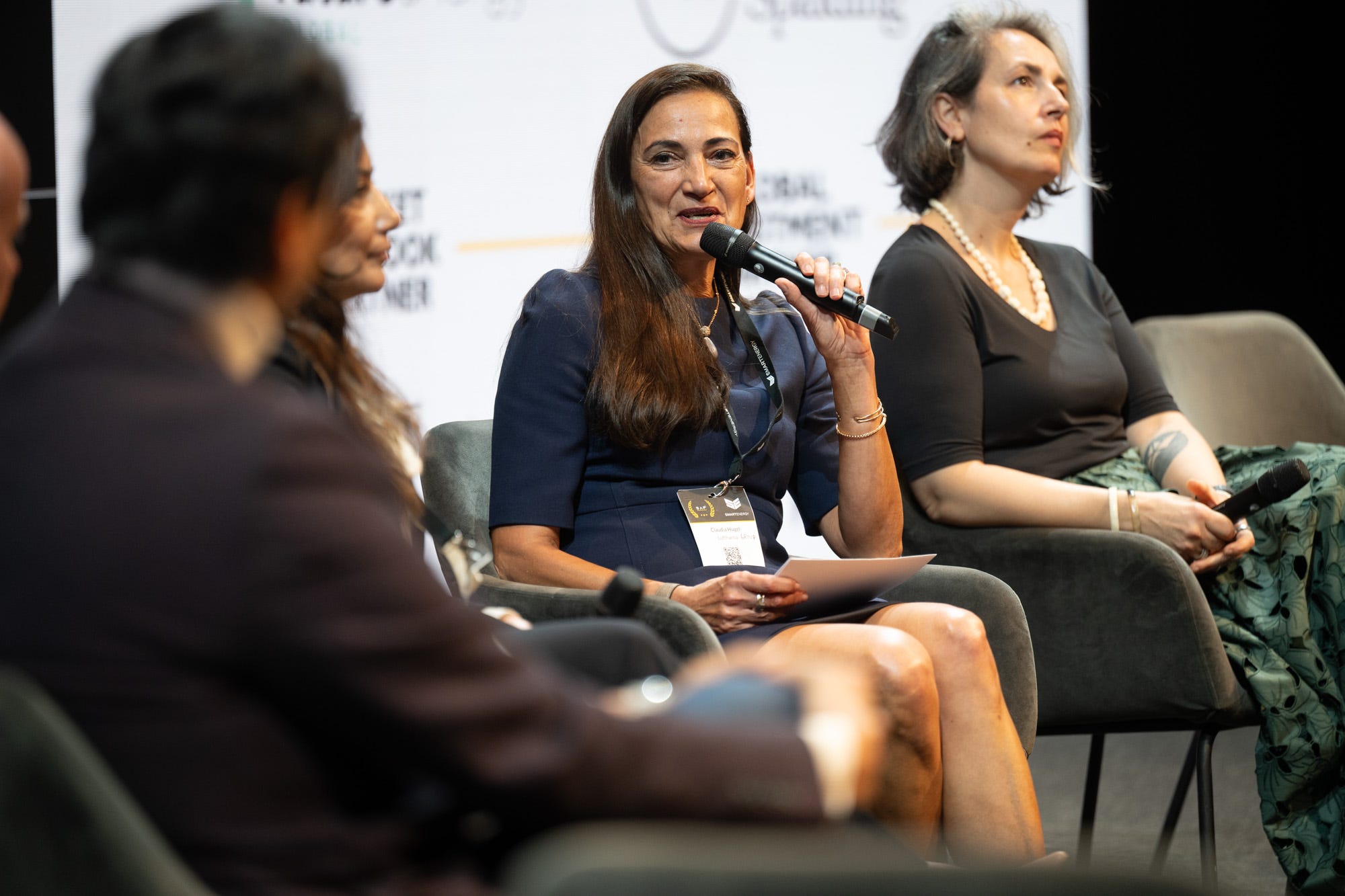
Claudia Huegel, the group’s Senior Director and Head of ESG Rating and Reporting, outlined the progress of Lufthansa’s “green fares”, a fare option available at booking where passengers pay a small premium that funds a combination of SAF purchases and climate projects.
The fares now see a 5% uptake rate, with “four million passengers choosing a more sustainable fare”, said Huegel, mentioning that the number is steadily increasing.
For context, Nigam noted that most airlines SimpliFlying has worked with see a maximum of 1% uptake on comparable products, making Lufthansa’s trajectory remarkable.
“Be patient,” Huegel advised. The success of Lufthansa’s project didn’t happen overnight. The group started with a pilot in Scandinavian markets in summer 2022, rolled the product out across European routes in February 2023, and extended it to intercontinental flights in 2024. Lufthansa’s Green products, which also include SAF bulk deals, are now available across leisure, corporate and cargo segments.
She was candid, too, about the naming challenge. Lufthansa still calls them “green fares,” but regulators have pushed for more granular disclosure, with the fare now carrying an explanation that it represents a contribution to future CO2 savings through a combination of SAF and climate projects, not a guarantee that SAF is on that specific flight. It’s a compromise between consumer clarity and marketing reality, but one that underlines how much regulatory pressure surrounds even the language of sustainability.
Huegel also surfaced a tension in the RefuelEU mandate. The regulation has driven SAF offtakes in Europe, she observed, but production is mostly happening elsewhere. “The production is happening in North America, probably Brazil, in China,” she said, with a significant part of supply currently sourced from outside the EU. “Was this the intention of the European Union?”
This prompted Nigam to frame the discussion further: the industry doesn’t just need sustainable aviation fuel. It needs sovereign aviation fuel, produced where the mandates apply.
Fleet renewal still the biggest lever
Both Huegel and Wizz Air’s Owain Jones emphasised that SAF, while essential, is not the only decarbonisation pathway airlines are pursuing today. For Lufthansa Group, fleet renewal remains the most significant lever through to 2030.
“Lower emissions is lower cost,” as Huegel put it, backed by €4.6 billion in aircraft investment last year and over 230 new aircraft on order. For Wizz Air, the shift to an all-A321neo fleet by the end of 2028 will deliver both cost efficiency and emissions reduction, alongside early-stage investments, for example in sewage to SAF company Firefly Green Fuels.

SITA’s Ashraf Hoseni added a practical dimension: the compliance infrastructure for managing SAF obligations is still painfully analogue, with airlines receiving documentation from multiple suppliers in inconsistent PDF formats.
Digital solutions and greater harmonisation across the value chain, she argued, would make it far easier for airlines, particularly smaller carriers without dedicated sustainability teams, to manage their obligations and scale their SAF procurement.
Our take
The conversation in Amsterdam pointed to an industry that is clear-eyed about the gap between political ambition and the financial mechanisms needed to deliver on it. The money exists, the demand signals are emerging, and the policy tools are understood.
All the ingredients are on the counter. What we now have to do is actually cook the dish.
And while much of this debate centres on Brussels, aviation is a global business. If RefuelEU is driving mandates in Europe while production scales in North America, Brazil and China, the conditions for a functional SAF market need to be global too.
The argument from airlines is that the longer governments leave those ingredients sitting there, the harder it becomes to convince anyone that the meal is ever coming.