

Why Yama Carbon's approach to DAC focuses on industrial discipline, not lab breakthroughs
The French startup is betting that the path to affordable Direct Air Capture lies not in novel sorbents, but in mastering the unglamorous industrial engineering everyone else ignores.

While many Direct Air Capture startups pitch new materials or novel chemistry, Aurélie Gonzalez is focused on steel and concrete.
Her Paris-based company, Yama Carbon, is developing a DAC system that is less focused on laboratory breakthroughs and more on industrial reality. Rather than relying on bespoke plants and custom equipment, Yama is attempting to make carbon capture more affordable by utilising mass-manufactured components and familiar industrial processes.
The challenge, she argues, is building systems that can last, rather than just reducing energy use.
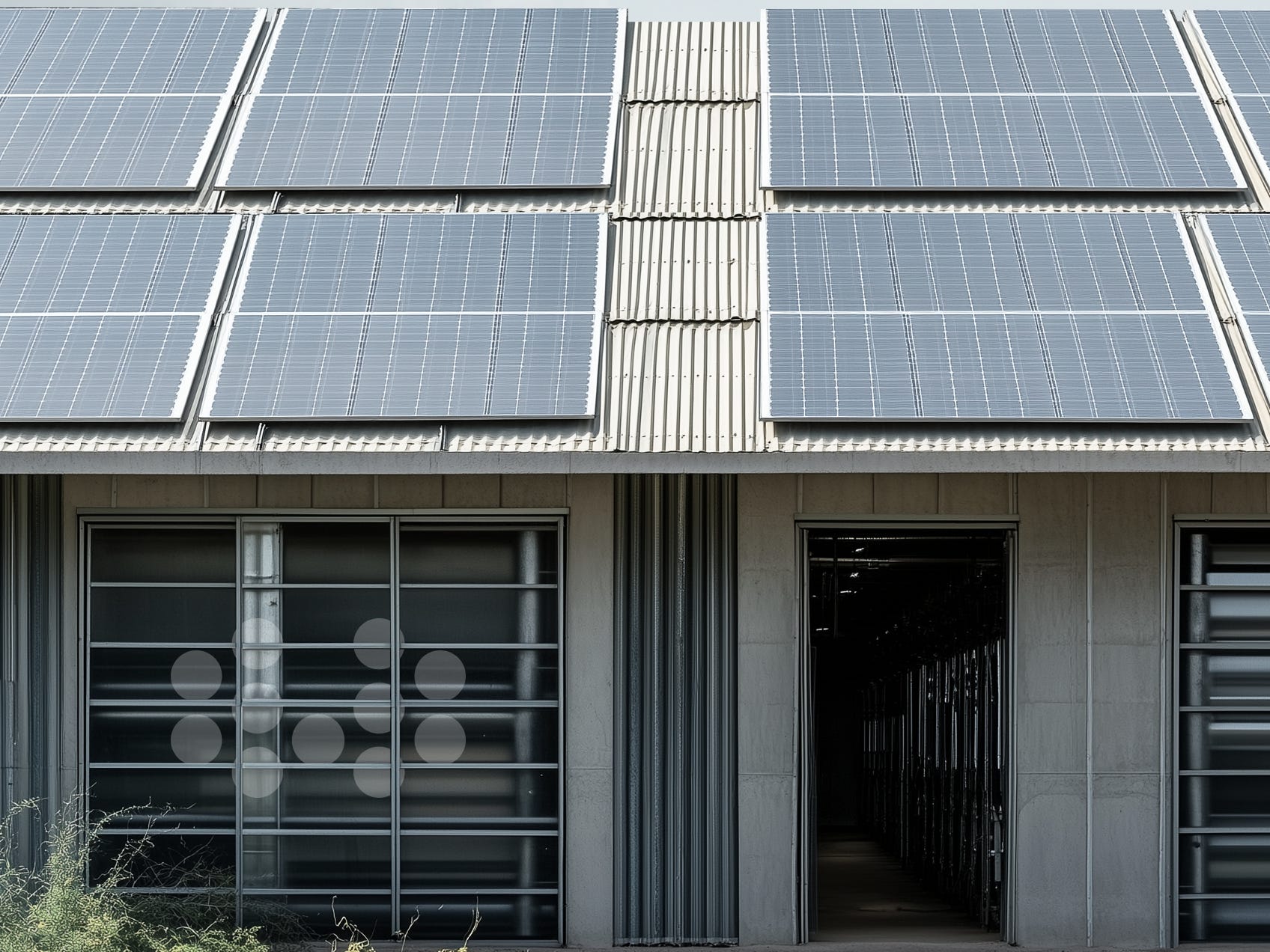
Yama employs an electrochemical approach to capture carbon dioxide, utilising a combination of pH changes and low-grade heat. Compared with many first-generation DAC systems, the process requires less thermal energy.
Gonzalez says the chemistry itself is not where most of the money goes. “Roughly 60 per cent of the cost is outside the process,” she said. “It’s everything you need to make the machine stand.” That includes buildings, foundations, steel structures, power electronics, fans, and access for maintenance.
In industry terms, it is the balance of plant, the part of large systems that rarely features in investor decks, but often dominates final costs.
Maintenance is a significant factor. Electrochemical systems rely on membranes, which degrade over time. Upfront cost matters less, Gonzalez argues, than how often those components need to be replaced. “It’s okay to pay upfront,” she said. “The problem is to replace.”
So, while many of the roughly 150 DAC startups focus on sorbents or capture chemistry, Yama has chosen to concentrate on the physical infrastructure that surrounds the process.
Yama’s underlying technology utilises electrodialysis, a method that has long been employed in water treatment and desalination. The company’s bet is that borrowing from mature industries reduces manufacturing risk and speeds deployment.
Dealing with energy use
Yama is currently operating a small pilot facility near Paris, capturing around 25 tonnes of CO₂ per year. Energy use remains one of the main criticisms of DAC.
Gonzalez said the pilot consumes less than 1,500 kilowatt-hours per tonne. In comparison, most commercial DAC systems today fall in the range of roughly 1,500 to 3,000 kilowatt-hours per tonne, according to a 2024 German study on large-scale deployment. This puts Yama on the low end of that scale.
Gonzalez is realistic about how much further those numbers can fall. Laboratory tests already have reached close to 1,000 kilowatt-hours per tonne, she said. “In terms of energy, you can improve,” she said. “But you can’t divide by 10.” The implication is clear: future cost reductions will come from engineering discipline, not energy miracles.
Scaling out, not packaging up
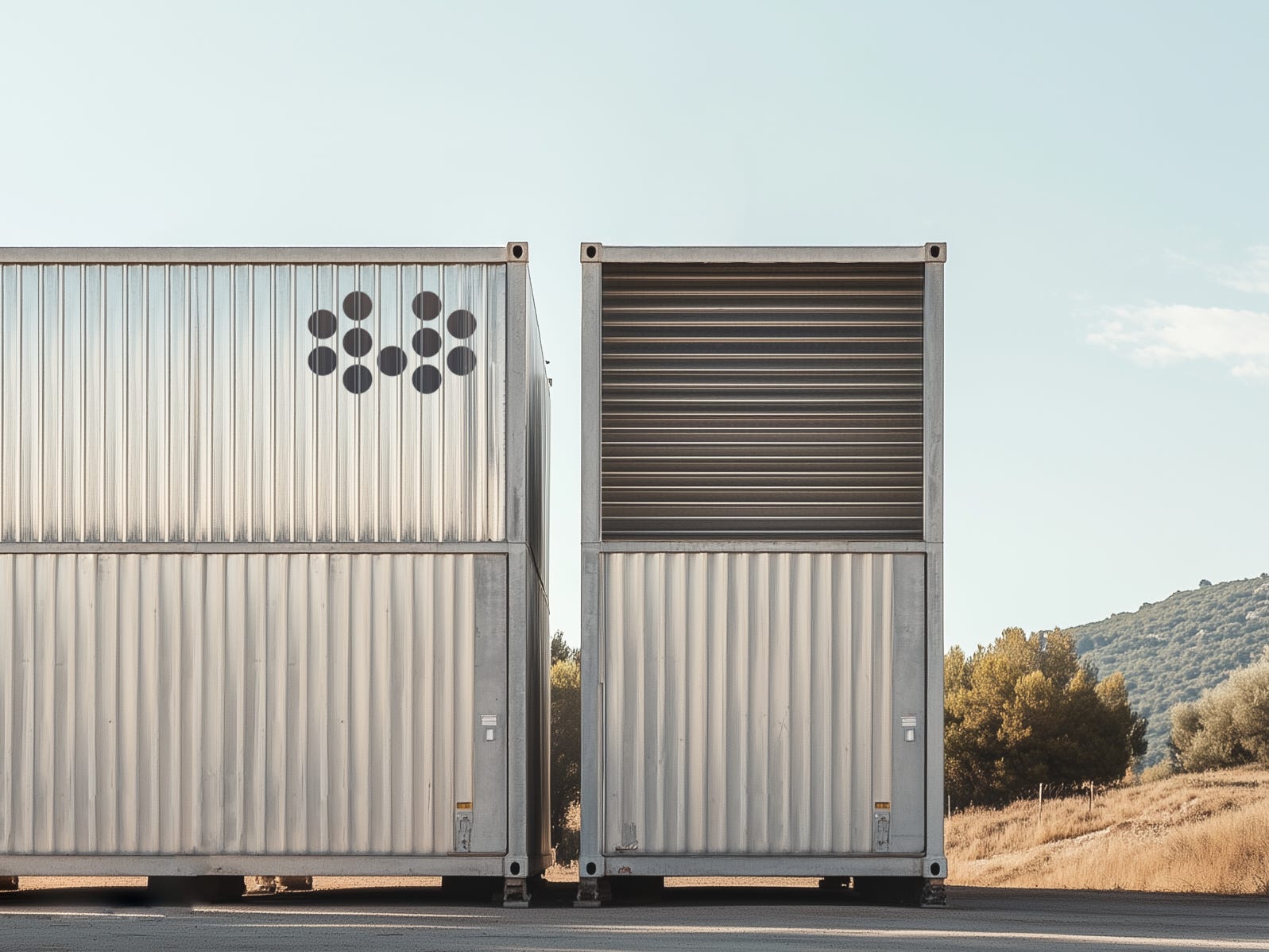
Like many newer DAC firms, Yama describes its system as modular. But Gonzalez draws a sharp distinction between modular equipment and fully containerised plants. Electrochemical membranes have size limits, which means larger facilities are built by duplicating stacks. That approach allows gradual scale-up.
But containerised units, she said, may be a transitional step rather than a permanent solution. “You don’t want to containerise everything,” Gonzalez said. At scale, buildings can be cheaper.
Her confidence draws on her previous experience in the heavy industry, including steel, cement, aluminium, and sugar, where cost curves have been reduced through engineering.
Yama’s approach is part of a broader reassessment among a new wave of European DAC startups. Paris-based Norma is focused on energy recovery. Dutch firm Carbyon emphasises fast capture rates. Belgian startup Sirona borrows manufacturing ideas from the electric-vehicle sector. Each is looking for alternatives to the large, bespoke facilities built by early DAC pioneers.
Potential for E-Fuels

Yama sees two early markets for its technology. One is the emerging carbon-removal credit market. The other is synthetic fuels for aviation and other sectors.
Producers of e-fuels need clean, reliable sources of CO₂. Early projects are expected to rely on biogenic sources; however, supply constraints may prompt developers to consider DAC as a means to secure long-term feedstock, especially as the EU E-Fuels sub-mandate for SAF takes effect after 2030.
“As a DAC company, you have to play on both markets,” Gonzalez said.
Yama plans to commission its first-of-a-kind commercial-scale plant around 2030, capturing roughly 50,000 tonnes of CO₂ per year.
Strategic deployment
Geography will play a significant role in determining where DAC plants get built. Gonzalez recently visited Japan, where she found strong interest from utilities and industrial companies in permanent carbon removal. But Japan itself, she noted, is unlikely to host large-scale DAC facilities. Instead, the focus there is on offtake agreements and investment rather than domestic deployment.
For actual plant locations, proximity to CO₂ storage sites matters. Yama is eyeing regions with access to geological sequestration, including the Nordic countries, Denmark, Canada, and potentially the Middle East. In Europe, shorter transport distances to North Sea storage could prove decisive.
Co-location with e-fuel producers presents another option, particularly as synthetic fuel mandates take effect. Rather than building standalone facilities and transporting CO₂, DAC units could be integrated directly with fuel production plants.
Answering the critics
Direct Air Capture remains controversial. Critics argue it diverts attention from emissions reduction, pointing to the involvement of fossil fuel companies in DAC projects. Others doubt whether DAC can ever be commercially viable due to its high cost and energy consumption.
Gonzalez does not dismiss critics’ concerns, but given that IPCC scenarios for 2050 account for an element of Carbon Dioxide Removal (CDR), she points out the limits of natural solutions. Nature-based removal currently delivers around two billion tonnes of CO₂ per year.
Expanding that further faces hard constraints. “You can try to continue with the forests, and you’re going to do 2.5 billion maybe,” she said. “But this is the limit.” To reach higher levels of removal, engineered solutions will be required. “We need to get to seven billion. What is the best technology which can get there? It’s chemistry.”
Financing the next step
Yama has raised approximately €4.5 million to date, through a combination of investments, grants, and European public funding. The next milestone is a 365-tonne-per-year demonstration plant, followed by a 5,000-tonne facility later in the decade. For that project, Gonzalez hopes to avoid heavy dilution.
“It shouldn’t be completely financed with dilutive money,” she said. The plan combines advance sales, debt and public support, a structure increasingly common among capital-intensive climate technologies.
By the mid-2030s, Gonzalez hopes Yama will be developing projects at the million-tonne scale. Though still a small share of global removal needs, it would still mark significant progress and scale.
For an industry often defined by laboratory claims, Yama’s focus on industrial execution stands out. Whether it works will become clear as its future plants come online.
For now, the company is building. In a field crowded with projections, that may be its clearest signal yet.