

Could Cameroon become Central Africa’s SAF gateway
A sugarcane-to-ethanol project in Cameroon illustrates both the promise and the complexity of building alternative fuel production in Africa.

⚡ In a nutshell
Cameroon has been identified by ICAO as one of seven strategic gateway countries for SAF development in Africa, with a national feasibility study now underway.
WESAF Energy Solutions is developing a vertically integrated sugarcane-to-ethanol project on 322 hectares, with SAF as its highest-value end market and a total capex of $38 million.
The project includes captive solar power and bagasse cogeneration. This is essential in a region where the electricity grid doesn’t reach the site.
A clean cooking programme using 5-10% of ethanol output, plus free surplus solar power for local schools and hospitals, could become a template for how SAF projects in Africa deliver local value to succeed.
Central thesis: Cameroon’s position as the largest economy in the six-nation CEMAC bloc makes it a natural launchpad for regional SAF production. The key to realising that will be the successful execution of initiatives such as the WESAF sugarcane project.
At the SAF Investor London conference earlier this year, Wakina Mutembei of Kenya Airways told a story that captures one of the absurdities of the current SAF market. When the airline operated its first SAF-powered long-haul flight in 2023, the fuel had been refined in Italy. But the feedstocks used in it had actually originated in Kenya. The fuel was then shipped back and sold to Kenya Airways at seven times the cost of Jet A.
That circular journey, with feedstocks leaving Africa only to return as expensive fuel, frames a question that a growing number of developers are asking: why are we not producing the fuel where the feedstocks are grown?
One of those developers is Marvin Tabi of WESAF Energy Solutions. He’s building a sugarcane-to-ethanol project in Cameroon, with SAF as its primary high-value market. In a conversation with Sustainability in the Air, Tabi laid out a vision that offers a window into what SAF development in Africa might actually look like over the coming decade.
From Aberdeen to the World Cup to Cameroon
Tabi originally studied oil and gas in Aberdeen, where his postgraduate project focused on decentralised energy systems for Africa and the developing world. He worked briefly in the oil industry, but the turning point came during the 2014 World Cup in Brazil.
“That’s when it really hit home,” he says. “All they were saying to me was, this is what you guys need to be doing in Africa.” Brazil’s ethanol industry, built on sugarcane and now deeply integrated into its transport infrastructure, offered a proof point. The feedstock was familiar. The technology was proven. The development impact was visible. It was, as Tabi puts it, “a no-brainer from there.”
He is Cameroonian, which explains the location. But there are strategic reasons too. Cameroon is the largest country as well as economy in the CEMAC bloc (Gabon, Equatorial Guinea, Congo, Chad and the Central African Republic). The total population across all six countries is approaching 100 million. Cameroon sits five hours by air from both Dubai and mainland Europe. And, as Tabi puts it, its agricultural potential is significant.
The project: ethanol first, SAF next
“Everything grows out there,” he says. “Ridiculously fertile soils. I saw someone growing strawberries in Africa last year. I couldn’t believe it.”
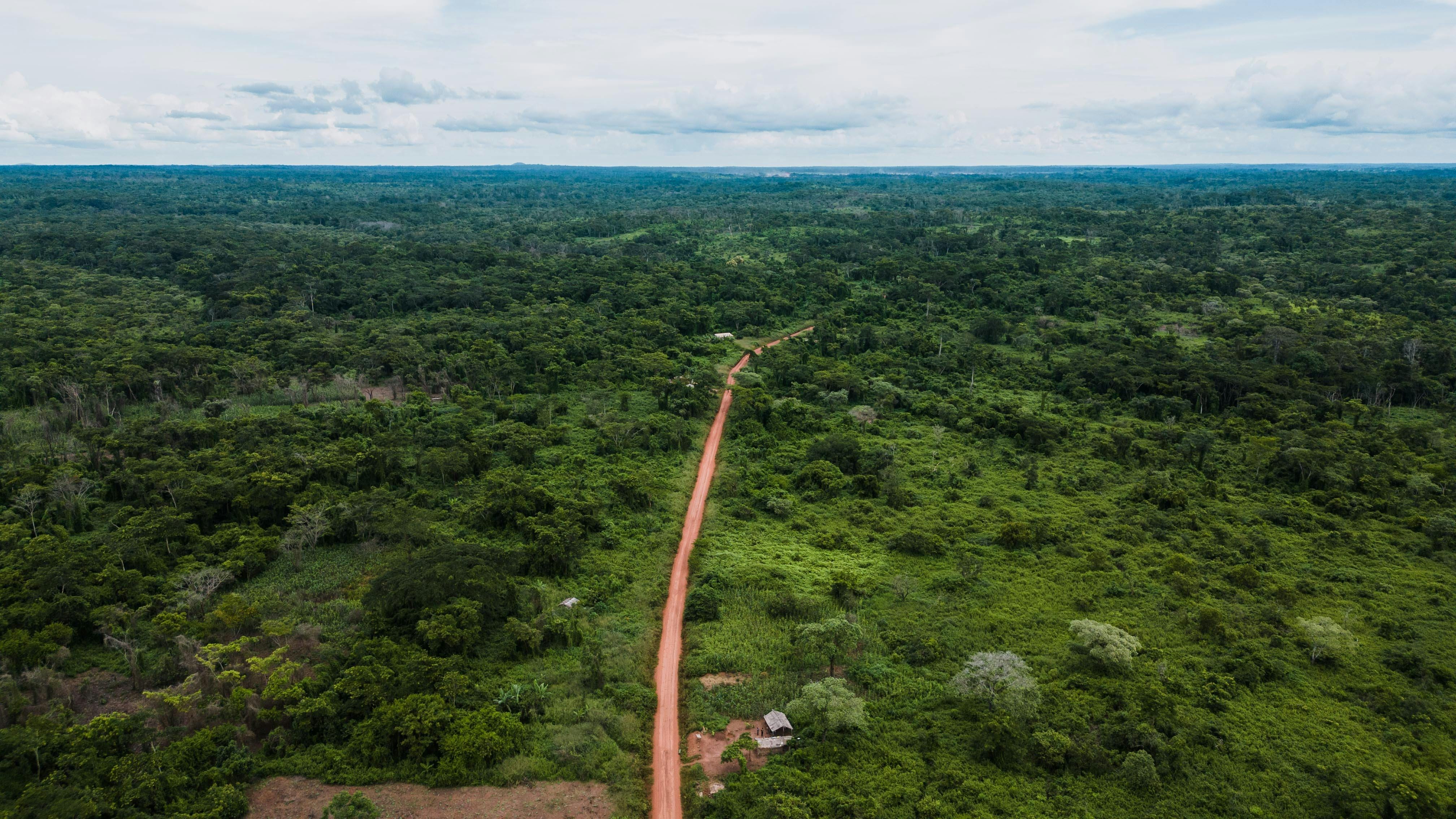
WESAF bought 322 hectares of land and has spent time developing the project, preparing the soil, and recruiting 200 outgrower farmers to intercrop sugarcane with their existing cash crops.
The business model is layered, with ethanol production as the core; the goal is approximately 10 million gallons from the initial facility. Sustainable aviation fuel (SAF) is the highest-value product, and marine fuel is a secondary market. But Tabi’s starting point will be to prove the ethanol supply chain works, then upgrade to SAF once execution is demonstrated.
His target is to be operational by 2030, when mandates tighten. He believes this is realistic as the typical lead time on an ethanol refinery is around 24 months. Total capex is $38 million, covering both the power infrastructure and the ethanol refinery itself.
The ICAO connection
ICAO has identified Cameroon as one of seven strategic gateway countries for SAF development in Africa and is funding a national feasibility study. The feasibility study will identify feedstocks, assess technology options, and outline how to shape demand in a market that currently does not exist. This last point is key.
As Tabi notes, there is currently no country on the African continent that blends significant quantities of biofuels for road transport, let alone aviation.
SAF in Africa doesn’t have an existing alternative fuels market to latch onto; one needs to be built from scratch. “Africa will have to re-engineer how you build demand,” he says. “Execution is key. Start with smaller volumes, prove you can do it, then scale.”
Power: the non-negotiable
Perhaps the most important practical insight from Tabi’s experience concerns electricity. In much of sub-Saharan Africa, you cannot assume the grid will support an industrial facility. In WESAF’s case, the grid simply doesn’t extend to their land.
The alternative, asking the public electricity body to extend it, is unappealing. “They’ll do it from the furthest location and charge you the most,” Tabi says. “And when they get round to doing it, it’ll be on their time.”
Instead, WESAF has designed a captive power system: 10 megawatts of solar, supplemented by cogeneration from sugarcane bagasse. This makes the facility energy-independent and insulates it from global energy price volatility. According to Tabi, “If you don’t install captive power, I wouldn’t do the project.”
Demonstrating success to the local community
This is also where WESAF’s model diverges from the typical SAF project structure.
Tabi plans to dedicate 5-10% of ethanol output to clean cooking fuel, displacing firewood and reducing deforestation. He says this is not corporate social responsibility but a way to demonstrate success and value to the community.
“It always feels like a con if you’ve got this industry in the country, and you’re producing a global product, but the average man doesn’t benefit from it. This is what has caused a lot of problems with the oil industry in a lot of African countries.”
The clean cooking component is designed as a proper consumer-facing business. Ethanol for clean cooking displaces firewood and charcoal while SAF revenue, as the highest-value product, subsidises the early ramp-up period.
Then there is surplus energy. Rather than attempting to sell electricity, which would create issues by competing with the energy provider, WESAF plans to install public charging points where locals can charge devices for a small fee.
For schools and hospitals, the power would be free. “I would just feel wrong to try and charge these public institutions,” Tabi says.
The economics work because SAF and ethanol revenue absorb the capex cost of the power infrastructure. The community benefits are built into the business model rather than bolted on as an afterthought.
Beyond Cameroon: the CEMAC opportunity
Tabi’s ambitions extend beyond a single site. Cameroon’s government has indicated willingness to provide further land concessions, and Tabi is looking to expand to 2,000-3,000 hectares across the country’s 10 regions with distributed feedstock production zones that all feed into central processing.
More significantly, he is in conversations with Equatorial Guinea, a neighbouring oil-rich country, about replicating the model there. The logic is that if SAF can be produced across multiple CEMAC countries, the opportunity to serve European airlines that fly into these destinations becomes substantial.
“Major European airlines run significant traffic into those countries on a daily basis,” Tabi points out. “If any of these airlines can lift certified SAF in Africa at a competitive price, they’ll do it.”
He cites a conversation with a large European leisure travel giant, whose procurement director told him directly that the airline would rather buy physical fuel than rely on book-and-claim certificates. Tabi believes that the preference for physical uplift, combined with the cost advantage of producing in Africa, suggests a genuine commercial opportunity if the production can be demonstrated.
The funding challenge
WESAF is a UK-based holding company with on-the-ground project companies, keeping financing within a jurisdiction that investors are comfortable with. Tabi is seeking $1.5 million for the clean cooking component (which also covers feed studies and early engineering) and an initial investment of around $25 million toward the total $38 million capex for power and the ethanol refinery.
But he is realistic about the challenges of raising capital for an African SAF project. Many investors are unfamiliar with the sector. Some ask questions that reveal how little they know about the continent. “People ask me, does sugarcane grow in Cameroon? I sometimes just want to say no,” he laughs.
The broader challenge affects every SAF project on the continent. AFRAA’s 2025 SAF Readiness Survey found that around 80% of African airlines have no access to SAF at their operational airports, and about 70% insist that SAF must be price-competitive with conventional jet fuel. Yet the same survey found that 92% of airlines are open to collaboration, and 84% are ready to join an AFRAA SAF Taskforce. The willingness is there. But not the infrastructure. Not yet, anyway.
The bigger picture
What Tabi is building is a proof-of-concept. If it works, it could be replicated across Central and West Africa, in countries with similar agricultural profiles and similar needs for economic development, energy access, and connection to global markets.
The African Development Bank’s recent partnership with Japan’s JGC Corporation to explore SAF production across the continent signals that institutional capital is beginning to view Africa as a potential production base. AFRAA estimates that Africa could achieve 0.6 million tonnes of SAF capacity by 2030, representing 5-10% of the projected global supply.
The potential is there. But will the global investment ecosystem recognise that the most cost-effective SAF production of the next decade may come from regions that most investors have barely considered, built by developers who know their markets intimately and are willing to start small?
As Tabi puts it: “We don’t want to pioneer, we don’t want to be the number one region everyone gets excited about. We just want to be in the game.”