

Why the Global South could produce aviation’s cheapest sustainable fuels
Lower feedstock costs, cheaper renewable energy, and book-and-claim could unlock production in Africa and Asia if developers can navigate captive power, equity partnerships, and sceptical lenders.

A panel at SAF Investor London, chaired by SimpliFlying CEO and founder Shashank Nigam, argued that, in the future, the most cost-competitive sustainable aviation fuel (SAF) won’t come from Europe or the US, but from countries like Kenya, Cameroon, Egypt, Oman, and Thailand. The catch? The supply chains don’t exist yet.
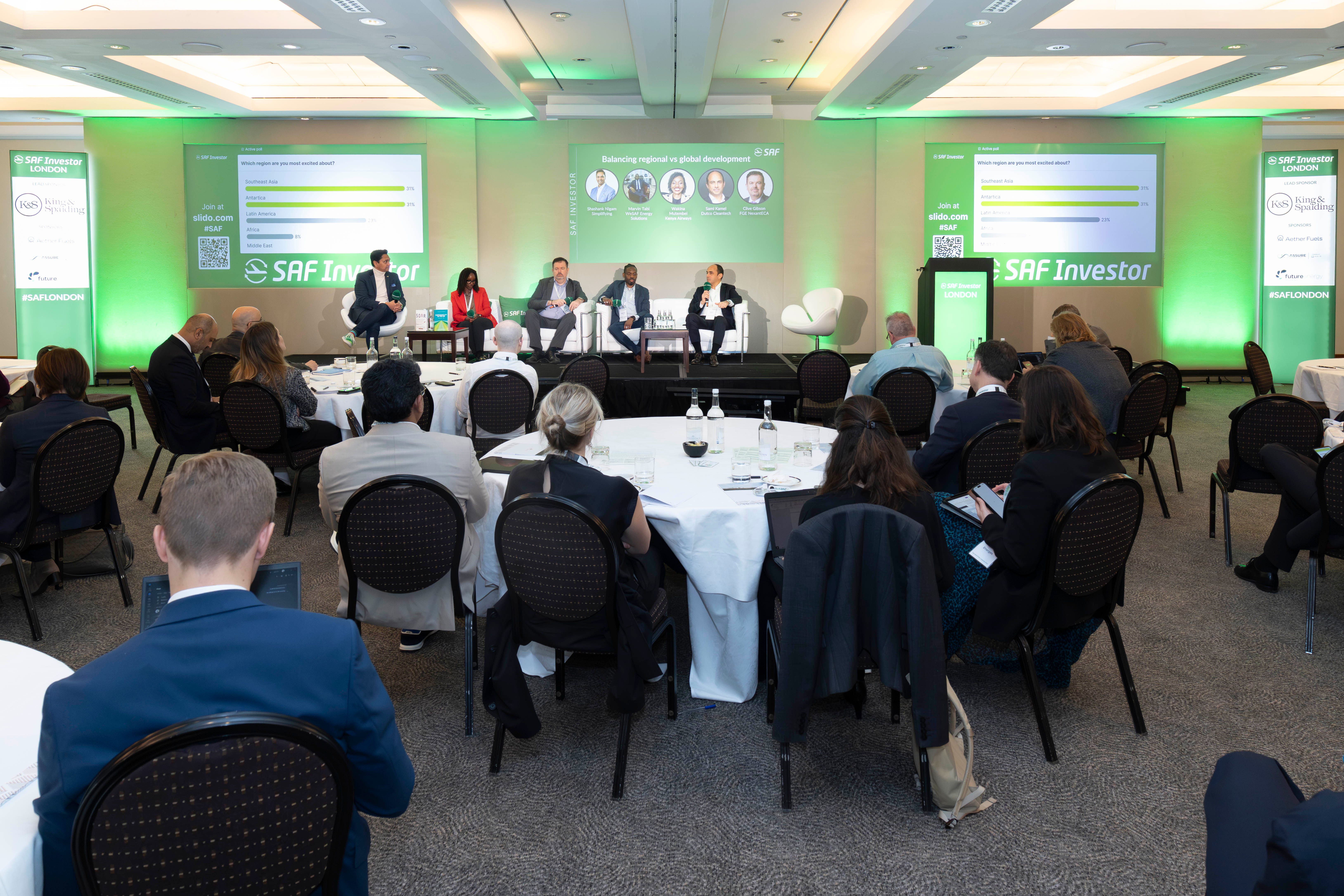
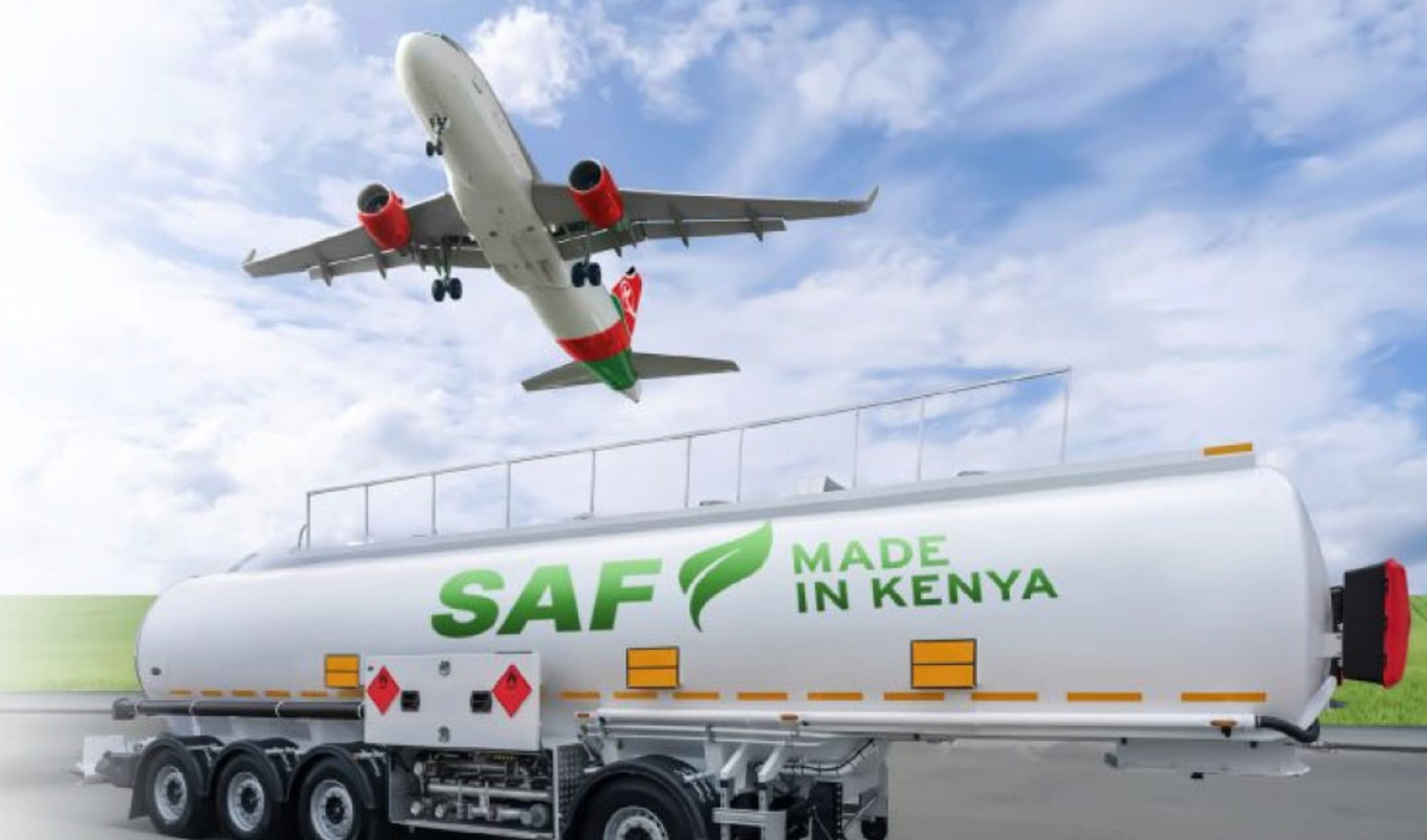
Wakina Mutembei, who leads sustainability and innovation at Kenya Airways, opened with a story that captured the absurdity of SAF’s current geography. When the airline operated its first SAF-powered long-haul flight in 2023 (the first by any African carrier), the fuel had been refined in Italy. But the feedstocks used in it had actually originated in Kenya.
“It was exported, refined, then transported back to us and sold to us at seven times the cost of jet fuel,” Mutembei told the audience at SAF Investor London. “And that’s just for the neat SAF, before blending.”
That circular journey, feedstocks leaving Africa only to return as expensive fuel, framed the entire discussion on a panel exploring how developing regions could shift from being raw material suppliers to SAF producers in their own right.
The feedstock map
Each panelist brought a different regional picture, but the common thread was abundance.
In Kenya, it is used cooking oil and animal fats. Mutembei noted that Kenya Airways has been working with local producers and the Kenyan government to develop incentives for SAF production and for airlines to uplift SAF from Nairobi. The airline won three awards at the SkyTeam Aviation Challenge for its sustainability initiatives, including best approach to scaling SAF, built around a partnership to establish Kenya’s first SAF production plant using feedstock cultivated on degraded mining land in Kwale County.
Meanwhile, in Cameroon, Marvin Tabi of WESAF Energy Solutions is developing a sugarcane-to-ethanol project on a 322-hectare site, with SAF as the highest-value end market. His approach is deliberately unglamorous: proven feedstocks, proven conversion pathways, with ICAO now funding a national feasibility study that could outline the pathway for further projects. “We’re not doing anything out of the blue,” Tabi said. “Sugarcane, agricultural waste, forestry waste, [these are] things we’ve got in abundance.”

Commenting on the work Tabi is doing in Cameroon, Nigam said “I love your almost boring approach. Boring feedstock, boring pathways. We just want to be part of the ecosystem, and that’s actually good because it reduces the risk. It de-risks the entire process.”
In Southeast and Southern Asia, Clive Gibson of FGE NexantECA described a landscape where used cooking oil collection underpins virtually every HEFA project under development. The scale of the collection challenge is formidable: plants need 200,000 to 600,000 tonnes of feedstock, and the supply chains are being built from scratch.
Gibson noted that Pakistan is “very, very favourable for used cooking oil generation,” though the quality can be challenging. “It’s almost like crude oil when you see it coming out of some of these restaurants.”
In the Gulf, Sami Kamel of Dutco Group outlined a different proposition centred on e-SAF. The region’s competitive advantage lies in some of the world’s cheapest renewable energy, which translates into green hydrogen at $3 to $3.50 per kilogram.
Combined with available CO2 sources and deep-water port infrastructure, Kamel argued that the Gulf offers “sweet spots” for large-scale e-SAF production targeting the EU and UK markets. Dutco is developing three projects: an e-SAF plant in Oman leveraging a 1-million-tonne green ammonia project, a bio-SAF facility using molasses from a Dubai sugar refinery, and a potential synthetic ethanol import operation from Brazil.
Book-and-claim as the great equaliser
The most strategically significant part of the discussion centred on how book-and-claim certification could transform the economics of SAF production in developing regions.
Mutembei made the following argument:
If you can produce SAF more cheaply in Kenya than in Europe, and book-and-claim allows you to sell the environmental certificates to European and UK airlines with mandates while using the physical fuel locally, then the feedstock boomerang goes away. It becomes a business opportunity rather than a compliance burden.
Mutembei said that the overall opportunity was three-fold: “One, to retain our feedstocks. Two, to create employment. And three, to produce SAF that is cheaper for the European and UK markets.”
De-risking in harder markets
The panel was realistic about the obstacles. Building SAF production capacity in developing regions is fundamentally different from doing so in Europe or the US, and each speaker highlighted a different dimension of the challenge.
Tabi was the most direct: in much of Africa, you cannot assume the electricity grid will support an industrial facility. “If you’re going to develop a project, you have to include captive power in the capex,” he said. “If you don’t do that, you’re just not going to get off the ground.”
His approach is to start small, demonstrate execution, build the supply chain piece by piece, and then scale. “We don’t want to pioneer, we don’t want to be the number one region everyone gets excited about. We just want to be in the game.”
Kamel described a different model: getting feedstock suppliers and offtakers to take equity positions in the project itself. In Dutco’s molasses-to-SAF project in Dubai, the sugar refinery owners are taking a minority stake.
In the green hydrogen projects, offtakers are also becoming equity partners. “When we’re signing the offtake agreement, it’s really with an equity partner in the project who will also market the final product,” he explained. The approach ties everyone’s incentives together, but it also highlights a structural gap: project lenders want ten- to fifteen-year offtake agreements, while most buyers are only willing to commit to five.
Gibson emphasised the importance of having all the pieces aligned from day one: feedstock, technology, offtake, and funding.
“The projects that we’re seeing being successful have a very strong strategic vision from the start,” he said. He also noted a nuance that cuts both ways: developers in Southeast Asia are building with the EU mandates as their primary revenue target, but with an eye to pivoting toward Asian mandates as they emerge.
“Is this carbon colonialism?”
One of the most contentious moments came during the audience Q and As.
Using the conference online form, an anonymous questioner asked whether EU fuel suppliers charging high SAF premiums amounted to a tax on African airlines that had no say in designing the mandates.
According to Mutembei, “Of course it’s not fair.” But she reframed it by pointing out that the cost of producing SAF in Kenya is lower than in Europe, and that if book-and-claim is permitted, the mandate creates a market that African producers can serve at a competitive advantage.
“Look at the cost of production in Europe and in the UK. It’s definitely much higher than it is in Kenya. So if we are all complaining that the cost of SAF is high, why not go to a market where it’s cheaper to produce it?”
The argument was echoed by Gibson, who pointed to capital cost efficiency as a fundamental advantage for projects in Africa and Southeast Asia. A HEFA plant built in Egypt or Kenya, with access to local feedstock, can achieve significantly lower capital costs per tonne than an equivalent European facility. “That’s a key area where Africa can compete,” he said.
What needs to happen
The panel closed with each speaker offering a three-year outlook. Mutembei pointed to Kenya’s 90% renewable energy grid as a foundation for future e-SAF production, alongside the nearer-term HEFA opportunity.
Kamel called for the EU to relax biogenic CO2 requirements, which currently constrain e-SAF projects in the Gulf, where fossil-derived CO2 from refineries and petrochemical plants is abundant. Tabi reiterated his theme of execution over ambition: prove the supply chain works at a small scale, then grow.
The broader message was clear. Conferences in places like London and New York tend to focus on mandates, fund structures, and margin analysis in mature markets. But the panellists in this session made a compelling case that the most cost-effective SAF production over the next decade may come from regions that barely feature in those conversations.
The feedstocks are there. The energy costs are lower. The capital costs can be lower. What is missing is the supply chain infrastructure, regulatory alignment (particularly on book-and-claim mandates), and investment flows to connect Global South production to Global North demand.
