

From fission to fusion: The long game for clean jet fuel
Last week, we explored how nuclear fission and small modular reactors could solve SAF’s energy problem. At SXSW 2026, a panel on fusion energy suggested the story doesn’t end there.

⚡ In a nutshell
Fusion combines light atoms rather than splitting heavy ones. It carries none of the meltdown or long-term waste risks associated with fission.
Fusion fuel has an energy density roughly 10 million times greater than oil, with effectively limitless raw materials, meaning there is no floor on how cheap the energy could eventually become.
Commercial fusion power is most credibly projected for the 2040s, which is precisely when SAF production needs to scale from millions to billions of litres.
Fusion is already in use in aviation: SHINE Technologies uses fusion-generated neutrons to inspect jet engine turbine blades for defects invisible to X-rays.
Plan for fission now. Keep fusion in your peripheral vision.
Last week, we made the case that small modular nuclear reactors could provide the always-on, low-carbon electricity that power-to-liquid SAF production demands. That piece was about what fission can deliver within the next decade. This is about what comes after.


At SXSW 2026, a panel titled “The Great Fusion Debate: How Far Away Are We Really?” brought together Greg Piefer, founder and CEO of SHINE Technologies, one of the few companies already generating commercial revenue from fusion; Dr Melanie Windridge, founder of Fusion Energy Insights; and Luke Ward, investment manager at Baillie Gifford. It was moderated by Jacob Goldstein, podcast host and author at Pushkin Industries.
Two ways to go nuclear
First, a quick explanation. The small modular reactors in last week’s piece are fission reactors, which split heavy atoms (such as uranium) to release energy. This is the same process that has powered conventional nuclear plants for decades, miniaturised and modernised.
Fusion works in the opposite direction. It combines light atoms, typically isotopes of hydrogen, releasing vastly more energy per unit of fuel. It is the process that powers the sun.
Crucially, fusion avoids the two risks that have defined public anxiety about nuclear power. There is no possibility of a runaway chain reaction (the Chernobyl scenario), and no long-lived radioactive waste requiring storage for thousands of years. As Piefer put it, fusion is nuclear energy, but without the core risks of fission.
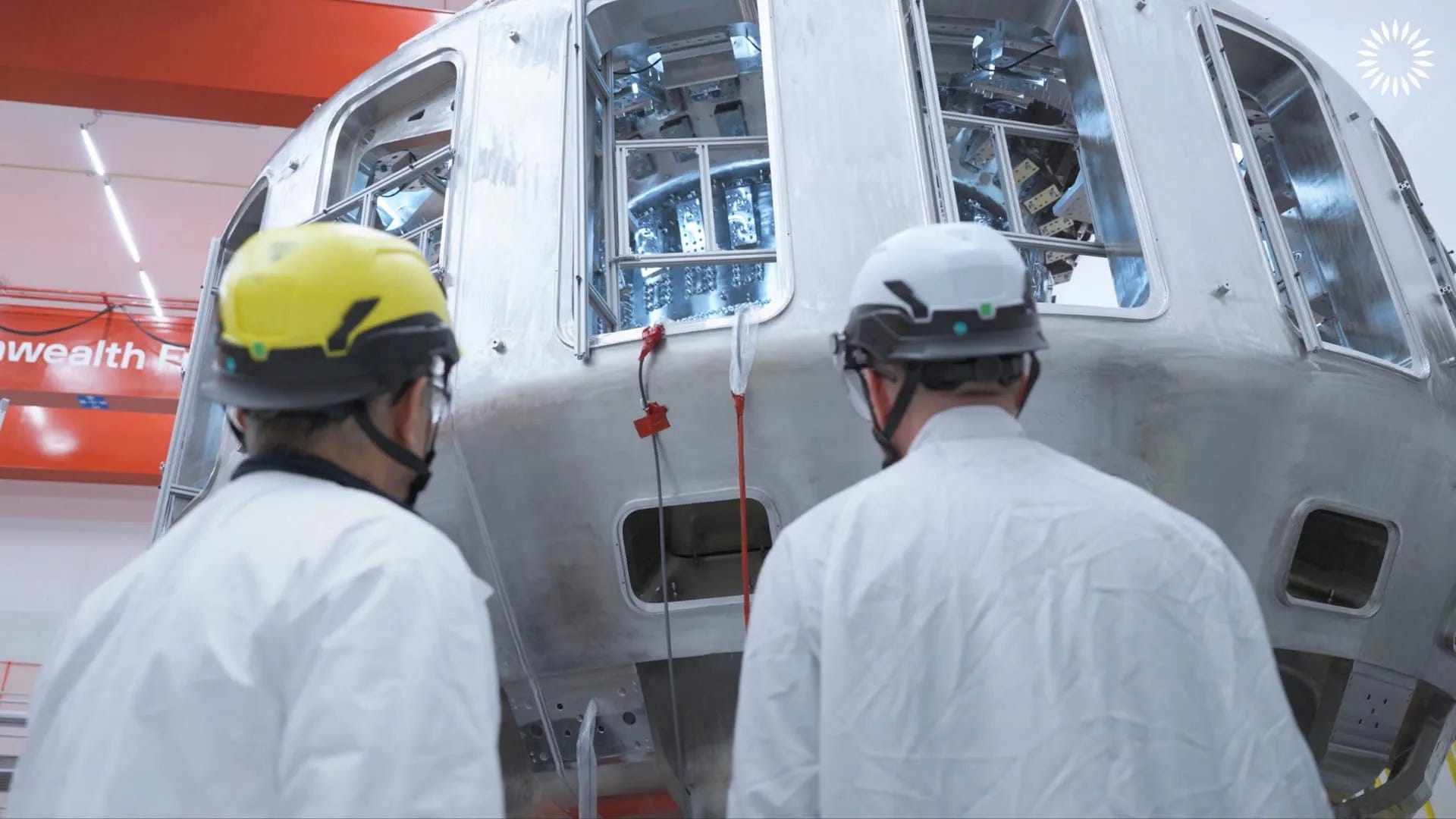
But the catch is formidable. Confining plasma at temperatures exceeding 100 million degrees remains one of humanity’s hardest engineering challenges. Despite decades of research and billions in private investment — Commonwealth Fusion Systems alone has raised over $2 billion — no fusion reactor has produced commercial electricity.
Fusion is already in aviation
Before getting to the long-term energy vision, it is worth noting that fusion technology is already touching aviation in a very specific way.
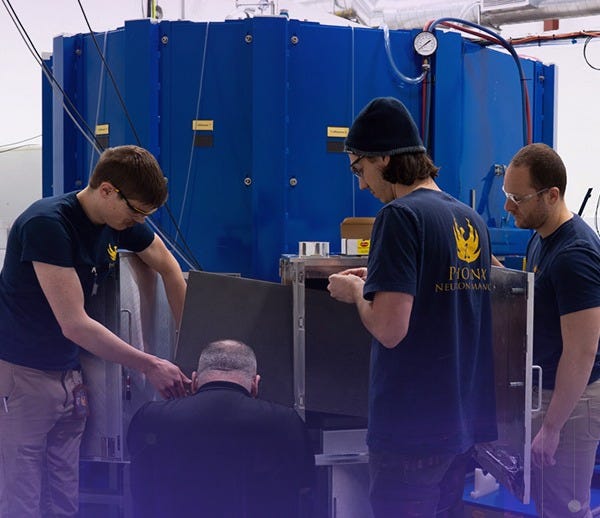
Piefer described how SHINE, via its Phoenix Imaging Center, uses neutrons generated by fusion reactions to inspect modern jet engine turbine blades. These blades operate above their own melting point, kept intact by intricate internal cooling channels through which compressed cold air is pumped. Manufacturing defects in those channels, invisible to conventional X-rays, can cause catastrophic engine failure. Fusion-generated neutrons can see what X-rays cannot, and SHINE is already selling this service to defence and aerospace customers.
It is a niche application, but it makes an important point: fusion’s value to aviation is already being proven through its by-products, before electricity even enters the frame.
10 million to one
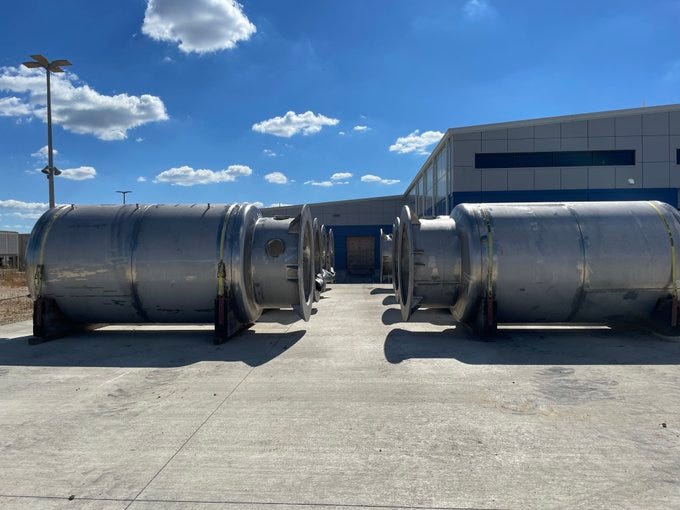
The headline figure from the panel came from Piefer: the energy density of fusion fuel compared to oil is roughly 10 million to one. One pound of lithium burned in a fusion reactor contains the equivalent energy of 10 million pounds of oil.
For power-to-liquid SAF, where each tonne of e-kerosene requires 30 to 50 megawatt-hours of electricity, the cost of energy is everything. Fusion can potentially transform the economics of making it.
Windridge reinforced the point from the supply side: Fusion fuel from deuterium in seawater, with lithium for breeding, is so abundant that fuel cost is unlikely to constrain long‑term fusion economics; instead, overall costs will be driven mainly by the complexity and capital cost of reactors, blankets, and supporting infrastructure. Piefer compared the trajectory to semiconductors: an industry that has seen trillions of times improvement in cost performance over 70 years, driven by the same principle of near-unlimited scalability.
But when?
The panel converged on a rough timeline: energy breakeven by the early 2030s, first electricity by the mid-2030s, and commercial rollout beginning in the 2040s.
All three acknowledged the old joke that fusion is always 20 years away, but argued the landscape has fundamentally changed. A decade ago, the sector was dominated by government-funded megaprojects like ITER, a machine Windridge described as the size of a cathedral, when we want something more the size of a church.
Today, private companies with commercial discipline are building smaller, asking how to reach profitability, and generating revenue along the way from intermediate products like medical isotopes and superconducting magnets. SHINE is already building a half-billion-dollar facility to produce 20 million doses of medical isotopes per year using fusion-generated neutrons.
Ward drew a useful comparison to SpaceX: the ambition is Mars, but the business runs on commercialising low Earth orbit. Fusion companies need the same kind of stepping-stone economics to fund the journey to grid-scale power. The consensus was that fusion will be commercially useful — in medicine, inspection, and materials — long before it produces electricity at scale.
What this means for SAF
The timeline matters because of where aviation’s mandates are heading. The EU’s SAF obligation ramps to 70% by 2050, with a dedicated sub-mandate for e-fuels. The UK’s PtL targets reach their full ambition in the same period. Meeting those volumes will require clean electricity at a scale and cost that intermittent renewables alone are unlikely to provide.
Fission, as we explored last week, could be a medium-term answer: SMR-powered SAF plants that could be operational by the early 2030s. Fusion is the generation after that. If commercial rollout begins in the 2040s as the panel projected, it arrives precisely when PtL production needs to shift from demonstration scale to industrial scale.
And where fission can already offer SAF producers pink hydrogen competitive with green hydrogen, fusion’s promise is an energy source that keeps getting cheaper with no fuel-cost floor. That is the trajectory that could eventually bring e-kerosene within reach of price parity with conventional jet fuel.

Engage early
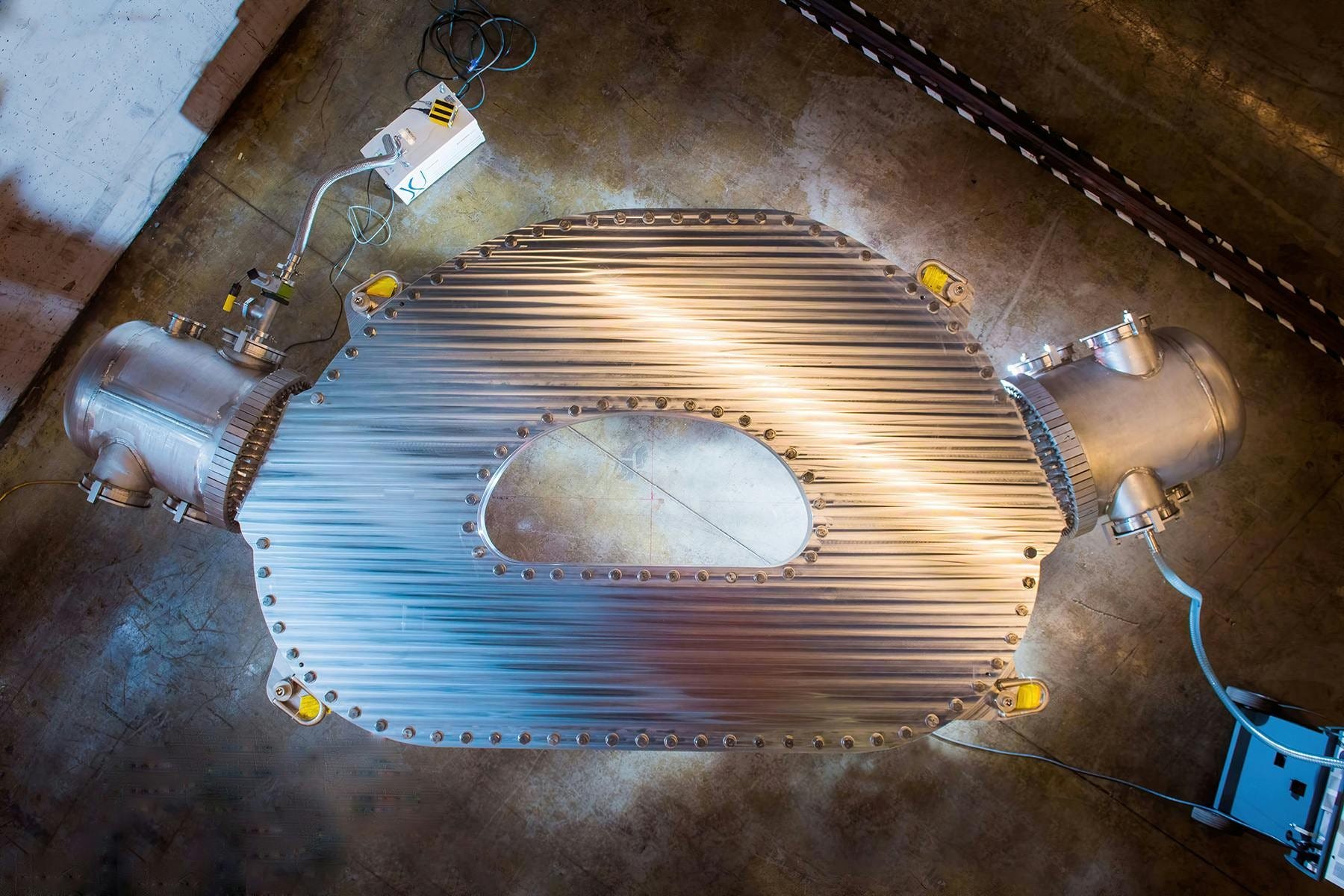
Windridge’s parting advice? In every major energy transition, the people who engaged early were the ones who did best. The risk with fusion is that it arrives, and your industry is not ready.
Ward’s closing remark landed the same point from a different angle: innovation has to be better and cheaper than its predecessors at scale. That principle applies equally to the reactor and the fuel it produces.
For anyone in aviation watching the PtL space: plan for fission now. But keep fusion in your peripheral vision. The technology that powers the first wave of nuclear SAF plants may not be the technology powering them in 2050.