

The six-times markup that convinced a Kenyan entrepreneur to make his own SAF
Peter Waweru spent years supplying oilseeds to one of Europe’s largest energy companies. Then Kenya Airways asked him a question that changed everything.

⚡ In a nutshell
Peter Waweru’s company Mobimart spent years supplying Kenyan oilseeds to Italian energy major Eni, which refined them into SAF in Sicily before shipping the finished fuel back to Kenya at six times the cost. When Kenya Airways asked Eni to build a SAF plant in Kenya instead, Eni declined. So the airline turned to Waweru instead.
That’s the origin of Bleriot Group, which is now developing Kenya’s first domestic SAF production capability using the HEFA pathway, with Kenya Airways as its anchor customer.
Waweru’s feedstock strategy is built around farmer economics. It includes the African spider plant, cotton seed, and croton from existing forests.
Instead of a $500 million conventional refinery, Bleriot is developing small units costing $5 million each, producing 10 tonnes of SAF per day. The target is 10 units by 2030. The technology has also attracted interest from smaller European airlines that can’t access SAF through existing supply chains.
Bleriot will start with biodiesel for road transport, where the economics are already compelling, then scale into SAF. This mirrors the route Brazil used to build its biofuels industry over five decades.
The technology and feedstock is in hand, a bigger challenge will be to fund large-scale energy agriculture on arid and semi-arid land, which requires development finance that commercial capital alone won’t provide.

For several years, Peter Waweru’s company Mobimart International did what many African commodity businesses do. It aggregated oilseeds across Kenya’s arid counties, crushed them at facilities in Kwale, and shipped the crude vegetable oil to Europe for refining.
The principal buyer was Eni, the Italian energy major, which sent the oil to its biorefinery in Gela, Sicily. There, among other products, it was converted into Sustainable Aviation Fuel (SAF).
Some of that was shipped back to Kenya.
In 2023, when Kenya Airways operated its first SAF-powered long-haul flight, the first by any African carrier, the fuel had been refined by Eni in Italy. But the feedstocks came from Kenya. By the time the finished product returned to Nairobi, the cost represented a six fold premium over standard Jet A.
It was, as Wakina Mutembei of Kenya Airways later described at the SAF Investor London conference, one of the absurdities of the current SAF market.
This led to a conversation between Peter Waweru and the airline.
“Kenya Airways sat me down and said, Peter, can you do this thing for us locally?” Waweru recalls. “I said to them, yes I can, with quite a few caveats.”
Before coming to Waweru, Eni had been asked the same question. Could they build a local SAF plant in Kenya?
Waweru says the energy giant declined. “They would never build that.”
The reason is structural, and is based on a business model designed to move raw materials in one direction: from countries like Kenya to the company’s multi-billion dollar European refining infrastructure. (Note: Eni’s Kenyan biofuel operations have also recently faced scrutiny over its smallholder farming programme, though the company says it complies with EU laws.)
What followed was the formation of Bleriot Group, with Waweru as Group Chairman providing the feedstock expertise, land access, and government relationships, and Serguei Poppeleer as CEO bringing the fuel production and chemical engineering capability.
The ambition was to build Kenya’s, and potentially Africa’s, first domestically produced end to end SAF supply chain.
The feedstock: designed around farmer economics
Instead of the conversion technology, Waweru’s SAF model starts with the farmer. His view is that unless smallholders on arid Kenyan land see immediate returns, no refinery technology will create a sustainable supply chain.
As a result, his feedstock portfolio is sequenced by how quickly different crops generate returns:
1. African spider plant: food first, fuel second
The shortest-cycle crop in Bleriot’s portfolio rarely features in global SAF discussions.
African spider plant (Cleome gynandra), indigenous to sub-Saharan Africa, is widely eaten as a leafy vegetable. The edible leaves can be harvested within weeks, giving the farmer early food and income. The seeds, which mature later once the pods have dried, contain 17-19% oil. That’s modest by oilseed standards, but the food comes first and the fuel feedstock is a by-product. That then builds into a wider feedstock strategy.
“You need a short-term crop like African spider plant, and then you can graduate into a mid-term like canola,” Waweru explains. “Then you’ve got crops like jatropha that are ideal because of very high oil content and they thrive in arid and semi-arid areas.”
2. Cotton seed: the industrial-scale play
Waweru’s longer-term top pick for SAF feedstock at volume is cotton seed. Kenya’s cotton industry once operated at significant capacity but today functions at roughly 10% of its 1970s levels.
The infrastructure such as gins, cooperatives, extension programmes, still exists in skeletal form. Kenyan President William Ruto is already pushing for a cotton revival. And the economics have a structural advantage: the oilseed component represents approximately 60% of the cotton boll, and in Kenya, cotton seed oil is not edible. Before biofuels, there was simply no market for it.
“The entire ecosystem of cotton production in Kenya can be revived,” Waweru says. “Governments and cooperatives would come along and erect ginneries and extension programmes. The biofuels market now provides a buyer for the oilseed that previously had none.”
3. Croton: the carbon play
Then there is croton, a species that already exists in Kenyan forests whose seeds can be collected without new planting. Its role in Waweru’s model is about carbon sequestration as well as oil supply.
And the food-versus-fuel safeguards?
Waweru emphasises crops that serve both food and fuel purposes simultaneously (e.g. African spider plant), as well as a heavy reliance on arid and semi-arid land where there is no competition with food production. In addition, he points to species like castor that rehabilitate degraded former mining land by detoxifying the soil until it can revert to agricultural use. He further proposes a policy principle whereby no more than 10% of any individual farmer’s land should be allocated to fuel crops.
Small modular reactors: $5 million versus $500 million
The conversion technology itself centres on what Waweru calls small modular reactors (SMR)*.
*Note: he does not mean this in the nuclear energy sense where the term ‘SMR’ is commonly used, but in compact HEFA processing units capable of producing up to 10 metric tonnes of SAF per day.
A single SMR unit will cost approximately $5 million. Compare this to a conventional SAF refinery (Waweru cited Topsoe’s plant in Rotterdam as an example) which runs to $2 billion. Even a more modest facility requires $500 million or more.
“Once this SMR technology gets to bite, one of these things will cost about $5 million, as opposed to erecting a major SAF refinery which costs $500 million,” Waweru says. “It’s a question of how many of these SMRs can we deploy.”
His target is initially 10 units by 2030, producing a combined 100 metric tonnes per day or roughly 36,500 tonnes per year. Bleriot has identified two potential manufacturers, one in China and one in South Africa, and is working to bring the first units to deployment.
Units can be sited near airport fuel infrastructure, reducing the need for a SAF blending and pipeline network that Kenya currently lacks entirely. Or they can be placed near feedstock production areas, minimising the logistics cost of transporting raw materials. The decision, Waweru says, will be situational.
Waweru even sees a technological export opportunity. Smaller European airlines, he argues, are struggling to access SAF through the existing supply chains, which are dominated by partnerships between major refiners (Topsoe, Neste) and oil marketing companies supplying the continent’s larger carriers. Regional airlines face mandates but have a narrower route to compliance.
“These smaller airlines are really struggling,” Waweru says. “They’re having to buy carbon credits and pay heavy penalties because there’s no SAF available for them.”
So his proposition is as follows: Use African-developed feedstock, processed through modular technology, deployed at or near the airports where smaller carriers need it.
Road transport first, then aviation: the Brazilian model
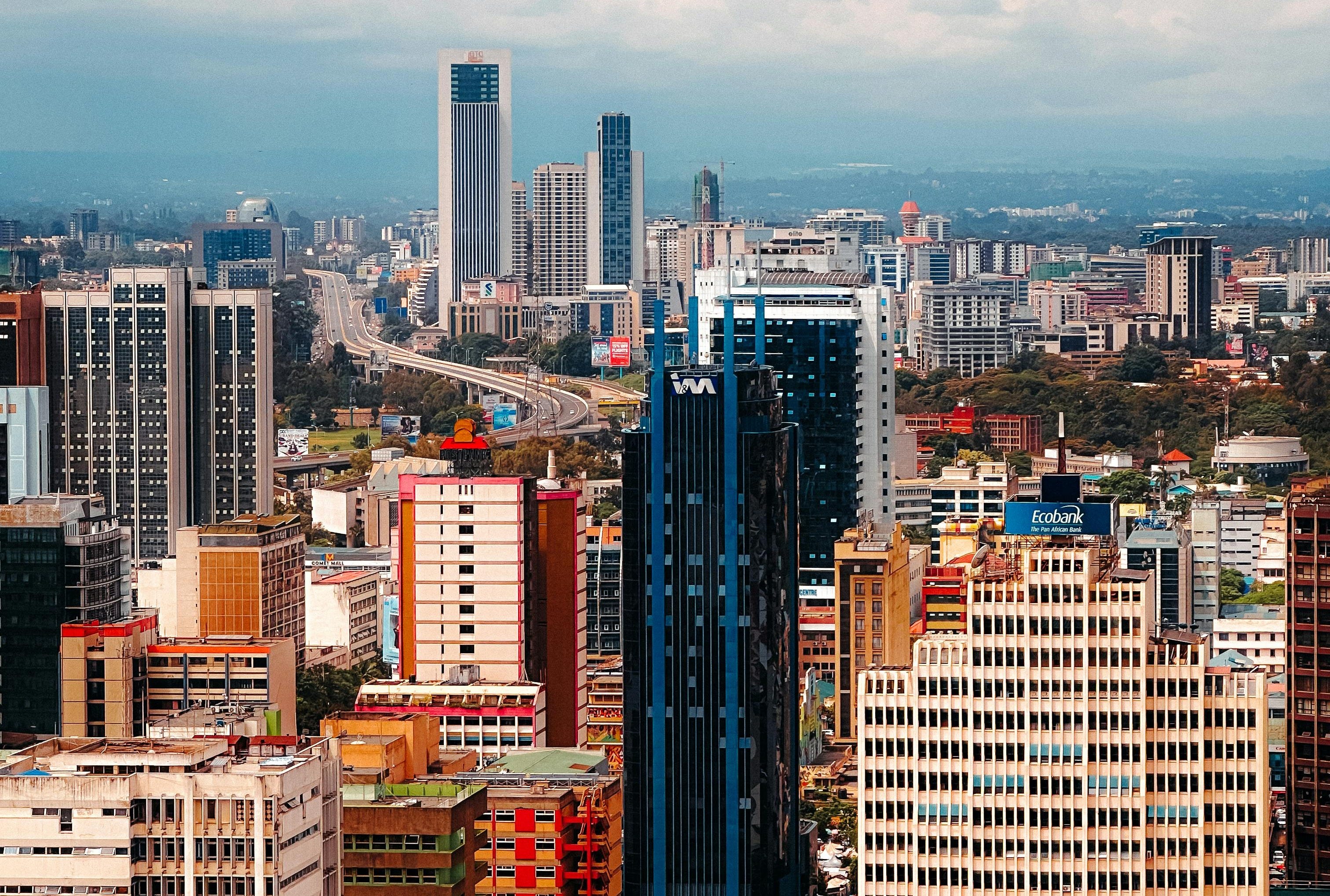
Kenya’s new petroleum legislation is expected to mandate a 20% biodiesel blend for road transport. The economics make sense: diesel in Kenya currently costs 206 Kenyan shillings per litre (~$1.60), while the cost of producing biodiesel is around 140 shillings (~$1.08), leaving a margin of approximately 65 shillings (~$0.50) per litre.
“It’s tempting, it’s juicy,” Waweru says. “So we grab the low-hanging fruit first, because we have energy deficiency and energy insecurity in road transport. And it’s for real.”
The feedstock for biodiesel and SAF is the same. Only the processing differs, with biodiesel using the fatty acid methyl ester (FAME) route, while SAF requires the additional step of hydroprocessing via the HEFA pathway. Road transport builds the farmer supply chains, stabilises Bleriot’s revenue, and creates the feedstock volumes that make the jump to SAF economically viable.
This is in fact the model Brazil has been using.
Brazil is the world’s second-largest ethanol producer and third-largest biodiesel producer, built over decades of supportive policy and a vast agricultural sector. Its road transport biofuels industry, which is anchored by sugarcane ethanol and soybean biodiesel, created the feedstock supply chains, farmer participation, and processing infrastructure that are now being leveraged for aviation fuel.
Brazil’s Fuel of the Future law, enacted in 2024, established progressive SAF mandates starting at a 1% emissions reduction, rising to 10% by 2037. According to BloombergNEF, announced projects could bring Brazil’s SAF production capacity to roughly 700 million litres by 2030. Critically, the two most promising Brazilian SAF pathways, HEFA from soybean oil and alcohol-to-jet (AtJ) from sugarcane ethanol, are both built on feedstock supply chains that existed at industrial scale because of the road transport market.
“Look at Brazil, where road transport blending mandates such as B10 and B15 have already brought biofuels to parity,” Waweru says. “It is the economic activity generated through feedstock production that is really going to change the game here.”
A B10 biodiesel mandate in Kenya, Waweru estimates, would require nearly one million acres of dedicated biofuel crop production, creating eight to ten million jobs across farming, logistics, and processing. At that scale, feedstock prices fall, supply chains mature, and SAF production becomes commercially viable rather than aspirational.
AFRY reports that HEFA SAF production in Brazil could be 10% cheaper than in Central Europe, driven by large quantities of soybean production and its lower land and labour costs. Kenya’s numbers are smaller and its infrastructure more nascent. But the model of abundant land and feedstock is the same.
Why bio-SAF, not e-fuels
One pathway Waweru rules out is power-to-liquid e-fuels, for economic and social reasons.
“The things I do must have impact. The things I do must have reachability and understandability by the local communities,” he says. “What do they bring to the table? They bring in a skill, whether it’s farming, whether it’s land. I wouldn’t really venture into things that wouldn’t create empowerment at the base of the pyramid.”
He is not the only African SAF developer to reach this conclusion. In our recent feature on Sunbird Group’s cassava-to-SAF project in Ethiopia, founder Richard Bennett made a similar argument in choosing the AtJ pathway partly because the agricultural model creates thousands of smallholder farming livelihoods.

E-fuels may well be the right answer for the Gulf states, where cheap solar energy, port infrastructure, and smaller populations make capital-intensive, low-employment industrial projects viable.
But African developers are working with abundant land, feedstock, and large rural populations that need agricultural employment. A biofuel supply chain built around smallholder agriculture creates economic participation at scale.
The road ahead
Bleriot is currently at the bench and laboratory stage. Through partnerships with the University of Nairobi and Jomo Kenyatta University of Agriculture and Technology, the company has developed proprietary HEFA processing IP and produced SAF tested to ASTM D7566 standards.
SAF produced by Bleriot was used to fuel Kenya Airways demonstration flights in October 2025, including four return services from Nairobi to Paris, Amsterdam, London, and Cape Town using a 2% SAF blend.
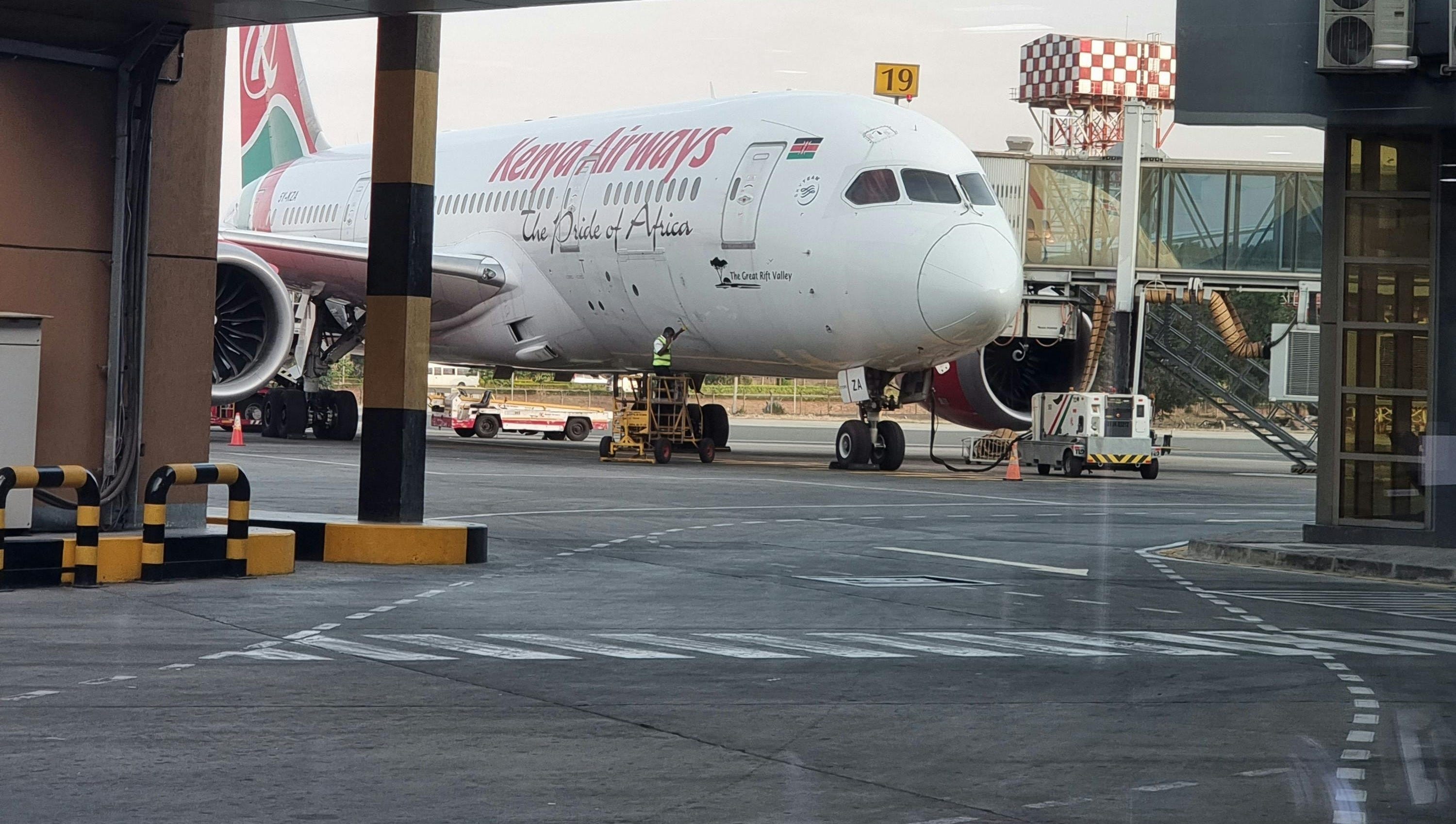
Now comes the jump to commercial production. A second-generation reactor is now under development, and Bleriot has identified SMR manufacturers. Securing the necessary capital will require support from development finance institutions, as Waweru argues that commercial investors alone are unlikely to absorb the combined agricultural and technology risks at this stage.
While the financing question is real, the broader picture looks more encouraging:
A supportive government: The policy environment is moving in the right direction. Kenya’s technical committee on SAF comprising the Civil Aviation Authority, Kenya Pipeline Company, and producers including Bleriot, is actively working toward a blending mandate. Waweru sits on that committee. The backdrop is a government that understands what domestic biofuel production could mean for energy security and employment.
Physical fuel, not certificates: Waweru sees himself as building a fuel and not a certificates business. Unlike other producers, the strategy does not rest on book-and-claim. Instead, Bleriot will produce the SAF, supply it to Kenya Airways, and let them on-sell to partners, in particular drawing on their SkyTeam relationships.
A model that scales: Looking at the Common Market for Eastern and Southern Africa (COMESA), countries like Ethiopia and Mozambique could contribute feedstock to centralised processing in Kenya. But the SMR technology is designed to be deployed anywhere. If a $5 million modular unit can produce 10 tonnes of SAF per day from locally grown oilseeds, there is no reason it couldn’t operate at an airport in Addis Ababa, Maputo, or Dar es Salaam just as well as in Nairobi.
Waweru’s closing argument returns to the land. “The most important thing is strong investment in the energy agriculture side,” he says. “That means transforming arid and semi-arid lands at scale. Africa’s advantage is the sheer amount of land suitable for this purpose. But it needs to be done differently.”
Whether Bleriot reaches 100 tonnes per day by 2030 remains to be seen. But the logic that Africa should process its own feedstock rather than export it, is becoming harder to argue against.