

Why DAC pioneer Skytree sees carbon capture as a product, not a project
While others plan billion-dollar megaprojects, European innovators like Skytree are shipping modular CO₂ scrubbers today, targeting the heart of aviation's carbon problem.

While testing materials to keep astronauts breathing in orbit, ESA engineer Max Beaumont had an epiphany: the same technology could be turned on Earth’s atmosphere. That insight became Skytree, a startup now at the forefront of a European movement to reinvent Direct Air Capture (DAC) with modular, scalable machines.
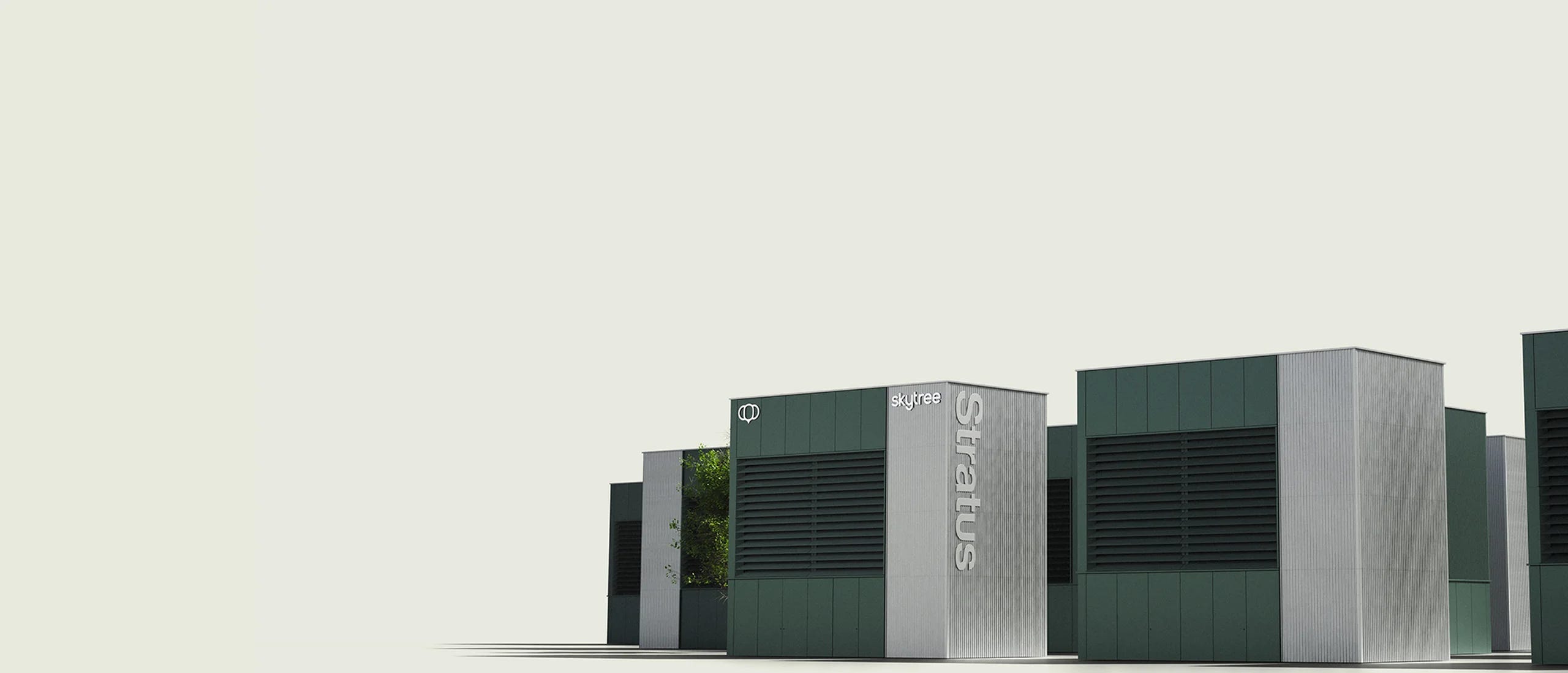
Instead of building multi-billion-dollar plants in remote areas, Skytree is one of a number of companies betting on smaller, modular machines that can be mass-manufactured and deployed where CO₂ is needed.
The idea: make carbon capture a product, not a project. It’s an approach Skytree shares with European innovators like Belgium’s Sirona, the Netherlands’ Carbyon, and France’s Norma, all of which challenge the mega-facility model with speed, modularity, and manufacturing-line production.
Field evidence, not PowerPoint slides
The DAC sector is crowded with big promises, but Skytree sees its differentiator as deployment. The company has installed eight pre-production systems, known as “Cumulus,” across European greenhouses, university test centers, and one operational customer site in Belgium.
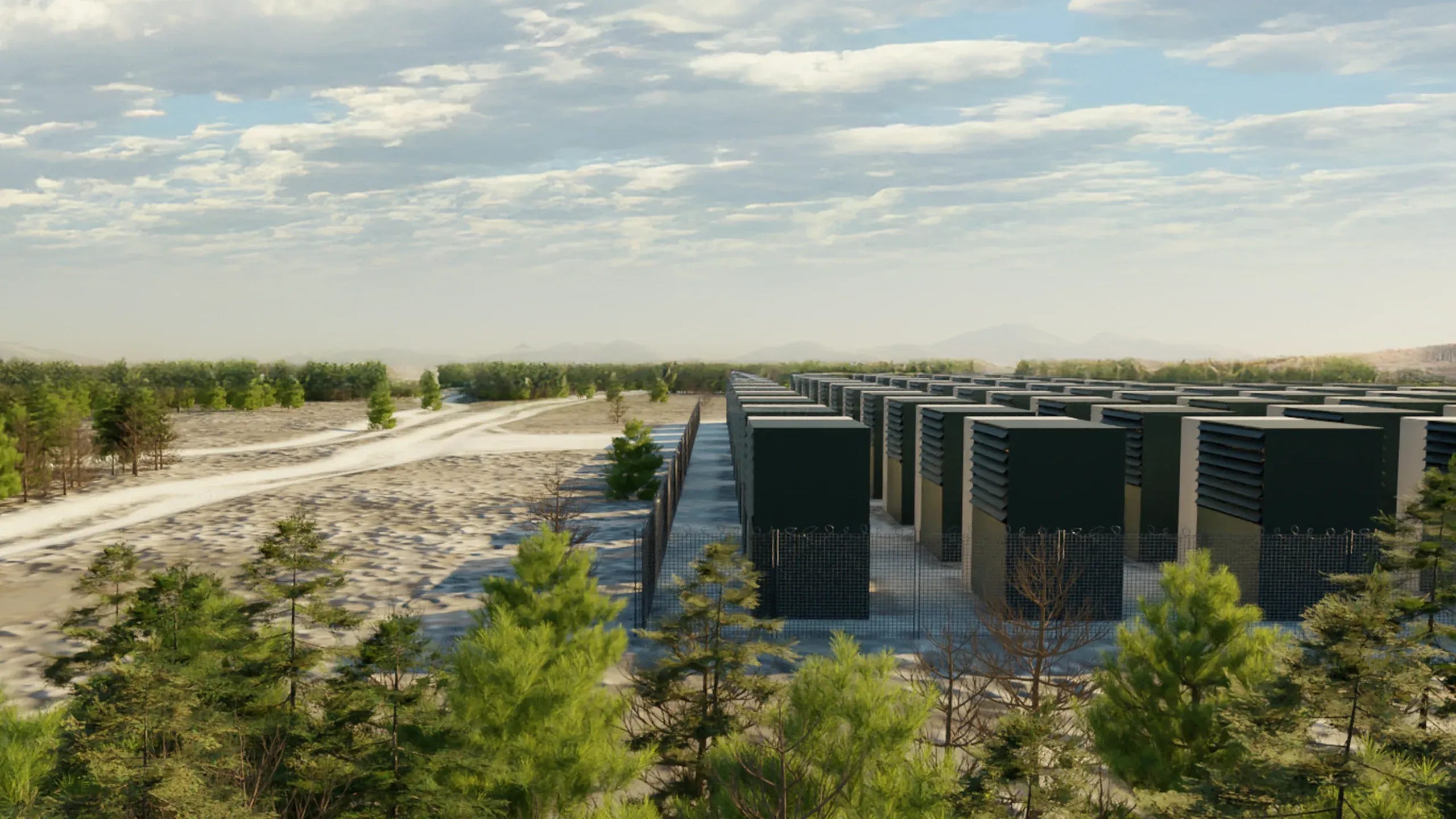
“We’ve installed 8 small pre-production versions of our Skytree Stratus machine at various customers and test centers,” CEO Rob van Straten said. Data from those units helped refine Stratus, Skytree’s full-scale system, now headed for a cold-weather test in Alberta with Canadian carbon-removal developer Deep Sky.
Skytree’s units have already produced beverage-grade CO₂ in the Netherlands. In controlled agriculture trials at Wageningen University and Delphy, Skytree-supplied CO₂ supported crop growth with positive results.
These use cases matter because most CO₂ consumed today isn’t buried underground, but used in products and processes and then returned to the air. Skytree calls this alternative “circular CO₂”: capture from air, use, and repeat without adding new fossil emissions.
A market looking for molecules
Global CO₂ supply is tightening. Fossil CO₂ streams, once cheap and abundant, are declining as industries decarbonise. Yet demand for CO₂ is rising, not only for food and beverage uses but for next-generation fuels.
Aviation is one of the main drivers. The EU requires that a percentage of jet fuel sold in Europe be synthetic e-SAF starting in 2030, a mandate that cannot be met without new non-fossil CO₂ sources.
“For 1% of the kerosine volume tanked in Europe, a lot of non-fossil CO₂ is required,” van Straten said. Biomass isn’t available at the necessary scale, especially near renewable power hubs, leaving DAC as a prime feedstock source for e-fuel projects.
This shift also reflects the sector’s bruising experience with offsets, which has faced a series of reputational hits questioning its role as a net-zero tool. Aviation’s CORSIA scheme faces a compliance crisis: just 15.8 million eligible credits exist against 144 million needed by 2028, mainly from questionable avoided-deforestation schemes in Guyana. As offset credibility collapses, airlines are turning to carbon removal that can be measured and audited rather than hoped for.
Several carriers, including United Airlines, Lufthansa, American Airlines, and British Airways, have made early DAC investments and commitments.
Engineering built for iteration
DAC is young, and the technology is advancing fast. Performance gains come quickly, and machines risk becoming obsolete before they pay back their costs.
Skytree’s solution: treat the CO₂-capturing materials as replaceable parts. Every four to six years, operators can swap in newer, better sorbents, the chemical sponges that trap carbon from air.
The system’s software automatically adjusts to the new materials, unlocking higher capture rates or lower energy use without any hardware changes.
Earlier this year, Skytree co-developed a new sorbent that delivered a 25 percent performance jump. Existing machines will get that upgrade when their materials need replacing.
Scaling by assembly line, not megaproject
In 2024, Skytree signed a manufacturing partnership with Scanfil to produce machines in Finland and Atlanta. That step moved the company closer to its commercial goal: capturing 10 million tonnes of CO₂ through customer deployments by 2030.
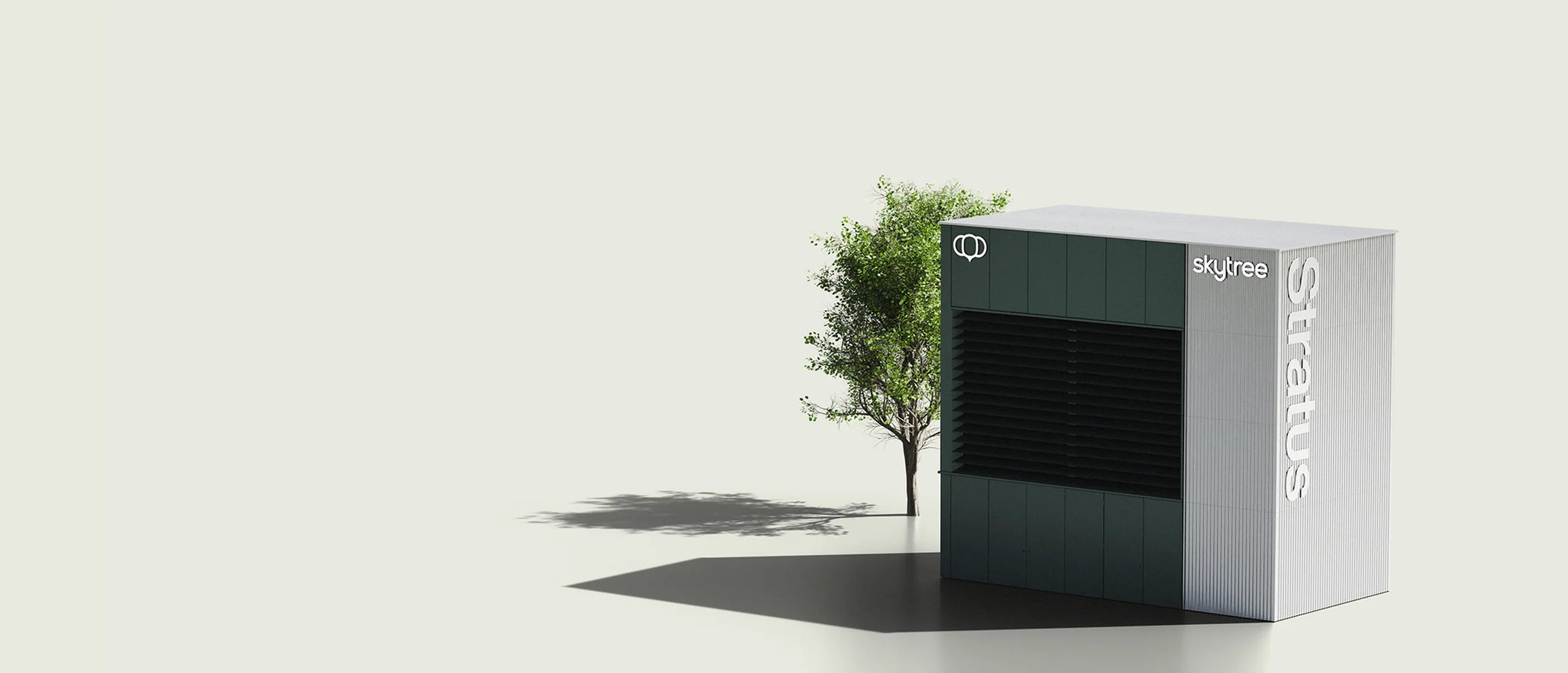
The units being produced, called ‘Stratus’, resemble large outdoor AC boxes, but each captures a ton of CO₂ a day. They can be stacked to form “parks” supplying carbon removal projects, e-fuel refineries, and greenhouses at an industrial scale.
Skytree has also opened a North American headquarters in Toronto and a U.S. office in Nashville. Canada’s incentives and storage geology make it a natural market for DAC, while Europe’s e-fuel mandates and energy security debates are accelerating demand closer to home.
A European moment, if it doesn’t slip away
Europe is emerging as a DAC innovation center. Climeworks, the world’s largest DAC company, is Swiss. Many of the new wave of modular innovators we have featured over the past year are European.
Governments are beginning to back the sector: Germany recently committed €476 million for carbon dioxide removal technologies through 2033, signaling that policy support is shifting from aspiration to actual funding.
Skytree and other startups are pushing Brussels not to repeat Europe’s familiar pattern: nurture the science, then watch the U.S. or China industrialise it.
The opportunity is real. While U.S. policy has cooled, Europe has the technology and the policy momentum; the question is whether it can move fast enough to turn innovation into industrial leadership.
Aviation’s test
For aviation, DAC represents a dual solution. The same captured CO₂ can either be permanently stored for credible carbon removal, replacing discredited offsets, or converted into e-fuels that keep existing fleets flying with lower emissions.
The question now is whether this generation of systems can be built fast enough, cheap enough, and at a scale that matters, Skytree and the new breed of innovators is betting that it can.