

#Sustainability20: DOT, FAA pick eight eVTOL pilot projects ahead of summer 2026 flights & more
Weekly Round-up - 13/03/26

Each Friday, we publish a round-up of the 20 most important stories on sustainable aviation. You can see previous editions of #Sustainability20 here.
Industry Updates
The aviation sector has maintained its net-zero commitment despite persistent structural challenges, shifting focus towards pragmatic, cost-effective decarbonisation pathways. SAF remains central, though policy uncertainty and supply-chain vulnerabilities continue to constrain investment and deployment.
CORSIA has structurally transformed carbon markets, with demand for eligible credits now expected to reach 200-220 million tonnes during the First Phase. Supply has remained critically constrained by bottlenecks in issuing Letters of Authorisation, though recent acceleration has begun unlocking additional credits.
A Brooklyn-based startup has commenced manufacturing containerised synthetic fuel units for the Pentagon, aiming to produce sustainable aviation fuel in war zones and reduce reliance on vulnerable fuel convoys.
A feasibility study has suggested that small modular nuclear reactors in the South West could supply Bristol Airport’s energy needs, potentially reducing flight emissions by 29% by 2035 through nuclear-derived hydrogen and sustainable fuel production.
Carbonfuture has signed a multi-year agreement with Boeing for at least 40,000 tonnes of durable carbon removal credits sourced from biochar projects, which the manufacturer will apply to address residual emissions from business travel.
EcoJet Airlines, the Scottish start-up promoted as the world’s first zero-emission regional carrier, has collapsed into voluntary liquidation without ever operating a commercial passenger flight, citing technological, regulatory and funding challenges.
CLIMATE WATCH: ‘A sobering preview’: extreme heat now affects one in three people globally, study finds
Climate breakdown has shrunk the time people can safely spend outdoors, with a third of the world’s population now residing in areas where heat severely limits activity, according to a study combining physiological research with seven decades of data.
Infrastructure and operational efficiencies
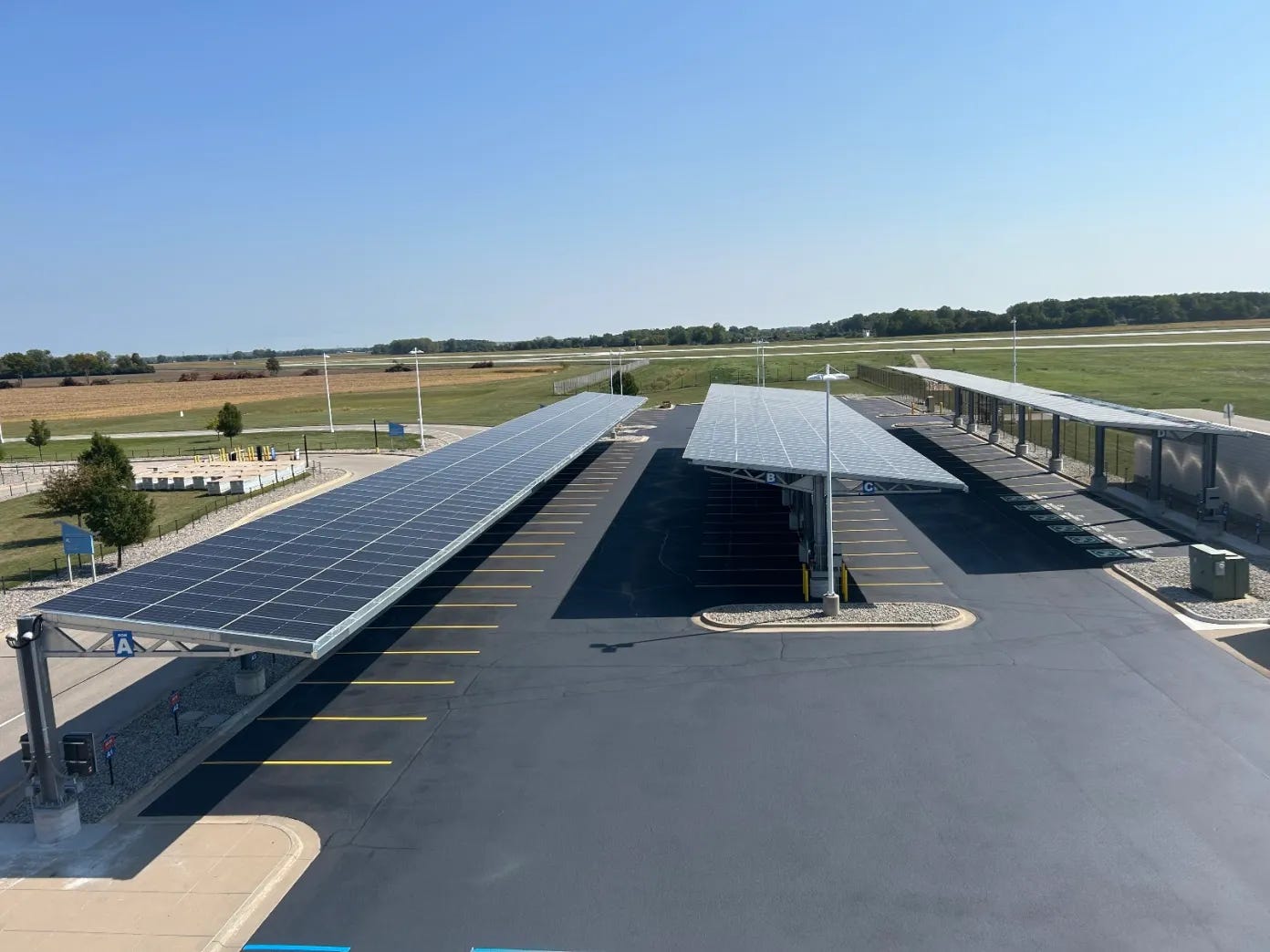
MBS International Airport is nearing completion of a major solar energy project that has positioned it as a leader in sustainable aviation, featuring the largest solar array at any Michigan airport and covered parking powered entirely by solar energy.
Airports are evolving from human-executed processes to intelligent systems that autonomously operate core functions with human oversight, powered by data and AI to orchestrate seamless operations and passenger experiences.
Sustainable Aviation Fuel (SAF)
Rolls-Royce SMR and Equilibrion have partnered to explore nuclear-powered sustainable aviation fuel, aiming to scale low-carbon fuel production for UK and global aviation using small modular reactor technology.
Southern Energy Renewables has announced a $1.4 billion investment to develop a green methanol and sustainable aviation fuel facility in Louisiana, converting wood-waste biomass into low-carbon fuels and creating more than 500 potential new jobs.
Gevo has announced plans to expand capacity at its North Dakota ethanol plant to 75 million gallons annually, while aiming to make a final investment decision on an adjacent sustainable aviation fuel project later this year.

Axens has signed a memorandum of understanding with Airbus to strengthen cooperation on sustainable aviation fuel development, aiming to accelerate technology scale-up and support the industry’s transition toward net-zero emissions by 2050.
AIRCO has introduced a containerised technology platform designed to produce synthetic fuels directly at the point of use, enabling on-site generation in remote or infrastructure-constrained environments for both civilian and defence applications.

thyssenkrupp Uhde has secured a contract to conduct an integration study for a major biomass-to-methanol project in Nova Scotia, which aims to produce more than 450,000 metric tons of methanol annually using sustainable woody biomass.
Research commissioned by Sydney Airport finds Australians support a domestic sustainable aviation fuel industry to create regional jobs, support farmers, and process local feedstocks currently exported overseas.
New technology: Electric and Hydrogen
The US Department of Transportation has selected eight pilot projects across 26 states to test eVTOL aircraft later in 2026, covering urban air taxi service, cargo operations, emergency response and regional passenger transportation.
California-based eVTOL developer Joby Aviation has advanced to testing its first FAA-conforming aircraft, marking its entry into the final phase of certification as it aims to get agency test pilots in the cockpit later this year.

A South African-developed membrane electrode assembly has been successfully validated inside a commercial aviation-grade fuel cell stack for unmanned aircraft, marking a significant milestone towards locally produced hydrogen-electric aviation systems.

Australian hypersonic flight company Hypersonix Launch Systems has successfully completed the first flight of its Dart AE hypersonic aircraft, gathering invaluable technical data to shape the design of future operational hypersonic systems.
A glimpse of the future of flying taxis has been seen in China, where AutoFlight has demonstrated its five-ton Matrix eVTOL, though the industry acknowledges that full commercialisation remains dependent on certification and ecosystem development.